Higher Education Reform and Opportunity Act
Summary
What This Bill Does
The Higher Education Reform and Opportunity Act rewrites major pieces of title IV higher education policy. It phases out most existing Direct Loan authority after September 30, 2030, and blocks new loans to new borrowers after June 30, 2026, except Federal Direct simplification loans. Those loans begin July 1, 2026, with separate undergraduate and graduate/professional interest formulas tied to 10-year Treasury auctions and statutory caps. The bill prevents income-contingent repayment and new Public Service Loan Forgiveness cancellation for Federal Direct simplification loans, with transition protection for borrowers already in a program before July 1, 2026. It also lets states establish alternative accreditation systems for institutions, programs, courses, apprenticeships, nonprofit organizations, and for-profit organizations or businesses to become title IV eligible under a state plan approved by the Secretary. Participating institutions must publish annual institution-level and program-level data on federal grants, loans, prices, outcomes, and other measures, and institutions must pay annual default-rate fines based on outstanding loans not receiving regular on-time payments.
Who Benefits and How
States benefit because they can create alternative accreditation systems that open title IV eligibility beyond traditional accreditors. Apprenticeship programs and nontraditional education providers benefit if state accreditation makes their programs eligible for federal aid. Students comparing programs benefit from annual website and alternative-format disclosures at the institution and program level. Federal taxpayers benefit if default-rate fines shift some loan nonpayment costs back to institutions.
Who Bears the Burden and How
New student borrowers lose access to many existing Direct Loan structures and forgiveness paths after the transition dates. Institutions of higher education must publish extensive annual data and may owe default-rate fines. Department of Education staff must administer Federal Direct simplification loans, state accreditation agreements, disclosures, and fines. Traditional accreditors lose exclusive gatekeeping power where states establish approved alternative systems.
Key Provisions
- Creates Federal Direct simplification loans beginning July 1, 2026.
- Bars most new Direct Loans after September 30, 2030, except simplification loans.
- Limits new loan forgiveness and income-contingent repayment for Federal Direct simplification loans.
- Authorizes state alternative accreditation systems for title IV eligibility.
- Requires annual institution and program disclosures on websites and in alternative formats.
- Creates institutional default-rate fines for outstanding loans not receiving regular on-time payments.
Evidence Chain:
This summary is generated from the full bill text using AI analysis. Expand "Detailed Analysis" below for identified beneficiaries/burden bearers with clause-level evidence links.
At a Glance
What This Bill Does
Restructures federal higher education finance by replacing most new Direct Loans with Federal Direct simplification loans, phasing out loan forgiveness for new loans, authorizing state alternative accreditation, requiring institution-level and program-level disclosures, and imposing default-rate fines.
Key Policy Areas
Higher Education, Student Loans, Accreditation
Primary Purpose
Restructures federal higher education finance by replacing most new Direct Loans with Federal Direct simplification loans, phasing out loan forgiveness for new loans, authorizing state alternative accreditation, requiring institution-level and program-level disclosures, and imposing default-rate fines.
Policy Domains
Resolution provisions
Identified Gains
- States
- Apprenticeship programs
- Students comparing programs
- Federal taxpayers
Identified Costs
- New student borrowers
- Institutions of higher education
- Department of Education staff
- Traditional accreditors
Sponsors
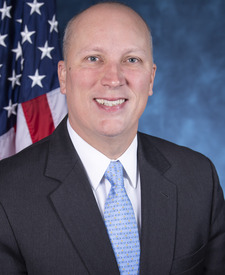
Legislative Progress
In CommitteeMr. Roy introduced the following bill; which was referred to …
Referred to the House Committee on Education and Workforce.
Introduced in House
Stakeholder Effects
cui bono?How this legislation distributes effects. Mention counts reflect frequency, not effect magnitude.
Institutions of higher education, New student borrowers, Students comparing programs
Positive-direction: Students comparing programs
Negative-direction: Institutions of higher education, New student borrowers
Bill Structure & Actor Mappings
Who is "The Secretary" in each section?
We use a combination of our own taxonomy and classification in addition to large language models to assess meaning and potential beneficiaries. High confidence means strong textual evidence. Always verify with the original bill text.
Learn more about our methodology