To require the Secretary of Homeland Security to conduct annual assessments on terrorism threats to the United States posed by terrorist organizations utilizing generative artificial intelligence applications, and for other purposes.
Sponsors



Legislative Progress
Passed HouseReceived; read twice and referred to the Committee on Homeland …
Passed House (inferred from eh version)
Additional sponsor: Mr. Hernández
Reported with amendments, committed to the Committee of the Whole …
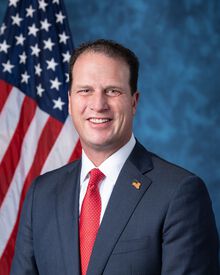
Mr. Pfluger (for himself, Mr. Guest, and Mr. Evans of …
Summary
What This Bill Does
This bill requires the Department of Homeland Security to produce annual reports on how terrorist organizations and individuals are using generative AI tools (like ChatGPT and similar technologies) for terrorism. The reports must analyze how terrorists might use AI for spreading extremist content, recruiting followers, or developing weapons of mass destruction. DHS must publish these reports publicly and brief Congress on the findings each year for five years.
Who Benefits and How
Congressional oversight committees benefit by receiving detailed annual reports and briefings on AI terrorism threats, enhancing their ability to monitor emerging national security risks. The intelligence and law enforcement community gains clearer authority and mandate to coordinate on AI-related terrorism threats. The general public benefits from increased transparency through publicly available threat assessments.
Who Bears the Burden and How
The Department of Homeland Security faces significant new workload requirements to research, analyze, and produce comprehensive annual assessments on AI terrorism threats. The Office of the Director of National Intelligence, FBI, and other intelligence agencies must dedicate staff time to consultation and information sharing with DHS. State and local fusion centers must gather and report AI terrorism intelligence to DHS, adding to their operational responsibilities.
Key Provisions
- Requires DHS to produce annual terrorism threat assessments focused on generative AI use by terrorist organizations and individuals for five years, starting within one year of enactment
- Mandates that assessments analyze how terrorists use AI for radicalization, recruitment, and developing chemical, biological, radiological, or nuclear weapons
- Requires DHS to coordinate with the Director of National Intelligence and receive information from the FBI, intelligence community, and state/local fusion centers
- Mandates public release of unclassified portions of assessments on the DHS website and congressional briefings within 30 days of each report
- Requires DHS to ensure privacy, civil rights, and civil liberties protections in the assessment process
Evidence Chain:
This summary is derived from the structured analysis below. See "Detailed Analysis" for per-title beneficiaries/burden bearers with clause-level evidence links.
Primary Purpose
Requires annual terrorism threat assessments on foreign terrorist organizations using generative AI applications
Policy Domains
Legislative Strategy
"Enhance understanding and awareness of AI-enabled terrorism threats through mandatory reporting and inter-agency coordination"
Likely Beneficiaries
- Department of Homeland Security (enhanced mission)
- Intelligence Community (expanded coordination role)
- Congressional oversight committees (regular briefings)
Likely Burden Bearers
- DHS staff (annual reporting burden)
- DNI and intelligence agencies (consultation and information sharing requirements)
- Fusion centers (information gathering and sharing mandates)
Bill Structure & Actor Mappings
Who is "The Secretary" in each section?
- "the_director"
- → Director of National Intelligence
- "the_secretary"
- → Secretary of Homeland Security
Key Definitions
Terms defined in this bill
Committee on Homeland Security, Permanent Select Committee on Intelligence, and Committee on Energy and Commerce (House); Committee on Homeland Security and Governmental Affairs, Select Committee on Intelligence, and Committee on Commerce, Science, and Transportation (Senate)
As defined in section 5002 of the National Artificial Intelligence Initiative Act of 2020 (15 U.S.C. 9401)
The class of artificial intelligence models that emulate the structure and characteristics of input data to generate derived synthetic content, including images, videos, audio, text, and other digital content
Any entity designated as a foreign terrorist organization pursuant to section 219 of the Immigration and Nationality Act (8 U.S.C. 1189)
As defined in subsection (k) of section 210A of the Homeland Security Act of 2002 (6 U.S.C. 124h)
As defined in section 3(4) of the National Security Act of 1947 (50 U.S.C. 3003(4))
A decentralized arrangement of fusion centers to enhance analysis and homeland security information sharing nationally
As defined in section 2 of the Homeland Security Act of 2002 (6 U.S.C. 101)
We use a combination of our own taxonomy and classification in addition to large language models to assess meaning and potential beneficiaries. High confidence means strong textual evidence. Always verify with the original bill text.
Learn more about our methodology