To coordinate Federal research and development efforts focused on modernizing mathematics in STEM education through mathematical and statistical modeling, including data-driven and computational thinking, problem, project, and performance-based learning and assessment, interdisciplinary exploration, and career connections, and for other purposes.
Analysis under review: This bill has generated analysis that may be too generic or incomplete. Clause-level evidence remains available below.
Summary
What This Bill Does
This bill, To coordinate Federal research and development efforts focused on modernizing mathematics in STEM education through mathematical and statistical modeling, including data-driven and computational thinking, problem, project, and performance-based learning and assessment, interdisciplinary exploration, and career connections, and for other purposes., changes federal law or congressional policy affecting schools, students, and education providers. The main policy domain is Education, Labor, Technology.
Who Benefits and How
schools, students, and education providers may benefit from new authority, funding, eligibility, regulatory clarity, or reduced risk created by the bill.
Who Bears the Burden and How
federal implementing agencies, schools, students, and education providers may take on implementation duties, reporting obligations, compliance costs, or oversight responsibilities.
Key Provisions
- Section H0F34A452810346A6A4B4F5C2A8D45B24: 1. Short title This Act may be cited as the Mathematical and Statistical Modeling Education Act.
- Section H2316C105EF5943BBB4860FF48CBD1E28: 2. Mathematical and statistical modeling education Congress finds the following: The mathematics taught in schools, including statistical problem solving and...
- Section HCABE71A2DB7943C9ACAB398738267C09: 3. NASEM report on mathematical and statistical modeling education in prekindergarten through 12th grade Not later than 180 days after the date of the...
- Section H1C180D52A3AD417D9D3599DE2FB15460: 4. Limitations Amounts made available to carry out sections 2 and 3 shall be derived from amounts appropriated or otherwise made available to the National...
Evidence Chain:
This summary is generated from the full bill text using AI analysis. Expand "Detailed Analysis" below for identified beneficiaries/burden bearers.
At a Glance
What This Bill Does
This bill, To coordinate Federal research and development efforts focused on modernizing mathematics in STEM education through mathematical and statistical modeling, including data-driven and computational thinking, problem, project, and performance-based learning and assessment, interdisciplinary exploration, and career connections, and for other purposes., changes federal law or congressional policy affecting schools, students, and education providers.
Key Policy Areas
Education, Labor, Technology
Primary Purpose
This bill, To coordinate Federal research and development efforts focused on modernizing mathematics in STEM education through mathematical and statistical modeling, including data-driven and computational thinking, problem, project, and performance-based learning and assessment, interdisciplinary exploration, and career connections, and for other purposes., changes federal law or congressional policy affecting schools, students, and education providers.
Policy Domains
Whole bill
Identified Gains
Contextual inference, no direct clause citation- schools, students, and education providers
Contextual inference, no direct clause citation
Identified Costs
Contextual inference, no direct clause citation- federal implementing agencies
- schools, students, and education providers
Contextual inference, no direct clause citation
Sponsors
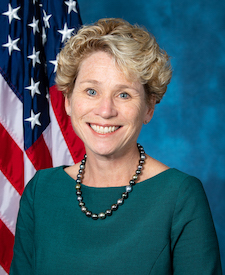
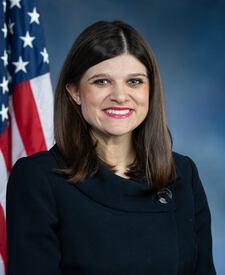
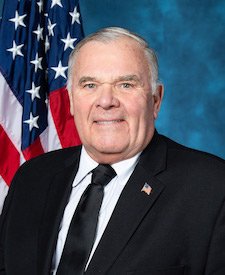

Legislative Progress
ReportedReceived; read twice and referred to the Committee on Health, …
Additional sponsors: Ms. Lee of Pennsylvania and Ms. Stevens
Reported with an amendment, committed to the Committee of the …
Ms. Houlahan (for herself and Mr. Baird) introduced the following …
Stakeholder Effects
cui bono?How this legislation distributes effects. Mention counts reflect frequency, not effect magnitude.
Teacher education and professional development programs, Teacher education programs
Institutions of higher education conducting STEM education research, K-12 public and private schools
National Academies of Sciences, Engineering and Medicine
Nonprofit organizations focused on STEM education
STEM employers seeking qualified workforce
Bill Structure & Actor Mappings
Who is "The Secretary" in each section?
- "secretary_of_education"
- → Secretary of Education
We use a combination of our own taxonomy and classification in addition to large language models to assess meaning and potential beneficiaries. High confidence means strong textual evidence. Always verify with the original bill text.
Learn more about our methodology