Standard FEES Act
Summary
What This Bill Does
The Standard FEES Act standardizes federal fees for processing applications to place communications facilities on federal buildings and property. It amends section 6409 of the Middle Class Tax Relief and Job Creation Act of 2012 so the GSA Administrator must set a uniform fee schedule for forms used for easements, rights-of-way, leases, and contracts for communications facility installations on federal property. Fees must be based on direct agency processing costs and be competitively neutral compared with similar uses of federal property.
Who Benefits and How
Wireless telecommunications carriers benefit from a predictable fee schedule instead of agency-by-agency processing charges. Broadband providers benefit because the bill allows exceptions when they serve the public benefit and expand broadband internet access service. Cell tower companies benefit from lower barriers and clearer pricing for federal-property applications. Communications infrastructure firms benefit from a uniform process across executive agencies.
Who Bears the Burden and How
The General Services Administration must create the schedule within 30 days and decide any competitively neutral exceptions. Federal executive agencies must adopt the GSA fees and exceptions by regulation within 120 days and can grant exceptions only case by case. Agencies owning federal buildings or other property may lose fee flexibility because the new fees supersede other statutory processing fees and collected fees are available only as provided in advance in appropriations acts.
Key Provisions
- Requires GSA to establish a uniform fee schedule for communications-facility form processing on federal property.
- Requires fees to be based on direct processing costs and competitively neutral compared with similar federal-property uses.
- Authorizes competitively neutral exceptions for public benefit and broadband deployment.
- Requires executive agencies to adopt the GSA fees and exceptions by regulation within 120 days.
- Limits use of collected fees to appropriated amounts for processing costs and supersedes other processing fees.
Evidence Chain:
This summary is generated from the full bill text using AI analysis. Expand "Detailed Analysis" below for identified beneficiaries/burden bearers with clause-level evidence links.
At a Glance
What This Bill Does
Requires the General Services Administration to establish a uniform, direct-cost-based, competitively neutral fee schedule for processing communications-facility forms on federal property within 30 days, requires executive agencies to adopt the fees and exceptions within 120 days, allows neutral exceptions tied to public benefit and broadband deployment, limits fee use to appropriated processing costs, and supersedes other processing fees.
Key Policy Areas
Telecommunications, Technology, Federal Property, Government Operations
Primary Purpose
Requires the General Services Administration to establish a uniform, direct-cost-based, competitively neutral fee schedule for processing communications-facility forms on federal property within 30 days, requires executive agencies to adopt the fees and exceptions within 120 days, allows neutral exceptions tied to public benefit and broadband deployment, limits fee use to appropriated processing costs, and supersedes other processing fees.
Policy Domains
House resolution provisions
Identified Gains
- Wireless telecommunications carriers
- Broadband providers
- Cell tower companies
- Communications infrastructure firms
Identified Costs
- General Services Administration
- Federal executive agencies
- Agencies owning federal buildings
Sponsors


Legislative Progress
ReportedReported by the Committee on Energy and Commerce. H. Rept. …
Ordered to be Reported by the Yeas and Nays: 49 …
Committee Consideration and Mark-up Session Held
Subcommittee Consideration and Mark-up Session Held
Forwarded by Subcommittee to Full Committee by Voice Vote.
Introduced in House
Referred to the Subcommittee on Economic Development, Public Buildings, and …
Referred to the Subcommittee on Communications and Technology.
Referred to the Committee on Transportation and Infrastructure, and in …
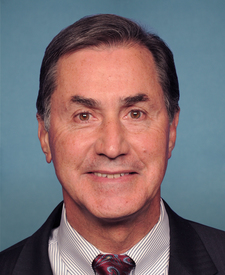
Mr. Palmer (for himself and Mr. Ryan) introduced the following …
Stakeholder Effects
cui bono?How this legislation distributes effects. Mention counts reflect frequency, not effect magnitude.
Broadband providers, Cell tower companies, Communications infrastructure firms
Agencies owning federal buildings, Federal executive agencies, General Services Administration
Bill Structure & Actor Mappings
Who is "The Secretary" in each section?
- "gsa"
- → General Services Administration
- "middle_class_tax_relief_act"
- → Middle Class Tax Relief and Job Creation Act of 2012
We use a combination of our own taxonomy and classification in addition to large language models to assess meaning and potential beneficiaries. High confidence means strong textual evidence. Always verify with the original bill text.
Learn more about our methodology