Rocky Mountain Judgeship Act
Summary
What This Bill Does
The Rocky Mountain Judgeship Act adds Article III district judgeships in two fast-growing Rocky Mountain states. It directs the President, with Senate advice and consent, to appoint two additional district judges for the District of Colorado and one additional district judge for the District of Idaho. It amends the 28 U.S.C. 133(a) table so Colorado has 9 district judges and Idaho has 3. It also amends 28 U.S.C. 85 to add Fort Collins to the list of places named in the Colorado district statute. The practical effect is more federal trial-court capacity for Colorado and Idaho, with appointment, confirmation, chambers, staff, courtroom, and budget consequences.
Who Benefits and How
Colorado federal court users benefit from two additional district judgeships that can reduce pressure on civil and criminal dockets. Idaho federal court users benefit from one additional district judgeship for trial-court capacity. Federal judges and court clerks benefit from statutory relief for workload in the affected districts. Fort Collins residents benefit because the Colorado district statute would expressly include Fort Collins.
Who Bears the Burden and How
The President must nominate additional district judges and the Senate must consider confirmations. Administrative Office of the U.S. Courts staff must support judgeship implementation, staffing, and facilities planning. Federal taxpayers bear the salary, chambers, staff, security, and courtroom costs of the added judgeships. U.S. Marshals Service officers and courthouse administrators may need to support added judicial operations.
Key Provisions
- Authorizes two additional district judges for the District of Colorado.
- Authorizes one additional district judge for the District of Idaho.
- Requires the 28 U.S.C. 133 table to list Colorado with 9 judges and Idaho with 3 judges.
- Adds Fort Collins to Colorado federal district court location language.
Evidence Chain:
This summary is generated from the full bill text using AI analysis. Expand "Detailed Analysis" below for identified beneficiaries/burden bearers.
At a Glance
What This Bill Does
Authorizes two additional federal district judgeships for Colorado, one additional federal district judgeship for Idaho, updates statutory judgeship totals, and adds Fort Collins to Colorado district court location language.
Key Policy Areas
Federal Courts, Judicial Administration, Colorado
Primary Purpose
Authorizes two additional federal district judgeships for Colorado, one additional federal district judgeship for Idaho, updates statutory judgeship totals, and adds Fort Collins to Colorado district court location language.
Policy Domains
Resolution provisions
Identified Gains
Contextual inference, no direct clause citation- Colorado federal court users
- Idaho federal court users
- Federal court clerks
- Fort Collins residents
Contextual inference, no direct clause citation
Identified Costs
Contextual inference, no direct clause citation- President of the United States
- Administrative Office of the U.S. Courts
- Federal taxpayers
- U.S. Marshals Service officers
Contextual inference, no direct clause citation
Sponsors
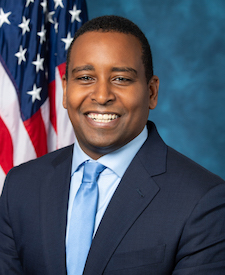

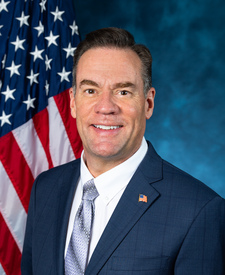
Legislative Progress
In CommitteeMr. Neguse (for himself, Mr. Simpson, and Mr. Fulcher) introduced …
Referred to the House Committee on the Judiciary.
Introduced in House
Bill Structure & Actor Mappings
Who is "The Secretary" in each section?
We use a combination of our own taxonomy and classification in addition to large language models to assess meaning and potential beneficiaries. High confidence means strong textual evidence. Always verify with the original bill text.
Learn more about our methodology