Defund Heroin Injection Centers Act of 2025
Summary
What This Bill Does
The Defund Heroin Injection Centers Act is a federal funding restriction aimed at supervised injection sites. It provides that no federal funds may be made available to any state, local, Tribal, or private entity that operates or controls an injection center in violation of 21 U.S.C. 856, commonly known as the crack-house statute. The bill does not create a new criminal offense; it uses federal spending eligibility to penalize entities that operate or control unlawful injection centers. Its practical effect is to put cities, public health departments, Tribal entities, nonprofits, and other operators at risk of losing federal money if they run or control a covered site.
Who Benefits and How
Opponents of supervised injection centers benefit because the bill creates a federal funding consequence for unlawful sites. Federal drug-enforcement officials benefit from a spending restriction that reinforces the Controlled Substances Act. Neighborhood residents opposing injection centers benefit if federal funding pressure discourages local operation of those facilities. Members of Congress favoring abstinence-oriented drug policy benefit from a clear defunding mechanism.
Who Bears the Burden and How
Public health nonprofits operating injection centers risk losing federal funds if the centers violate the crack-house statute. State health agencies must avoid operating or controlling covered unlawful injection centers to preserve federal funding. Local governments supporting harm-reduction sites face financial pressure from the funding ban. Drug users who rely on supervised injection services may lose access if operators close or avoid federally funded work.
Key Provisions
- Bars federal funds for entities operating or controlling injection centers that violate 21 U.S.C. 856.
- Applies the funding ban to state, local, Tribal, and private entities.
- Uses the Controlled Substances Act crack-house statute as the legal trigger.
- Limits the bill to funding eligibility rather than creating a new standalone criminal offense.
Evidence Chain:
This summary is generated from the full bill text using AI analysis. Expand "Detailed Analysis" below for identified beneficiaries/burden bearers with clause-level evidence links.
At a Glance
What This Bill Does
Bars federal funds from going to any state, local, Tribal, or private entity that operates or controls an injection center violating the Controlled Substances Act crack-house statute.
Key Policy Areas
Drug Policy, Federal Funding, Public Health
Primary Purpose
Bars federal funds from going to any state, local, Tribal, or private entity that operates or controls an injection center violating the Controlled Substances Act crack-house statute.
Policy Domains
Resolution provisions
Identified Gains
- Drug enforcement officials
- Neighborhood residents
- Members of Congress
- Abstinence-oriented advocates
Identified Costs
- Public health nonprofits
- State health agencies
- Local governments
- Drug users
Sponsors
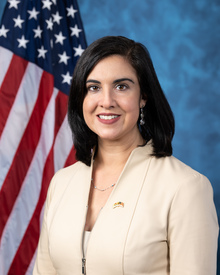
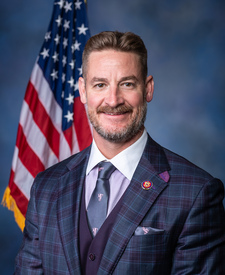
Legislative Progress
In CommitteeMs. Malliotakis introduced the following bill; which was referred to …
Referred to the House Committee on Oversight and Government Reform.
Introduced in House
Stakeholder Effects
cui bono?How this legislation distributes effects. Mention counts reflect frequency, not effect magnitude.
Neighborhood residents, Public health nonprofits
Local governments, State health agencies
Bill Structure & Actor Mappings
Who is "The Secretary" in each section?
We use a combination of our own taxonomy and classification in addition to large language models to assess meaning and potential beneficiaries. High confidence means strong textual evidence. Always verify with the original bill text.
Learn more about our methodology