To direct the Department of Energy and the National Oceanic and Atmospheric Administration to conduct collaborative research in order to advance numerical weather and climate prediction in the United States, and for other purposes.
Summary
What This Bill Does
The bill establishes collaborative research and development activities between DOE and NOAA focused on artificial intelligence and high-performance computing for advancing climate models and numerical weather prediction, creates an initiative for NOAA to leverage DOE high-performance computers to run advanced weather models and compare them with current National Weather Service forecasts, and requires all research activities under this Act to comply with research security provisions of the CHIPS Act of 2022, ensuring national security standards are maintained in collaborative research. It relies on reporting requirements, grants, compliance mandates, and procurement rules. The main policy areas are Science & Space, Science & Technology, Education, and Energy.
Who Benefits and How
National Laboratories could gain revenue opportunities, National laboratories and university research teams could gain revenue opportunities, and Weather forecasting and climate modeling services could face reduced risk.
Who Bears the Burden and How
DOE and NOAA research coordination offices would take on compliance duties, NOAA Administrator would take on compliance duties, and NOAA would take on compliance duties.
Key Provisions
- Establishes collaborative research and development activities between DOE and NOAA focused on artificial intelligence and high-performance computing for advancing climate models and numerical weather prediction.
- Creates an initiative for NOAA to leverage DOE high-performance computers to run advanced weather models and compare them with current National Weather Service forecasts.
- Requires all research activities under this Act to comply with research security provisions of the CHIPS Act of 2022, ensuring national security standards are maintained in collaborative research.
- Requires DOE and NOAA collaborative research, competitive awards, high-performance computing, AI, modeling, data sharing, and reports to improve weather and climate prediction.
- Requires applies CHIPS Act research-security requirements to the bill's weather and climate prediction research activities.
Evidence Chain:
This summary is generated from the full bill text using AI analysis. Expand "Detailed Analysis" below for identified beneficiaries/burden bearers with clause-level evidence links.
At a Glance
What This Bill Does
The bill establishes collaborative research and development activities between DOE and NOAA focused on artificial intelligence and high-performance computing for advancing climate models and numerical weather prediction, creates an initiative for NOAA to leverage DOE high-performance computers to run advanced weather models and compare them with current National Weather Service forecasts, and requires all research activities under this Act to comply with research security provisions of the CHIPS Act of 2022, ensuring national security standards are maintained in collaborative research.
Key Policy Areas
Science & Space, Science & Technology, Education, Energy
Primary Purpose
The bill establishes collaborative research and development activities between DOE and NOAA focused on artificial intelligence and high-performance computing for advancing climate models and numerical weather prediction, creates an initiative for NOAA to leverage DOE high-performance computers to run advanced weather models and compare them with current National Weather Service forecasts, and requires all research activities under this Act to comply with research security provisions of the CHIPS Act of 2022, ensuring national security standards are maintained in collaborative research.
Policy Domains
Whole bill
Identified Gains
- National Laboratories
- National laboratories and university research teams
- Weather forecasting and climate modeling services
- High-performance computing and climate technology researchers
- National Weather Service
Identified Costs
- DOE and NOAA research coordination offices
- NOAA Administrator
- NOAA
- Department of Energy
- Research institutions receiving federal funding
Sponsors

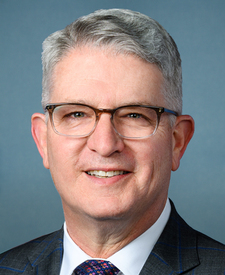
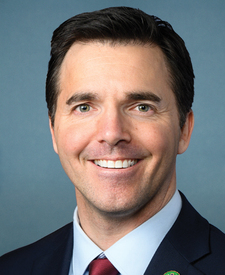
Legislative Progress
ReportedAdditional sponsors: Mr. Jackson of North Carolina, Ms. Lee of …
Reported from the Committee on Science, Space, and Technology; committed …
Mr. Miller of Ohio (for himself and Ms. Ross) introduced …
Stakeholder Effects
cui bono?How this legislation distributes effects. Mention counts reflect frequency, not effect magnitude.
DOE and NOAA research coordination offices, Department of Energy, NOAA
Positive-direction: National Weather Service, National security apparatus
Negative-direction: DOE and NOAA research coordination offices, Department of Energy, NOAA, NOAA Administrator
Federal research grant recipients and collaborators, National Laboratories, Nonprofit research institutions
Positive-direction: National Laboratories, Nonprofit research institutions
Negative-direction: Federal research grant recipients and collaborators, Research institutions receiving federal funding
Universities and higher education institutions, Universities conducting weather and climate research, Universities participating in collaborative research
Positive-direction: Universities and higher education institutions, Universities conducting weather and climate research
Negative-direction: Universities participating in collaborative research
National laboratories and university research teams
Weather forecasting and climate modeling services
High-performance computing and climate technology researchers
Weather forecasting and data analytics companies
U.S. research security and national security interests
Bill Structure & Actor Mappings
Who is "The Secretary" in each section?
We use a combination of our own taxonomy and classification in addition to large language models to assess meaning and potential beneficiaries. High confidence means strong textual evidence. Always verify with the original bill text.
Learn more about our methodology