RESTORE Act
Summary
What This Bill Does
The RESTORE Act creates a federal preservation framework for Freedom Settlements, also called Freedmen's Settlements, Freedom Colonies, or Black Towns. The findings describe more than 1,200 such settlements after the Civil War, including at least 200 towns established by formerly enslaved individuals between 1866 and 1930, and connect their underdevelopment to segregation, racial violence, redlining, public infrastructure exclusion, environmental racism, and divestment. The bill adds a National Freedom Settlements Preservation Program within the National Park Service. The Secretary of the Interior may award grants for identifying settlements, preservation and restoration, heritage tourism, research, documentation, capacity-building, and education, with $3 million authorized for each fiscal year 2026 through 2031. It also requires a public-involvement study, protects private property from federal management without written owner consent, authorizes cooperative agreements and technical assistance with agencies, governments, residents, descendants, scholars, nonprofits, and educational institutions, and creates a Freedom Settlements Advisory Committee.
Who Benefits and How
Freedom Settlement residents and descendants benefit because the bill funds preservation, documentation, and interpretation of their communities' history. Community organizations serving African-American heritage sites benefit from grant eligibility and technical assistance. Property owners of Freedom Settlement sites benefit because grants require owner consent and can support restoration and capacity-building. National Park Service staff benefit from a defined program, study, advisory committee, and cooperative agreement authority. African-American history researchers benefit from federal support for identifying and documenting settlements that have been under-studied.
Who Bears the Burden and How
Department of the Interior staff must create the program, run grants, conduct the study, and appoint the advisory committee. National Park Service administrators must coordinate donations, grants, technical assistance, and program inclusion decisions. Federal taxpayers bear the authorized $3 million per year cost for fiscal years 2026 through 2031. Grant applicants must obtain property-owner consent and comply with application and program requirements.
Key Provisions
- Creates the National Freedom Settlements Preservation Program within the National Park Service.
- Authorizes grants for identification, preservation, restoration, tourism, research, documentation, capacity-building, and education.
- Provides $3 million per year for fiscal years 2026 through 2031.
- Requires a Freedom Settlements study with public involvement and consultation.
- Protects private property from federal management without written owner consent.
- Creates a Freedom Settlements Advisory Committee with residents, descendants, experts, and community leaders.
Evidence Chain:
This summary is generated from the full bill text using AI analysis. Expand "Detailed Analysis" below for identified beneficiaries/burden bearers with clause-level evidence links.
At a Glance
What This Bill Does
Creates a National Freedom Settlements Preservation Program in the National Park Service with grants, a study, cooperative agreements, private-property protections, and an advisory committee for historic Freedmen's Settlements, Freedom Colonies, and Black Towns.
Key Policy Areas
Historic Preservation, Civil Rights, Grants
Primary Purpose
Creates a National Freedom Settlements Preservation Program in the National Park Service with grants, a study, cooperative agreements, private-property protections, and an advisory committee for historic Freedmen's Settlements, Freedom Colonies, and Black Towns.
Policy Domains
Resolution provisions
Identified Gains
- Freedom Settlement residents
- Community organizations
- Property owners of Freedom Settlement sites
- National Park Service staff
- African-American history researchers
Identified Costs
- Department of the Interior staff
- National Park Service administrators
- Federal taxpayers
- Grant applicants
Sponsors


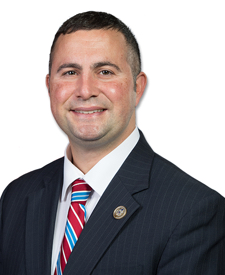


Legislative Progress
In CommitteeMs. Kamlager-Dove (for herself, Mr. Soto, Mr. Jackson of Illinois, …
Referred to the House Committee on Natural Resources.
Introduced in House
Stakeholder Effects
cui bono?How this legislation distributes effects. Mention counts reflect frequency, not effect magnitude.
Department of the Interior, National Park Service
Property owners of Freedom Settlement sites
Bill Structure & Actor Mappings
Who is "The Secretary" in each section?
We use a combination of our own taxonomy and classification in addition to large language models to assess meaning and potential beneficiaries. High confidence means strong textual evidence. Always verify with the original bill text.
Learn more about our methodology