To amend the Public Health Service Act to reauthorize the Stop, Observe, Ask, and Respond to Health and Wellness Training Program.
Summary
What This Bill Does
H.R. 1669 replaces fiscal years 2020 through 2024 with fiscal years 2026 through 2030 in the SOAR to Health and Wellness Training Program's authorization of appropriations. The unchanged amount in 42 USC 300d-54(h) is $4 million per year, totaling $20 million in authorized appropriations over the five new fiscal years. This is permission for future appropriations, not an immediate payment or a mandatory spending entitlement. Fiscal year 2025 is not added to the specified period.
SOAR means Stop, Observe, Ask, and Respond. The existing HHS program supports training for health care and social service providers to recognize human trafficking, refer people to appropriate services, and deliver trauma-informed care. Its existing grants, technical assistance, privacy safeguards and annual congressional reporting remain in place. Renewing the funding authorization does not create the program for the first time or establish that services stopped when the earlier authorization years ended.
Who Benefits and How
Eligible training grantees gain a renewed statutory funding authorization supporting potential future awards. Health care providers and social service providers may benefit from continued training and assistance. Human trafficking survivors are the intended downstream beneficiaries of better recognition, referrals and care. Those outcomes depend on appropriations, implementation and provider participation; the bill does not guarantee any person an award, treatment slot or particular clinical result. It creates no new criminal offense, immigration status or private right to payment.
Who Bears the Burden and How
The Department of Health and Human Services retains responsibility for administering the program and its existing reporting obligations. Funded training providers continue to bear grant-delivery and accountability duties rather than receiving an unconditional subsidy. Congress would need to supply funding separately, so federal budget costs depend on later appropriations and spending. The amendment imposes no new mandatory training requirement on every clinician, changes no patient confidentiality rule, and does not require disclosure of identifiable survivor data.
Key Provisions
- Authorizes the existing $4 million annual SOAR amount for each fiscal year from 2026 through 2030, replacing the expired 2020-2024 authorization period.
- Extends the funding authorization for the existing provider-training and grant framework without appropriating the $20 million five-year total.
- Uses unchanged program eligibility, survivor confidentiality and reporting provisions; the listed fiscal years do not include 2025.
Evidence Chain:
This summary is generated from the full bill text using AI analysis. Expand "Detailed Analysis" below for identified beneficiaries/burden bearers with clause-level evidence links.
At a Glance
What This Bill Does
Renew the existing $4 million annual authorization for HHS's SOAR human-trafficking training program for fiscal years 2026 through 2030, without appropriating funds or changing the program's substantive rules.
Key Policy Areas
Healthcare, Social Welfare
Primary Purpose
Renew the existing $4 million annual authorization for HHS's SOAR human-trafficking training program for fiscal years 2026 through 2030, without appropriating funds or changing the program's substantive rules.
Policy Domains
To amend the Public Health Service Act to reauthorize the Stop, Observe, Ask, and Respond to Health and Wellness Training Program.
Identified Gains
- SOAR training grantees
- Health care providers receiving SOAR training
- Social service providers receiving SOAR training
- Human trafficking survivors
Identified Costs
- Department of Health and Human Services
- SOAR training providers fulfilling funded grant requirements
Sponsors
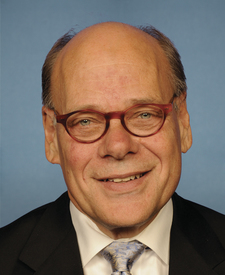
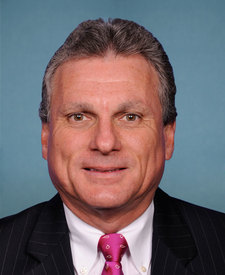
Legislative Progress
ReportedAdditional sponsor: Mr. Carter of Georgia
Committed to the Committee of the Whole House on the …
Placed on the Union Calendar, Calendar No. 331.
Reported by the Committee on Energy and Commerce. H. Rept. …
Ordered to be Reported by Voice Vote.
Committee Consideration and Mark-up Session Held
Mr. Cohen introduced the following bill; which was referred to …
Referred to the House Committee on Energy and Commerce.
Introduced in House
Stakeholder Effects
cui bono?How this legislation distributes effects. Mention counts reflect frequency, not effect magnitude.
SOAR provider-training grantees
Health care providers receiving SOAR training
Social service providers receiving SOAR training
Human trafficking survivors served by SOAR-trained providers
Bill Structure & Actor Mappings
Who is "The Secretary" in each section?
- "the_program"
- → Stop, Observe, Ask, and Respond to Health and Wellness Training Program under 42 USC 300d-54
- "trafficking"
- → Severe forms of trafficking in persons, as cross-referenced in unchanged subsection (g)
- "the_secretary"
- → Secretary of Health and Human Services
Note: This SOAR program concerns human-trafficking training under HHS, not similarly named Social Security disability assistance or school-voucher programs. Authorization expiration does not prove program termination.
Key Definitions
Terms defined in this bill
An unchanged $4 million annual authorization with new FY2026-2030 dates; this amendment does not itself supply budget authority or require an award.
We use a combination of our own taxonomy and classification in addition to large language models to assess meaning and potential beneficiaries. High confidence means strong textual evidence. Always verify with the original bill text.
Learn more about our methodology