Truck Parking Safety Improvement Act
Summary
What This Bill Does
The bill creates new Section 180 of title 23 establishing a competitive federal grant program for constructing, expanding, and improving public commercial motor vehicle parking facilities along Federal-aid highways, creates new Section 180 of title 23 (standalone statutory text) establishing competitive grants for commercial motor vehicle parking, and requires the Secretary of Transportation to submit biennial reports (starting 4 years after enactment, then every 2 years) to Senate and House committees evaluating: availability of truck parking (public and private). It relies on grants, compliance mandates, product standards, and reporting requirements. The main policy areas are Transportation, Housing, Energy, and Technology.
Who Benefits and How
Commercial truck drivers could see lower costs, State and local transportation agencies could gain revenue opportunities, and Motor carrier companies could see lower costs.
Who Bears the Burden and How
Private truck stop operators could lose revenue opportunities, Federal taxpayers could face higher costs, and Department of Transportation would take on compliance duties.
Key Provisions
- Creates new Section 180 of title 23 establishing a competitive federal grant program for constructing, expanding, and improving public commercial motor vehicle parking facilities along Federal-aid highways.
- Creates new Section 180 of title 23 (standalone statutory text) establishing competitive grants for commercial motor vehicle parking.
- Requires the Secretary of Transportation to submit biennial reports (starting 4 years after enactment, then every 2 years) to Senate and House committees evaluating: availability of truck parking (public and private)...
- Authorizes $151,000,000 per year for each of fiscal years 2025 through 2029 ($755 million total over 5 years) to the Secretary of Transportation for commercial motor vehicle parking projects under new Section 180...
Evidence Chain:
This summary is generated from the full bill text using AI analysis. Expand "Detailed Analysis" below for identified beneficiaries/burden bearers with clause-level evidence links.
At a Glance
What This Bill Does
The bill creates new Section 180 of title 23 establishing a competitive federal grant program for constructing, expanding, and improving public commercial motor vehicle parking facilities along Federal-aid highways, creates new Section 180 of title 23 (standalone statutory text) establishing competitive grants for commercial motor vehicle parking, and requires the Secretary of Transportation to submit biennial reports (starting 4 years after enactment, then every 2 years) to Senate and House committees evaluating: availability of truck parking (public and private).
Key Policy Areas
Transportation, Housing, Energy, Technology
Primary Purpose
The bill creates new Section 180 of title 23 establishing a competitive federal grant program for constructing, expanding, and improving public commercial motor vehicle parking facilities along Federal-aid highways, creates new Section 180 of title 23 (standalone statutory text) establishing competitive grants for commercial motor vehicle parking, and requires the Secretary of Transportation to submit biennial reports (starting 4 years after enactment, then every 2 years) to Senate and House committees evaluating: availability of truck parking (public and private).
Policy Domains
Whole bill
Identified Gains
- Commercial truck drivers
- State and local transportation agencies
- Motor carrier companies
- State and local transportation departments
- Highway construction and engineering firms
Identified Costs
- Private truck stop operators
- Federal taxpayers
- Department of Transportation
- EV charging infrastructure companies
- EV charging companies
Sponsors
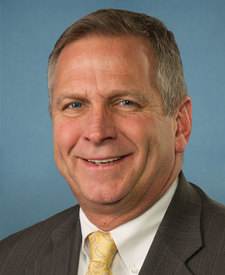

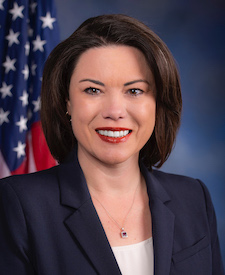
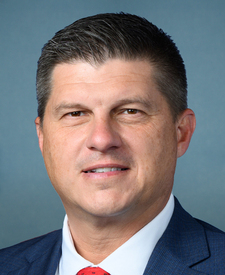
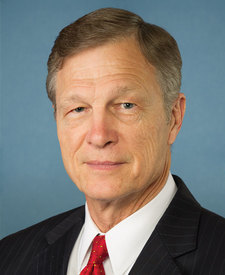
Legislative Progress
In CommitteeMr. Bost (for himself, Ms. Craig, Mr. Stauber, Mr. Carbajal, …
Referred to the Subcommittee on Highways and Transit.
Referred to the House Committee on Transportation and Infrastructure.
Introduced in House
Stakeholder Effects
cui bono?How this legislation distributes effects. Mention counts reflect frequency, not effect magnitude.
Commercial truck drivers, Motor carrier companies, Private truck stop operators
Positive-direction: Commercial truck drivers, Motor carrier companies, Trucking industry
Negative-direction: Private truck stop operators
Congressional oversight committees, Department of Transportation, State and local transportation agencies
Positive-direction: Congressional oversight committees, State and local transportation agencies, State and local transportation departments
Negative-direction: Department of Transportation
Construction and engineering firms, Construction firms, Highway construction and engineering firms
EV charging companies, EV charging infrastructure companies
Bill Structure & Actor Mappings
Who is "The Secretary" in each section?
We use a combination of our own taxonomy and classification in addition to large language models to assess meaning and potential beneficiaries. High confidence means strong textual evidence. Always verify with the original bill text.
Learn more about our methodology