HEIRS Act of 2025
Summary
What This Bill Does
The HEIRS Act addresses heirs' property, where residential title passes through intestacy to multiple heirs as tenants in common. HUD must establish, within one year, a grant program for eligible entities that had already enacted or later enact the Uniform Partition of Heirs Property Act or a substantial equivalent. Grant funds help residents pay bona fide expenses for establishing and documenting ownership rights or settling a decedent's estate. HUD must also run annual grants for housing counseling, legal assistance, and financial assistance related to title clearing and home retention for heirs' property owners, with $10 million authorized annually for fiscal years 2026 through 2030. HUD must prioritize entities with track records serving homeowners, minority and low- or moderate-income residents, and neighborhoods with high concentrations of those residents or heirs' property. The bill also requires HUD-funded housing counselors to explain heirs' property risks, estate planning, title-clearing options, and referrals to mission-driven nonprofits or higher-education legal clinics.
Who Benefits and How
Heirs' property owners benefit from grants for title clearing, estate settlement, housing counseling, legal aid, and home retention. Low-income homeowners benefit because HUD must consider services targeted to low- and moderate-income people. Minority communities benefit because grant criteria prioritize neighborhoods with high concentrations of minority residents and heirs' property. Legal services clinics benefit from referral roles and funding-linked demand for title-clearing assistance.
Who Bears the Burden and How
HUD must establish grant programs, evaluate eligible entities, administer $10 million annual authorizations, and update counseling requirements. Eligible jurisdictions must enact or adopt the Uniform Partition of Heirs Property Act or a substantial equivalent to receive section 2 grants. Housing counseling nonprofits must educate consumers about heirs' property risks, estate planning, and title-clearing services. Federal taxpayers bear the cost of heirs' property grants from fiscal years 2026 through 2030.
Key Provisions
- Creates HUD grants for jurisdictions adopting the Uniform Partition of Heirs Property Act or a substantial equivalent.
- Authorizes grant use for ownership documentation, title clearing, and estate settlement expenses.
- Provides $10 million annually from fiscal years 2026 through 2030 for heirs' property resolution grants.
- Requires HUD-funded housing counselors to explain heirs' property risks and refer consumers to title-clearing help.
Evidence Chain:
This summary is generated from the full bill text using AI analysis. Expand "Detailed Analysis" below for identified beneficiaries/burden bearers with clause-level evidence links.
At a Glance
What This Bill Does
Creates HUD grants for jurisdictions adopting the Uniform Partition of Heirs Property Act, annual heirs-property resolution grants for title clearing and home retention, and housing counseling duties explaining heirs' property risks and assistance options.
Key Policy Areas
Housing, Property Rights, Legal Aid
Primary Purpose
Creates HUD grants for jurisdictions adopting the Uniform Partition of Heirs Property Act, annual heirs-property resolution grants for title clearing and home retention, and housing counseling duties explaining heirs' property risks and assistance options.
Policy Domains
Resolution provisions
Identified Gains
- Heirs' property owners
- Low-income homeowners
- Minority communities
- Legal services clinics
Identified Costs
- HUD
- Eligible jurisdictions
- Housing counseling nonprofits
- Federal taxpayers
Sponsors



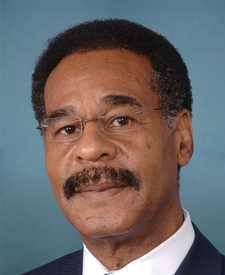
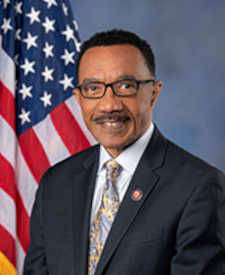
Legislative Progress
In CommitteeMs. Williams of Georgia (for herself, Mrs. Fletcher, Mr. Cleaver, …
Referred to the House Committee on Financial Services.
Introduced in House
Stakeholder Effects
cui bono?How this legislation distributes effects. Mention counts reflect frequency, not effect magnitude.
Bill Structure & Actor Mappings
Who is "The Secretary" in each section?
We use a combination of our own taxonomy and classification in addition to large language models to assess meaning and potential beneficiaries. High confidence means strong textual evidence. Always verify with the original bill text.
Learn more about our methodology