Strengthening Exports Against China Act
Summary
What This Bill Does
The Strengthening Exports Against China Act changes how the Export-Import Bank calculates a statutory default-rate cap. EXIM financing normally faces default-rate limits under the Export-Import Bank Act. This bill says the rate calculated under section 8(g)(1) does not include an entity in default if EXIM determines the financing helped replace or compete with a product or service provided by a Commerce Department Entity List firm, a Treasury Department specially designated national or blocked person, an entity at least 50 percent owned by such blocked persons, or if the financing was provided through the Program on China and Transformational Exports. The bill gives EXIM more room to take strategic export-finance risk when the deal counters Chinese or sanctioned competitors.
Who Benefits and How
U.S. exporters benefit because EXIM can support more deals that compete with Entity List or sanctioned competitors without those defaults counting against the cap. Program on China and Transformational Exports applicants benefit because covered financing receives special default-rate treatment. Export-Import Bank officials benefit from flexibility to support strategic transactions even when risk is higher. National security trade advocates benefit because export finance can be aimed at replacing products or services tied to restricted firms.
Who Bears the Burden and How
Export-Import Bank risk managers must determine when financing qualifies for exclusion from the default-rate calculation. Federal taxpayers bear more risk if strategically excluded financing defaults but is not counted in the same way. Entity List companies face stronger U.S. export-finance competition. Sanctioned persons and blocked affiliates face stronger U.S.-backed replacement competition.
Key Provisions
- Creates an exclusion for qualifying EXIM financing from the section 8(g)(1) default-rate calculation.
- Provides special treatment for financing that replaces or competes with Commerce Department Entity List products or services.
- Limits default-rate counting for financing that competes with Treasury sanctioned persons or blocked affiliates.
- Authorizes the same exclusion for financing under the Program on China and Transformational Exports.
Evidence Chain:
This summary is generated from the full bill text using AI analysis. Expand "Detailed Analysis" below for identified beneficiaries/burden bearers with clause-level evidence links.
At a Glance
What This Bill Does
Excludes certain Export-Import Bank financing from default-rate calculations when the financing competes with Entity List firms, sanctioned persons, blocked-person affiliates, or supports the Program on China and Transformational Exports.
Key Policy Areas
Trade Finance, China Competition, Export Controls
Primary Purpose
Excludes certain Export-Import Bank financing from default-rate calculations when the financing competes with Entity List firms, sanctioned persons, blocked-person affiliates, or supports the Program on China and Transformational Exports.
Policy Domains
Resolution provisions
Identified Gains
- U.S. exporters
- China export program applicants
- Export-Import Bank officials
- Trade security advocates
Identified Costs
- EXIM risk managers
- Federal taxpayers
- Entity List companies
- Sanctioned persons
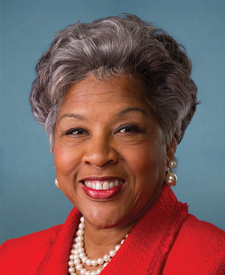
Sponsors


Legislative Progress
In CommitteeMrs. Kim (for herself and Mrs. Beatty) introduced the following …
Referred to the House Committee on Financial Services.
Introduced in House
Stakeholder Effects
cui bono?How this legislation distributes effects. Mention counts reflect frequency, not effect magnitude.
Bill Structure & Actor Mappings
Who is "The Secretary" in each section?
We use a combination of our own taxonomy and classification in addition to large language models to assess meaning and potential beneficiaries. High confidence means strong textual evidence. Always verify with the original bill text.
Learn more about our methodology