RAISE Act of 2025
Summary
What This Bill Does
The RAISE Act creates a new refundable teacher tax credit and increases federal support for teacher compensation. Eligible educators receive a $1,000 credit, plus an additional amount for qualifying schools based on how much the school's student poverty ratio exceeds 39 percent. The added credit can reach $14,000, or $9,000 for early childhood educators without bachelor's degrees, scaled by the poverty-ratio formula. The bill also raises the above-the-line educator expense deduction from $250 to $500, updates inflation indexing, and expands the deduction to early childhood educators working at least 1,020 hours. Separately, it converts ESEA Title II-A authorization language into mandatory funding: $5.2 billion for fiscal year 2026 and inflation-adjusted amounts thereafter, with a teacher salary incentive reservation tied to local educational agencies that maintained or increased salary schedules for all teachers.
Who Benefits and How
Public school teachers benefit from a refundable tax credit and a larger deduction for classroom expenses. Early childhood educators benefit because they are added to the educator expense deduction and can qualify for the teacher tax credit. Teachers in high-poverty schools benefit most because the additional credit scales with the student poverty ratio. Local educational agencies benefit from mandatory Title II-A funding if they maintain or raise teacher salary schedules. Students in high-poverty schools benefit if the salary incentives improve teacher recruitment and retention.
Who Bears the Burden and How
The Internal Revenue Service must administer a new refundable credit, poverty-ratio formula, and expanded deduction rules. The Department of Education must administer mandatory funding and teacher salary incentive reservations. Local educational agencies must maintain or increase salary schedules to qualify for salary incentive support. Federal taxpayers bear the cost of refundable credits, larger deductions, and mandatory education appropriations.
Key Provisions
- Creates a refundable teacher tax credit starting at $1,000.
- Provides additional credit amounts up to $14,000 for educators at qualifying high-poverty schools.
- Raises the educator expense deduction from $250 to $500 and adds early childhood educators.
- Appropriates $5.2 billion for fiscal year 2026 Title II-A funding with inflation increases thereafter.
- Creates teacher salary incentive funding for local educational agencies that maintain or increase salary schedules.
Evidence Chain:
This summary is generated from the full bill text using AI analysis. Expand "Detailed Analysis" below for identified beneficiaries/burden bearers with clause-level evidence links.
At a Glance
What This Bill Does
Creates a refundable teacher tax credit, increases the educator expense deduction, expands that deduction to early childhood educators, and provides mandatory Title II funding tied to local educational agencies maintaining or increasing teacher salary schedules.
Key Policy Areas
Education, Tax, Teacher Workforce
Primary Purpose
Creates a refundable teacher tax credit, increases the educator expense deduction, expands that deduction to early childhood educators, and provides mandatory Title II funding tied to local educational agencies maintaining or increasing teacher salary schedules.
Policy Domains
Resolution provisions
Identified Gains
- Public school teachers
- Early childhood educators
- High-poverty school teachers
- Local educational agencies
- Students
Identified Costs
- Internal Revenue Service
- Department of Education
- Local educational agencies
- Federal taxpayers
Sponsors


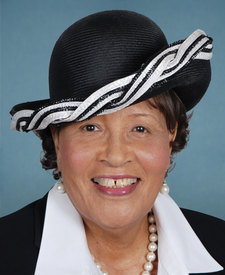
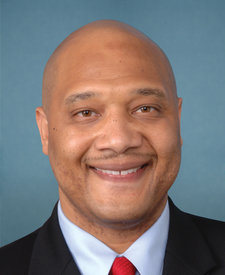

Legislative Progress
In CommitteeMrs. Hayes (for herself, Mr. Larson of Connecticut, Mr. Takano, …
Referred to the Committee on Ways and Means, and in …
Introduced in House
Stakeholder Effects
cui bono?How this legislation distributes effects. Mention counts reflect frequency, not effect magnitude.
Early childhood educators, Local educational agencies, Public school teachers
Department of Education, Internal Revenue Service
Bill Structure & Actor Mappings
Who is "The Secretary" in each section?
We use a combination of our own taxonomy and classification in addition to large language models to assess meaning and potential beneficiaries. High confidence means strong textual evidence. Always verify with the original bill text.
Learn more about our methodology