To require the Secretary of Homeland Security to produce a report on emerging threats and countermeasures related to vehicular terrorism, and for other purposes.
Sponsors

Legislative Progress
Passed HouseReceived; read twice and referred to the Committee on Homeland …
Passed House (inferred from eh version)
Additional sponsor: Mr. Carter of Louisiana
Reported with an amendment, committed to the Committee of the …
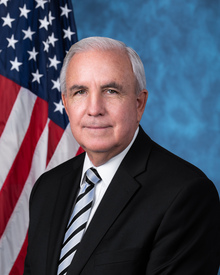
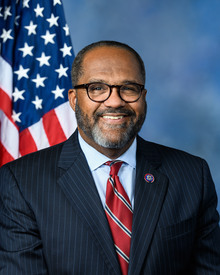
Mr. Gimenez (for himself and Mr. Green of Tennessee) introduced …
On Motion to Suspend the Rules and Pass, as Amended
Department of Homeland Security Vehicular Terrorism Prevention and Mitigation Act
Summary
What This Bill Does
This bill requires the Department of Homeland Security (DHS) to produce a comprehensive report on preventing, deterring, and responding to vehicular terrorism attacks. The legislation was introduced in response to the January 1, 2025, attack on Bourbon Street in New Orleans, where an attacker drove a vehicle into a crowd, killing 14 people and injuring at least 35 others.
Who Benefits and How
U.S. citizens and communities benefit from improved coordination between federal agencies, state and local governments, and private industry to prevent vehicle-ramming attacks at public gatherings, critical infrastructure, and crowded spaces.
First responders and law enforcement benefit from new training programs, joint exercises, and access to threat intelligence that will help them recognize and respond to vehicular terrorism threats more effectively.
Security technology companies may see new business opportunities as the bill recommends research and deployment of vehicle immobilization systems, geofencing technology, surveillance systems, and AI-powered threat detection software.
Who Bears the Burden and How
The Department of Homeland Security, TSA, and CISA must produce the required report within 180 days and provide congressional briefings. This creates administrative and research burdens on these agencies.
Vehicle rental companies, ride-sharing platforms (like Uber and Lyft), autonomous vehicle manufacturers, and automotive companies face increased scrutiny and will be expected to collaborate with DHS on best practices to prevent vehicle misuse, potentially leading to new industry protocols and compliance requirements.
Key Provisions
- Requires DHS to submit a classified report to Congress within 180 days assessing current and emerging vehicular terrorism threats, including risks from autonomous vehicles and ride-sharing platforms
- Mandates identification of high-risk locations vulnerable to vehicle attacks, including airports, seaports, power plants, stadiums, holiday markets, places of worship, and public demonstrations
- Requires DHS to develop recommendations for deploying protective infrastructure like bollards and barriers at vulnerable locations
- Calls for research into vehicle immobilization systems, remote disablement technologies, and AI-powered predictive analytics to detect suspicious vehicle behavior
- Requires DHS to engage with privacy and civil liberties stakeholders to ensure countermeasures respect individual rights
- Mandates public awareness initiatives to help citizens recognize and report suspicious vehicle-related behavior
Evidence Chain:
This summary is derived from the structured analysis below. See "Detailed Analysis" for per-title beneficiaries/burden bearers with clause-level evidence links.
Primary Purpose
This bill aims to enhance national security by addressing the threat of vehicular terrorism, specifically focusing on emerging technologies and high-risk locations. It requires the Department of Homeland Security (DHS) to produce a comprehensive report detailing prevention, deterrence, and response strategies.
Policy Domains
Bill Structure & Actor Mappings
Who is "The Secretary" in each section?
- "the_secretary"
- → Secretary of Homeland Security
- "the_administrator"
- → Administrator of the Transportation Security Administration
Key Definitions
Terms defined in this bill
Mandates a report from DHS, TSA, and CISA to Congress detailing strategies for preventing, deterring, and responding to vehicular terrorism. Includes an assessment of current and future threats, analysis of methods and motivations, identification of high-risk locations, and recommendations for technology deployment.
Congressional findings highlighting the devastating impact of vehicular terrorism, including the New Orleans attack in 2025. It emphasizes the evolving nature of these threats and the need for coordinated efforts.
We use a combination of our own taxonomy and classification in addition to large language models to assess meaning and potential beneficiaries. High confidence means strong textual evidence. Always verify with the original bill text.
Learn more about our methodology