HEIR Act of 2025
Summary
What This Bill Does
The HEIR Act changes documentation rules for Community Development Block Grant Disaster Recovery and Mitigation assistance after presidentially declared disasters. HUD must amend part 570 regulations so when homeowners must prove property ownership, heir property owners and other owners lacking traditionally accepted ownership documents receive resources and options for proving ownership. Acceptable documentation must include a signed affidavit of ownership form and letters from local public or private schools, federal or state benefit providers, social service organizations, community assistance programs, or nonprofit organizations. The bill targets a common disaster-recovery barrier: families living on inherited or informally documented property can be shut out of rebuilding or mitigation aid because they lack a deed or standard title paperwork.
Who Benefits and How
Heir property owners benefit because HUD-funded disaster programs must accept alternative proof of ownership. Low-income homeowners benefit when affidavits and community letters can substitute for traditional title documents. Disaster recovery nonprofits benefit from clearer roles helping residents document ownership for CDBG-DR or CDBG-MIT assistance. Gulf Coast and rural communities benefit if informal property ownership no longer blocks recovery and mitigation funds.
Who Bears the Burden and How
HUD must amend CDBG-DR and CDBG-MIT regulations and develop ownership-documentation resources. State disaster recovery agencies must accept and verify alternative proof from schools, benefit providers, and nonprofits. Local administrators must guard against fraud while making ownership proof more flexible. Traditional title reviewers must adapt to affidavit and community-letter documentation in disaster programs.
Key Provisions
- Requires HUD to amend CDBG-DR and CDBG-MIT ownership documentation rules.
- Provides heir property owners and other nontraditional owners with proof options and resources.
- Authorizes signed affidavits of ownership as acceptable documentation.
- Allows letters from schools, benefit providers, social service organizations, community programs, and nonprofits.
Evidence Chain:
This summary is generated from the full bill text using AI analysis. Expand "Detailed Analysis" below for identified beneficiaries/burden bearers with clause-level evidence links.
At a Glance
What This Bill Does
Requires HUD to amend CDBG-Disaster Recovery and CDBG-Mitigation rules so heir property owners and other owners without traditional documentation receive resources and alternative proof options for disaster assistance.
Key Policy Areas
Housing, Disaster Recovery, Property Rights
Primary Purpose
Requires HUD to amend CDBG-Disaster Recovery and CDBG-Mitigation rules so heir property owners and other owners without traditional documentation receive resources and alternative proof options for disaster assistance.
Policy Domains
Resolution provisions
Identified Gains
- Heir property owners
- Low-income homeowners
- Disaster recovery nonprofits
- Rural communities
Identified Costs
- HUD
- State recovery agencies
- Local administrators
- Title reviewers
Sponsors

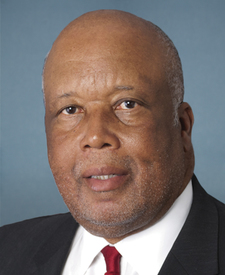
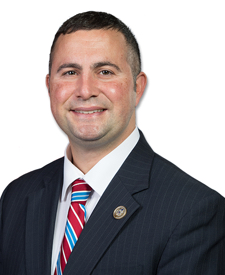
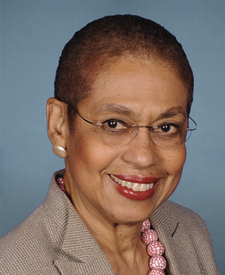
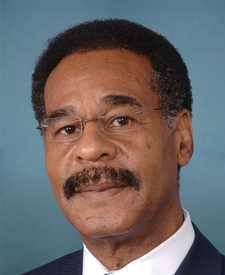
Legislative Progress
In CommitteeMrs. Fletcher (for herself, Mr. Cleaver, Ms. Williams of Georgia, …
Referred to the House Committee on Financial Services.
Introduced in House
Stakeholder Effects
cui bono?How this legislation distributes effects. Mention counts reflect frequency, not effect magnitude.
Heir property owners, Low-income homeowners
Local administrators, State recovery agencies
Bill Structure & Actor Mappings
Who is "The Secretary" in each section?
We use a combination of our own taxonomy and classification in addition to large language models to assess meaning and potential beneficiaries. High confidence means strong textual evidence. Always verify with the original bill text.
Learn more about our methodology