To require the Secretary of the Treasury to provide for greater transparency and protections with regard to Bank Secrecy Act reports, and for other purposes.
Summary
What This Bill Does
The Financial Privacy Act of 2025 responds to the scale and sensitivity of Bank Secrecy Act reporting collected by Treasury through FinCEN. Its findings state that since 2001 FinCEN has collected more than 322 million Currency Transaction Reports, more than 36 million Suspicious Activity Reports, nearly 5 million Form 8300 reports, and expects beneficial ownership information from 32 million companies in the first year plus 5 million additional companies each year. The bill adds a new title 31 reporting and protocol-review requirement. Within 180 days after enactment and annually thereafter, Treasury must report to the House Financial Services Committee and Senate Banking Committee on the number of reports by type filed since January 1, 2022; total reports retained by FinCEN; written protocols or guidance for national security, law enforcement, or intelligence agency access to, retention of, and dissemination of FinCEN-held report information; updates to those protocols; the number of agency queries during the reporting period; and denials or revocations of access with reasons. Treasury, in consultation with the Director of National Intelligence and Attorney General, must annually review and revise protocols to better tailor collection, retention, and dissemination to authorized objectives, enforce unauthorized-disclosure prohibitions, and fully protect U.S. persons' legal rights, civil liberties, and privacy. Committee chairs or ranking members may request copies of protocols or guidance, and Treasury must provide revised protocols within 30 days after revision.
Who Benefits and How
U.S. persons whose financial information appears in BSA reports benefit from annual review aimed at protecting legal rights, civil liberties, and privacy. Companies filing beneficial ownership information benefit from congressional oversight of sensitive BOI retention and access protocols. Congress benefits from detailed reporting on FinCEN report volumes, retained reports, agency queries, access denials, and protocol updates. Privacy and civil-liberties advocates benefit from statutory pressure to tailor BSA data collection and dissemination. National security, law enforcement, and intelligence agencies benefit from clearer written protocols governing access to FinCEN-held reports. FinCEN benefits from a formal framework for documenting access and confidentiality controls.
Who Bears the Burden and How
The Treasury Secretary and FinCEN must produce reports within 180 days and annually thereafter, track retained reports and agency queries, describe protocols, and provide copies to committee leaders on request. National security, law enforcement, and intelligence agencies must operate under protocols that can be revised to narrow collection, retention, and dissemination. The Director of National Intelligence and Attorney General must consult annually with Treasury on protocol reviews. Agencies or employees may face denials or revocations of access that must be reported with reasons. FinCEN compliance and privacy staff must enforce unauthorized-disclosure prohibitions and document updates within 30 days after revisions.
Key Provisions
- Requires Treasury reports within 180 days and annually thereafter on BSA report volumes and retained FinCEN reports.
- Requires descriptions of protocols for national security, law enforcement, and intelligence agency access to FinCEN-held information.
- Requires reporting on agency query counts, access denials, access revocations, and protocol updates.
- Requires annual protocol review with the Director of National Intelligence and Attorney General.
- Directs protocol revisions to tailor data use to authorized objectives and protect U.S. persons' rights and privacy.
- Allows House Financial Services and Senate Banking leaders to request protocol copies.
- Requires Treasury to send revised protocols to committees within 30 days after revision.
Evidence Chain:
This summary is generated from the full bill text using AI analysis. Expand "Detailed Analysis" below for identified beneficiaries/burden bearers with clause-level evidence links.
At a Glance
What This Bill Does
Requires Treasury and FinCEN transparency over Bank Secrecy Act reporting by mandating reports within 180 days and annually thereafter on report volumes, retained reports, agency access protocols, query counts, access denials and revocations, and protocol updates; requires annual review with the Director of National Intelligence and Attorney General to tailor collection, retention, and dissemination to authorized objectives, prevent unauthorized disclosure, and protect U.S. persons' legal rights, civil liberties, and privacy.
Key Policy Areas
Financial Privacy, Treasury, Civil Liberties, Oversight
Primary Purpose
Requires Treasury and FinCEN transparency over Bank Secrecy Act reporting by mandating reports within 180 days and annually thereafter on report volumes, retained reports, agency access protocols, query counts, access denials and revocations, and protocol updates; requires annual review with the Director of National Intelligence and Attorney General to tailor collection, retention, and dissemination to authorized objectives, prevent unauthorized disclosure, and protect U.S. persons' legal rights, civil liberties, and privacy.
Policy Domains
House resolution provisions
Identified Gains
- U.S. persons in BSA reports
- Companies filing beneficial ownership information
- Congressional oversight committees
- Privacy advocates
- Civil-liberties advocates
- Financial Crimes Enforcement Network
Identified Costs
- Secretary of the Treasury
- Financial Crimes Enforcement Network
- National security agencies
- Law enforcement agencies
- Intelligence agencies
- Director of National Intelligence
- Attorney General
Sponsors

Legislative Progress
ReportedReported with an amendment, committed to the Committee of the …
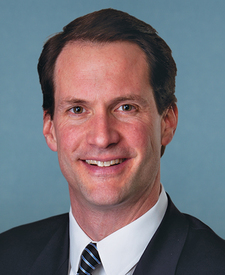
Mr. Davidson (for himself and Mr. Himes) introduced the following …
Stakeholder Effects
cui bono?How this legislation distributes effects. Mention counts reflect frequency, not effect magnitude.
Congressional oversight committees, National security agencies
Positive-direction: Congressional oversight committees
Negative-direction: National security agencies
Department of the Treasury, Financial Crimes Enforcement Network
Companies filing beneficial ownership information
Bill Structure & Actor Mappings
Who is "The Secretary" in each section?
- "dni"
- → Director of National Intelligence
- "fincen"
- → Financial Crimes Enforcement Network
- "treasury"
- → Department of the Treasury
- "attorney_general"
- → Attorney General
We use a combination of our own taxonomy and classification in addition to large language models to assess meaning and potential beneficiaries. High confidence means strong textual evidence. Always verify with the original bill text.
Learn more about our methodology