Dismantling Investments in Violation of Ethical Standards through Trusts Act
Summary
What This Bill Does
The Dismantling Investments in Violation of Ethical Standards through Trusts Act creates a new title 5 ethics subchapter for senior federal employees. Covered financial instruments include securities, security futures, commodities, and comparable synthetic interests such as derivatives, options, or warrants. Diversified mutual funds, diversified exchange-traded funds, U.S. Treasury obligations, and a spouse or dependent child's primary-occupation compensation are excluded. A senior federal employee, spouse, or dependent child may not hold, purchase, or sell covered instruments during the employee's service unless the instrument is sold within 180 days, held in a qualified blind trust, or exempt under conflict-of-interest regulations. Employees must annually certify compliance to the supervising ethics office, certifications must be published online, ethics offices may issue rules, extensions, guidance, and civil fines of the greater of $1,000 or 10 percent of the greatest value of the instrument, and GAO must audit compliance within two years.
Who Benefits and How
Ethics watchdog organizations benefit because senior federal employees face a bright-line ban on individual securities, commodities, and derivative holdings. Federal taxpayers benefit if the rule reduces conflicts of interest and public distrust in senior officials' financial decisions. Supervising ethics office staff benefit from explicit rulemaking, extension, guidance, certification-publication, and fine authority. The Government Accountability Office benefits from a defined audit mandate over compliance with the new subchapter.
Who Bears the Burden and How
Senior federal employees must divest covered instruments, use qualified blind trusts, or secure exemptions within 180 days. Families of senior federal employees face limits on covered holdings unless an exclusion, trust, or exemption applies. Dependent family members of senior federal employees face the same covered-instrument restrictions. Ethics office staff must process certifications, publish them online, enforce violations, and assess civil fines. Financial compliance attorneys for covered families must restructure portfolios around diversified funds, Treasury securities, and blind trusts.
Key Provisions
- Prohibits senior federal employees and covered family members from holding, buying, or selling covered financial instruments.
- Exempts diversified mutual funds, diversified exchange-traded funds, Treasury obligations, and primary-occupation compensation.
- Requires annual public compliance certifications to supervising ethics offices.
- Authorizes fines equal to the greater of $1,000 or 10 percent of the covered instrument's greatest value.
- Requires GAO to audit compliance within two years after enactment.
Evidence Chain:
This summary is generated from the full bill text using AI analysis. Expand "Detailed Analysis" below for identified beneficiaries/burden bearers with clause-level evidence links.
At a Glance
What This Bill Does
Bars senior federal employees, spouses, and dependent children from holding, purchasing, or selling individual securities, commodities, derivatives, or similar financial instruments unless divested, placed in qualified blind trusts, or exempted, with public certifications, fines, and GAO audit.
Key Policy Areas
Government Ethics, Federal Workforce, Financial Regulation
Primary Purpose
Bars senior federal employees, spouses, and dependent children from holding, purchasing, or selling individual securities, commodities, derivatives, or similar financial instruments unless divested, placed in qualified blind trusts, or exempted, with public certifications, fines, and GAO audit.
Policy Domains
Resolution provisions
Identified Gains
- Ethics watchdog organizations
- Federal taxpayers
- Supervising ethics office staff
- Government Accountability Office
Identified Costs
- Senior federal employees
- Families of senior officials
- Dependent family members
- Ethics office staff
- Financial compliance attorneys
Sponsors
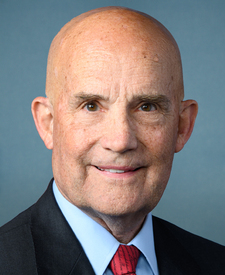
Legislative Progress
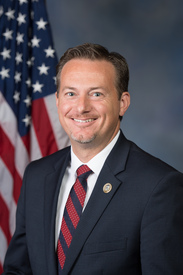
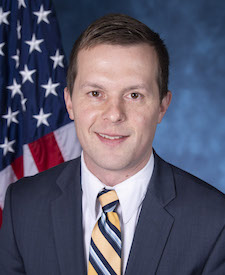
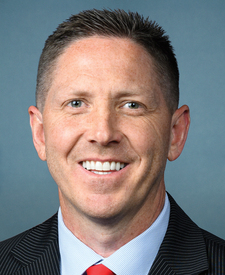
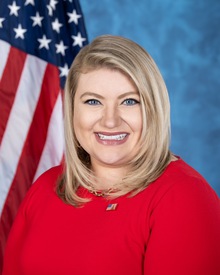
In CommitteeMr. Cloud (for himself, Mr. Golden of Maine, Mr. Self, …
Referred to the Committee on Oversight and Government Reform, and …
Introduced in House
Stakeholder Effects
cui bono?How this legislation distributes effects. Mention counts reflect frequency, not effect magnitude.
Ethics office staff, Government Accountability Office
Bill Structure & Actor Mappings
Who is "The Secretary" in each section?
We use a combination of our own taxonomy and classification in addition to large language models to assess meaning and potential beneficiaries. High confidence means strong textual evidence. Always verify with the original bill text.
Learn more about our methodology