Disaster Displacement Assistance Improvement Act of 2025
Summary
What This Bill Does
The Disaster Displacement Assistance Improvement Act changes how FEMA treats insurance when deciding eligibility for displacement assistance under section 408 of the Stafford Act. The President may not consider insurance to be a duplication of benefits for displacement assistance. The bill defines displacement assistance as help to stay in a hotel or motel, stay with family and friends, or use other available housing options. The legal point is narrow but important after disasters: survivors with insurance would not be blocked from temporary displacement help merely because they have insurance coverage that might relate to other losses or future recovery.
Who Benefits and How
Disaster survivors with insurance benefit because FEMA could not deny displacement assistance solely by treating insurance as duplicate aid. Families displaced from homes benefit from easier access to hotel, motel, family-stay, or other temporary housing support. State emergency managers benefit from a clearer federal rule when advising insured disaster survivors about temporary housing aid. Disaster caseworkers benefit because the displacement-assistance eligibility test is less tangled with insurance-duplication calculations.
Who Bears the Burden and How
FEMA must update Stafford Act displacement-assistance guidance and eligibility screening. Federal taxpayers may bear higher temporary housing costs if more insured survivors qualify for aid. Insurance adjusters may need to coordinate with FEMA without triggering displacement-assistance denials. Program integrity staff must still prevent true duplicate payments while applying the insurance carveout.
Key Provisions
- Prohibits treating insurance as a duplication of benefits for displacement-assistance eligibility.
- Defines displacement assistance to include hotels, motels, family and friend stays, and other housing options.
- Amends Stafford Act section 408 individual assistance rules.
- Requires FEMA eligibility decisions to separate temporary displacement aid from insurance duplication analysis.
Evidence Chain:
This summary is generated from the full bill text using AI analysis. Expand "Detailed Analysis" below for identified beneficiaries/burden bearers with clause-level evidence links.
At a Glance
What This Bill Does
Clarifies that insurance may not be treated as a duplication of benefits when FEMA determines eligibility for Stafford Act displacement assistance such as hotels, staying with family or friends, or other housing options.
Key Policy Areas
Disaster Recovery, Housing, FEMA
Primary Purpose
Clarifies that insurance may not be treated as a duplication of benefits when FEMA determines eligibility for Stafford Act displacement assistance such as hotels, staying with family or friends, or other housing options.
Policy Domains
Resolution provisions
Identified Gains
- Insured disaster survivors
- Displaced families
- State emergency managers
- Disaster caseworkers
Identified Costs
- FEMA
- Federal taxpayers
- Insurance adjusters
- Program integrity staff
Sponsors
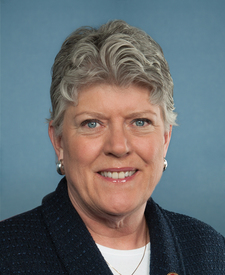
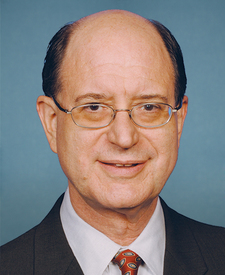


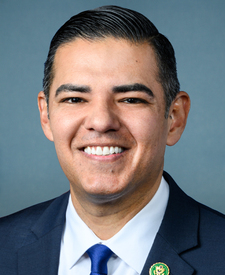
Legislative Progress
In CommitteeMs. Brownley (for herself, Mr. Garcia of California, Mr. Sherman, …
Referred to the Subcommittee on Economic Development, Public Buildings, and …
Referred to the House Committee on Transportation and Infrastructure.
Introduced in House
Stakeholder Effects
cui bono?How this legislation distributes effects. Mention counts reflect frequency, not effect magnitude.
Bill Structure & Actor Mappings
Who is "The Secretary" in each section?
We use a combination of our own taxonomy and classification in addition to large language models to assess meaning and potential beneficiaries. High confidence means strong textual evidence. Always verify with the original bill text.
Learn more about our methodology