American Dream and Promise Act of 2025
Analysis under review: This bill has generated analysis that may be too generic or incomplete. Clause-level evidence remains available below.
Summary
What This Bill Does
The American Dream and Promise Act of 2025 creates two pathways to permanent residency. Title I (Dream Act) allows individuals who entered the US as children before age 19 and have been continuously present since January 1, 2021, to obtain conditional permanent resident status if they are pursuing education or have completed high school. After meeting additional requirements (degree completion, military service, or 3 years of work), the conditional status can be converted to full permanent residency. Title II (American Promise Act) provides a direct path to permanent residency for TPS and DED recipients who were eligible as of January 1, 2017 or January 20, 2021.
Who Benefits and How
Dreamers (estimated millions of individuals who entered as minors) gain legal status and eventual citizenship eligibility, work authorization, and protection from deportation. TPS/DED recipients from designated countries gain permanent residency. States regain authority to grant in-state tuition to undocumented students (Section 505 repeal). Immigration attorneys and nonprofit organizations receive grant funding to assist applicants. Employers gain access to legally authorized workers from these populations.
Who Bears the Burden and How
DHS must establish application procedures, conduct background checks, and process applications within strict timelines. Applicants must pay fees up to $495 (Dream Act) or $1,140 (Promise Act), submit biometric data, and meet educational/employment requirements. The federal government must fund grant programs for application assistance and appointed counsel.
Key Provisions
- Conditional permanent residence for Dreamers with 10-year validity, convertible to full status
- Direct permanent residence path for TPS/DED recipients from countries designated before 2017/2021
- Confidentiality protections preventing use of application information for immigration enforcement
- Repeal of Section 505 barrier to state-determined in-state tuition eligibility
- Judicial review available in federal district courts for denials
Evidence Chain:
This summary is generated from the full bill text using AI analysis. Expand "Detailed Analysis" below for identified beneficiaries/burden bearers.
At a Glance
What This Bill Does
Provides pathways to permanent legal status for certain long-term residents who entered the US as children (Dreamers) and individuals with Temporary Protected Status or Deferred Enforced Departure (TPS/DED recipients).
Key Policy Areas
Immigration, Education, Employment, National Security
Primary Purpose
Provides pathways to permanent legal status for certain long-term residents who entered the US as children (Dreamers) and individuals with Temporary Protected Status or Deferred Enforced Departure (TPS/DED recipients).
Policy Domains
Title I - Dream Act of 2025
Identified Gains
Contextual inference, no direct clause citation- Childhood arrivals (Dreamers)
- DACA recipients
- Educational institutions
- Employers
Contextual inference, no direct clause citation
Identified Costs
Contextual inference, no direct clause citation- DHS (processing applications)
- Applicants (fees and documentation)
- Attorney General (judicial review)
Contextual inference, no direct clause citation
Title II - American Promise Act of 2025
Identified Gains
Contextual inference, no direct clause citation- TPS recipients
- DED recipients
- Family members of beneficiaries
Contextual inference, no direct clause citation
Identified Costs
Contextual inference, no direct clause citation- DHS (application processing)
- Applicants (fees up to $1,140)
Contextual inference, no direct clause citation
Title III - General Provisions
Identified Gains
Contextual inference, no direct clause citation- Applicants under both titles
- Immigration assistance nonprofits
- Immigration attorneys
Contextual inference, no direct clause citation
Identified Costs
Contextual inference, no direct clause citation- DHS (rulemaking, grants, reporting)
- ICE/CBP (restricted from using application data)
Contextual inference, no direct clause citation
Sponsors


Legislative Progress
In CommitteeSponsor introductory remarks on measure. (CR H884)
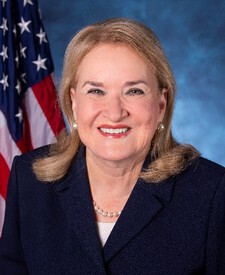
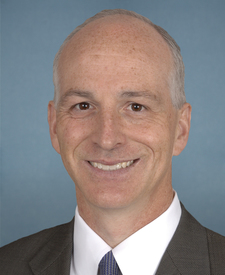
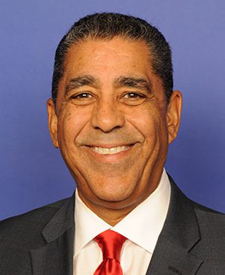
Ms. Garcia of Texas (for herself, Ms. Velázquez, Ms. Clarke …
Referred to the Committee on the Judiciary, and in addition …
Introduced in House
Stakeholder Effects
cui bono?How this legislation distributes effects. Mention counts reflect frequency, not effect magnitude.
All eligible applicants under the Act, Applicants seeking judicial review, Applicants under the Act
Applicants under the Act faces effects in multiple directions
Positive-direction: All eligible applicants under the Act, Applicants seeking judicial review, Applicants with denied or revoked status, Applicants with expunged or rehabilitated convictions, Applicants with gaps in presence due to extenuating circumstances, Applicants with pending removal orders, Childhood arrivals (Dreamers) meeting eligibility criteria, Conditional permanent residents seeking full status, Conditional permanent residents under Dream Act, DACA recipients, DED recipients, Eligible applicants (immediate application opportunity), Eligible applicants seeking assistance, Low-income applicants (below 150% FPL), Previously deported individuals (post-2017), TPS recipients from pre-2017 designated countries, Undocumented students seeking higher education
Negative-direction: Fee-paying applicants ($25 surcharge)
Congressional oversight, DHS (administrative review process), DHS (annual reporting)
Positive-direction: Congressional oversight, US military/Uniformed Services
Negative-direction: DHS (administrative review process), DHS (annual reporting), DHS (background check processing), DHS (reporting to Congress), DHS (revocation procedures), DHS (rulemaking), DHS employees handling application data, DHS/State Department (establishing procedure for outside applicants), DHS/USCIS (application processing), DHS/USCIS (document review), FBI and law enforcement agencies, Federal district courts, ICE (removal enforcement), ICE and CBP, USCIS (grant administration)
Employers of legalized workers, Employers seeking workers with authorization
Higher education institutions, Public colleges and universities
Bill Structure & Actor Mappings
Who is "The Secretary" in each section?
- "the_secretary"
- → Secretary of Homeland Security
- "the_attorney_general"
- → Attorney General of the United States
- "the_secretary"
- → Secretary of Homeland Security
- "the_attorney_general"
- → Attorney General of the United States
- "the_secretary"
- → Secretary of Homeland Security
Key Definitions
Terms defined in this bill
Deferred action granted to an alien pursuant to the Deferred Action for Childhood Arrivals policy announced by the Secretary of Homeland Security on June 15, 2012
As defined in section 102 of the Higher Education Act of 1965, excluding institutions outside the United States
As defined in section 3 of the Workforce Innovation and Opportunity Act
An offense under Federal or State law punishable by a maximum term of imprisonment of more than 1 year
An offense under Federal or State law punishable by a term of imprisonment of more than 5 days but not more than 1 year
For purposes of adjustment of status, does not include judgments that have been expunged, set aside, or resulted in rehabilitative disposition
We use a combination of our own taxonomy and classification in addition to large language models to assess meaning and potential beneficiaries. High confidence means strong textual evidence. Always verify with the original bill text.
Learn more about our methodology