Stop Sexual Harassment in K–12 Act
Summary
What This Bill Does
The Stop Sexual Harassment in K-12 Act creates a school-level Title IX infrastructure bill for elementary and secondary education. Each federally assisted local educational agency must increase full-time Title IX Coordinator staffing by at least one coordinator per 75,000 students in grade 7 or above and one per 150,000 students in grade 6 or below. Coordinators must be known to students, parents, guardians, and staff, and cannot hold school leadership roles that create conflicts of interest. The Education Department can award grants for training teachers and school staff to prevent, recognize, and respond to signs of sex-based harassment and assault. The Secretary of Education, in consultation with DOJ and CDC, must develop anonymous student and staff surveys on sex-based harassment, including online and off-campus conduct. The bill also preserves other federal and state remedies and defines sex discrimination to include sex stereotypes, sex characteristics, pregnancy, sexual orientation, and gender identity.
Who Benefits and How
K-12 students benefit because schools must provide more visible, conflict-free Title IX coordinators and better harassment-response capacity. Parents and guardians benefit from clearer information about who handles sex-based harassment complaints and when coordinators are available. Local educational agencies benefit from grant funding for teacher and staff training on prevention, recognition, and response. Civil-rights complainants benefit because the bill preserves Title VI, Title VII, Title IX, ADA, Rehabilitation Act, and section 1983 remedies.
Who Bears the Burden and How
Local educational agencies must hire or designate additional full-time Title IX Coordinators according to enrollment thresholds. School districts must train teachers and staff, publicize coordinator availability, and avoid coordinator conflicts of interest. The Department of Education must run the grant program and develop empirically validated anonymous harassment surveys. School administrators must administer surveys and respond to data on student and staff harassment, including online conduct.
Key Provisions
- Requires additional full-time Title IX Coordinators based on student enrollment thresholds.
- Prohibits coordinator conflicts of interest with school or district leadership roles.
- Authorizes Education Department grants for training on sex-based harassment and assault.
- Directs anonymous student and staff surveys developed with DOJ and CDC consultation.
- Preserves existing federal and state discrimination, retaliation, disability, and civil-rights remedies.
Evidence Chain:
This summary is generated from the full bill text using AI analysis. Expand "Detailed Analysis" below for identified beneficiaries/burden bearers with clause-level evidence links.
At a Glance
What This Bill Does
Requires federally assisted local educational agencies to add Title IX Coordinators, funds staff training on sex-based harassment and assault, creates anonymous harassment surveys, and preserves existing civil-rights remedies.
Key Policy Areas
Education, Civil Rights, Student Safety
Primary Purpose
Requires federally assisted local educational agencies to add Title IX Coordinators, funds staff training on sex-based harassment and assault, creates anonymous harassment surveys, and preserves existing civil-rights remedies.
Policy Domains
Resolution provisions
Identified Gains
- K-12 students
- Parents and guardians
- Local educational agencies
- Civil-rights complainants
Identified Costs
- School districts
- Title IX Coordinators
- Department of Education
- School administrators
Sponsors
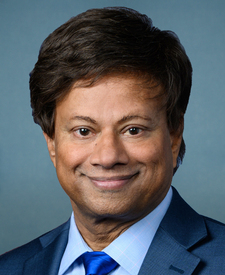
Legislative Progress
In CommitteeMr. Casten (for himself, Ms. Lois Frankel of Florida, Mrs. …
Referred to the House Committee on Education and Workforce.
Introduced in House
Stakeholder Effects
cui bono?How this legislation distributes effects. Mention counts reflect frequency, not effect magnitude.
K-12 students, Local educational agencies, School districts
Positive-direction: K-12 students, Local educational agencies
Negative-direction: School districts, Title IX Coordinators
Bill Structure & Actor Mappings
Who is "The Secretary" in each section?
We use a combination of our own taxonomy and classification in addition to large language models to assess meaning and potential beneficiaries. High confidence means strong textual evidence. Always verify with the original bill text.
Learn more about our methodology