PIFAA
Summary
What This Bill Does
PIFAA amends title 49 air-commerce rules for Guam and the Northern Mariana Islands. For foreign air carriers registered in Japan, the Philippines, or the Republic of Korea that hold the required U.S. permit, passengers or cargo added to or removed from an authorized Pacific aircraft in Guam or the Northern Mariana Islands would not be treated as breaking the international journey between a U.S. place and a foreign place. The bill is a targeted territorial aviation fix: it gives Pacific foreign carriers more flexibility to serve Guam International Airport Authority facilities and Commonwealth Ports Authority facilities as part of international routes without triggering domestic-cabotage treatment.
Who Benefits and How
Guam International Airport Authority facilities benefit if more international carriers can move passengers or cargo through Guam without cabotage barriers. Commonwealth Ports Authority facilities benefit from more flexible cargo and passenger routing through the Northern Mariana Islands. Japanese foreign air carriers benefit because qualifying international routes can add or remove passengers or cargo in the territories. Philippine foreign air carriers benefit from the same territorial stop flexibility when they hold the required U.S. permit.
Who Bears the Burden and How
U.S. air carriers may face added competition on Pacific routes that touch Guam or the Northern Mariana Islands. The Department of Transportation must administer the permit and cabotage interpretation for authorized Pacific aircraft. Guam airport inspectors must distinguish qualifying international journeys from prohibited domestic carriage. CNMI airport inspectors must coordinate any additional passenger or cargo operations if service expands.
Key Provisions
- Amends air-commerce rules for Guam and the Northern Mariana Islands.
- Authorizes qualifying foreign carriers from Japan, the Philippines, or Korea to add or remove passengers or cargo.
- Clarifies that those territorial stops do not break the international journey for cabotage purposes.
- Limits the flexibility to foreign carriers holding a permit under section 41302.
Evidence Chain:
This summary is generated from the full bill text using AI analysis. Expand "Detailed Analysis" below for identified beneficiaries/burden bearers with clause-level evidence links.
At a Glance
What This Bill Does
Clarifies that passengers or cargo added or removed in Guam or the Northern Mariana Islands by authorized Japanese, Philippine, or Korean foreign air carriers do not break an international journey under air-cabotage rules.
Key Policy Areas
Aviation, Territories, Transportation
Primary Purpose
Clarifies that passengers or cargo added or removed in Guam or the Northern Mariana Islands by authorized Japanese, Philippine, or Korean foreign air carriers do not break an international journey under air-cabotage rules.
Policy Domains
Resolution provisions
Identified Gains
- Guam International Airport Authority
- Commonwealth Ports Authority
- Japanese foreign air carriers
- Philippine foreign air carriers
Identified Costs
- U.S. air carriers
- Department of Transportation
- Guam airport inspectors
- CNMI airport inspectors
Sponsors
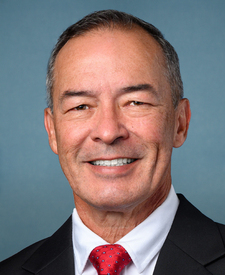

Legislative Progress
In CommitteeMr. Moylan (for himself and Ms. King-Hinds) introduced the following …
Referred to the Subcommittee on Aviation.
Referred to the House Committee on Transportation and Infrastructure.
Introduced in House
Stakeholder Effects
cui bono?How this legislation distributes effects. Mention counts reflect frequency, not effect magnitude.
Commonwealth Ports Authority, Guam International Airport Authority, Japanese foreign air carriers
Positive-direction: Commonwealth Ports Authority, Guam International Airport Authority, Japanese foreign air carriers, Philippine foreign air carriers
Negative-direction: U.S. air carriers
Bill Structure & Actor Mappings
Who is "The Secretary" in each section?
We use a combination of our own taxonomy and classification in addition to large language models to assess meaning and potential beneficiaries. High confidence means strong textual evidence. Always verify with the original bill text.
Learn more about our methodology