To provide for an online repository for certain reporting requirements for recipients of Federal disaster assistance, and for other purposes.
Summary
What This Bill Does
Requires the Office of Management and Budget, Treasury, FEMA, HUD, the Small Business Administration, and other covered agencies to publish quarterly machine-readable information about federal disaster assistance projects and spending on a public subpage of the federal transparency website.
Who Benefits and How
Taxpayers, oversight groups, journalists, and state or local officials could gain a clearer view of where disaster funds are going, what projects they support, and how far those projects have progressed.
Who Bears the Burden and How
Covered agencies must gather and publish quarterly project-level data, coordinate with OMB and Treasury, and maintain machine-readable reporting on federal disaster assistance.
Key Provisions
- Creates a disaster-assistance transparency subpage within the federal spending transparency website.
- Requires quarterly publication of totals, obligations, project descriptions, completion status, award identifiers, and location details.
- Applies to FEMA, HUD, SBA, and other agencies providing covered disaster assistance.
- Allows OMB to use a private or nonprofit partner if needed to develop the subpage.
Evidence Chain:
This summary is generated from the full bill text using AI analysis. Expand "Detailed Analysis" below for identified beneficiaries/burden bearers.
At a Glance
What This Bill Does
Requires the Office of Management and Budget, Treasury, FEMA, HUD, the Small Business Administration, and other covered agencies to publish quarterly machine-readable information about federal disaster assistance projects and spending on a public subpage of the federal transparency website.
Key Policy Areas
Government Transparency, Disaster Relief, Federal Spending
Primary Purpose
Requires the Office of Management and Budget, Treasury, FEMA, HUD, the Small Business Administration, and other covered agencies to publish quarterly machine-readable information about federal disaster assistance projects and spending on a public subpage of the federal transparency website.
Policy Domains
Main Provisions
Identified Gains
Contextual inference, no direct clause citation- Taxpayers, watchdogs, and disaster-affected communities seeking better visibility into federal assistance flows
Contextual inference, no direct clause citation
Identified Costs
Contextual inference, no direct clause citation- OMB, Treasury, and covered disaster-assistance agencies responsible for collecting and publishing the quarterly data
Contextual inference, no direct clause citation
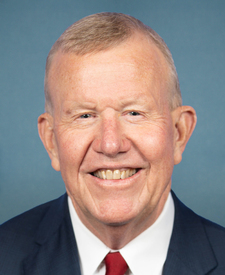
Sponsors
Legislative Progress
Passed HouseReceived; read twice and referred to the Committee on Homeland …
Passed House (inferred from eh version)
Mr. Ezell introduced the following bill; which was referred to …
Stakeholder Effects
cui bono?How this legislation distributes effects. Mention counts reflect frequency, not effect magnitude.
Department of Housing and Urban Development, Federal Emergency Management Agency, Office of Management and Budget
State and local governments receiving disaster assistance
Government accountability and watchdog organizations
Bill Structure & Actor Mappings
Who is "The Secretary" in each section?
We use a combination of our own taxonomy and classification in addition to large language models to assess meaning and potential beneficiaries. High confidence means strong textual evidence. Always verify with the original bill text.
Learn more about our methodology