ALYSSA Act
Summary
What This Bill Does
The ALYSSA Act amends the Elementary and Secondary Education Act to impose a school-safety condition on local educational agencies receiving federal education funds. Each covered local educational agency must ensure that every elementary and secondary school is prepared for a security emergency, including by having at least one panic alarm. The alarm is designed for emergencies such as non-fire evacuation, lockdown, or active-shooter situations and sends a silent signal that can be manually activated to law enforcement. The bill turns panic-alarm installation into a federal funding compliance issue for public school systems.
Who Benefits and How
Students benefit if panic alarms shorten the time between a school security threat and law-enforcement notification. School staff benefit from a direct silent-alert tool during lockdown, evacuation, or active-shooter emergencies. Local law enforcement agencies benefit from faster alerts and clearer emergency signals from schools. Panic alarm vendors benefit because every federally funded school system would need qualifying emergency alert equipment.
Who Bears the Burden and How
Local educational agencies must purchase, install, maintain, and test panic alarms across elementary and secondary schools. School district administrators must document compliance as a condition of receiving federal education funds. School security coordinators must train staff on when and how to activate panic alarms. Local taxpayers may bear costs if federal education funds do not fully cover equipment and maintenance.
Key Provisions
- Requires federally funded local educational agencies to prepare each school for security emergencies.
- Requires at least one panic alarm in every elementary and secondary school.
- Creates a silent manually activated signal requirement for law-enforcement notification.
- Directs coverage for lockdown, evacuation, active-shooter, and similar non-fire security emergencies.
Evidence Chain:
This summary is generated from the full bill text using AI analysis. Expand "Detailed Analysis" below for identified beneficiaries/burden bearers with clause-level evidence links.
At a Glance
What This Bill Does
Conditions elementary and secondary education funding on each local educational agency ensuring every school has at least one panic alarm for security emergencies, including lockdown, evacuation, and active-shooter situations.
Key Policy Areas
Education, School Safety, Public Safety
Primary Purpose
Conditions elementary and secondary education funding on each local educational agency ensuring every school has at least one panic alarm for security emergencies, including lockdown, evacuation, and active-shooter situations.
Policy Domains
Resolution provisions
Identified Gains
- Students
- School staff
- Local law enforcement agencies
- Panic alarm vendors
Identified Costs
- Local educational agencies
- School district administrators
- School security coordinators
- Local taxpayers
Sponsors
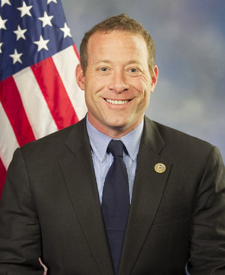


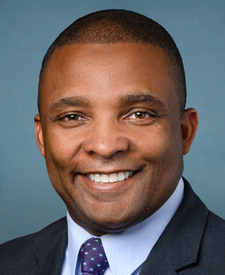

Legislative Progress
In CommitteeMr. Gottheimer (for himself, Mr. Moskowitz, Mr. Davis of North …
Referred to the House Committee on Education and Workforce.
Introduced in House
Stakeholder Effects
cui bono?How this legislation distributes effects. Mention counts reflect frequency, not effect magnitude.
Local educational agencies, School staff, Students
Positive-direction: School staff, Students
Negative-direction: Local educational agencies
Bill Structure & Actor Mappings
Who is "The Secretary" in each section?
We use a combination of our own taxonomy and classification in addition to large language models to assess meaning and potential beneficiaries. High confidence means strong textual evidence. Always verify with the original bill text.
Learn more about our methodology