To amend the Disaster Recovery Reform Act of 2018 to develop a study regarding streamlining and consolidating information collection and preliminary damage assessments, and for other purposes.
Summary
What This Bill Does
The Federal Disaster Assistance Coordination Act rewrites Disaster Recovery Reform Act section 1223. Within two years, the FEMA Administrator must coordinate with the Small Business Administration, Department of Housing and Urban Development, the Disaster Assistance Working Group of the Council of the Inspectors General on Integrity and Efficiency, and other agencies to study and plan how disaster-assistance applications and grantee information collection can be modified, streamlined, expedited, made more flexible, consolidated, and simplified. FEMA must also develop a plan for regular collection and reporting of federal disaster assistance awards and maintain a public website for that information. Separately, FEMA must convene a regular working group with CIGIE, the Secretary of Labor, OMB Director, HHS Secretary, SBA Administrator, Transportation Secretary, Commerce Assistant Secretary for Economic Development, and other agencies to identify duplication in preliminary damage assessments, consider whether one federal agency could make assessments for all agencies, and examine emerging technologies such as unmanned aircraft systems. FEMA must send one comprehensive report to House Transportation and Infrastructure and Senate Homeland Security and Governmental Affairs, publish it in downloadable and machine-readable formats when applicable, and brief Congress on request within 180 days after submission.
Who Benefits and How
Disaster survivors, disaster-assistance applicants, state emergency-management agencies, local governments, tribal governments, territorial governments, nonprofit grantees, small businesses seeking recovery aid, HUD disaster-recovery grantees, SBA disaster-loan applicants, and the public benefit from less duplicative paperwork, fewer repeated damage-assessment requests, clearer award data, and a public disaster-assistance website. If FEMA identifies a common assessment process or useful unmanned-aircraft tools, applicants and grantees could spend less time resubmitting the same information to multiple federal programs.
Who Bears the Burden and How
FEMA, SBA, HUD, the Disaster Assistance Working Group, CIGIE staff, OMB, Department of Labor, HHS, Department of Transportation, Economic Development Administration, federal disaster-assistance program managers, congressional committee staff, and agency data teams must conduct the study, create the plan, convene the working group, reconcile agency-specific assessment rules, build or maintain the reporting website, produce downloadable and machine-readable materials, and brief Congress. Unmanned aircraft systems providers may gain opportunity from the technology review but also face scrutiny over whether their tools meet FEMA modernization requirements.
Key Provisions
- Amends Disaster Recovery Reform Act section 1223 to require a FEMA-led study and plan on streamlined disaster-assistance information collection.
- Requires a plan for regular public reporting of federal disaster-assistance awards through a FEMA website.
- Directs FEMA and CIGIE to convene an interagency working group on duplicative preliminary damage assessments.
- Requires the working group to consider whether one federal agency could make preliminary damage assessments for all agencies.
- Requires analysis of emerging technologies such as unmanned aircraft systems to expedite damage assessments.
- Requires a comprehensive public report, machine-readable formats when applicable, and congressional briefings on request.
Evidence Chain:
This summary is generated from the full bill text using AI analysis. Expand "Detailed Analysis" below for identified beneficiaries/burden bearers with clause-level evidence links.
At a Glance
What This Bill Does
Amends the Disaster Recovery Reform Act study requirement to require FEMA, SBA, HUD, inspectors general, OMB, Labor, HHS, Transportation, EDA, and other agencies to plan streamlined disaster-assistance information collection, regular public reporting of federal disaster awards, coordinated preliminary damage assessments, public machine-readable reporting, and congressional briefings.
Key Policy Areas
Disaster Recovery, Federal Administration, Emergency Management
Primary Purpose
Amends the Disaster Recovery Reform Act study requirement to require FEMA, SBA, HUD, inspectors general, OMB, Labor, HHS, Transportation, EDA, and other agencies to plan streamlined disaster-assistance information collection, regular public reporting of federal disaster awards, coordinated preliminary damage assessments, public machine-readable reporting, and congressional briefings.
Policy Domains
Substantive provisions
Identified Gains
- Disaster-assistance applicants
- Disaster survivors
- State emergency-management agencies
- Local governments
- Tribal governments
- Territorial governments
- Nonprofit grantees
- SBA disaster-loan applicants
Identified Costs
- Federal Emergency Management Agency
- Small Business Administration
- Department of Housing and Urban Development
- Disaster Assistance Working Group
- Office of Management and Budget
- Department of Labor
- Department of Health and Human Services
- Department of Transportation
Sponsors
Legislative Progress
Passed HouseReceived; read twice and referred to the Committee on Homeland …
Passed House (inferred from eh version)
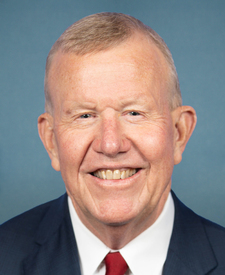
Mr. Ezell introduced the following bill; which was referred to …
Stakeholder Effects
cui bono?How this legislation distributes effects. Mention counts reflect frequency, not effect magnitude.
Department of Health and Human Services, Department of Housing and Urban Development, Department of Labor
Local governments, State emergency-management agencies
Disaster survivors, Disaster-assistance applicants, SBA disaster-loan applicants
Bill Structure & Actor Mappings
Who is "The Secretary" in each section?
- "cigie"
- → Council of the Inspectors General on Integrity and Efficiency.
We use a combination of our own taxonomy and classification in addition to large language models to assess meaning and potential beneficiaries. High confidence means strong textual evidence. Always verify with the original bill text.
Learn more about our methodology