To provide for a reauthorizing schedule for unauthorized Federal programs, and for other purposes.
Analysis under review: This bill has generated analysis that may be too generic or incomplete. Clause-level evidence remains available below.
Summary
What This Bill Does
This bill creates an automatic system to cut funding for federal programs that Congress has not officially reauthorized. It establishes a new 14-member congressional commission to oversee the process and forces Congress to regularly review whether programs should continue.
Who Benefits and How
Taxpayers and fiscal conservatives benefit from increased oversight of federal spending and automatic budget discipline. The bill forces accountability by requiring Congress to actively reauthorize programs rather than letting them continue on autopilot. Programs that are no longer needed will face automatic funding cuts and eventual termination.
Who Bears the Burden and How
Federal agencies running unauthorized programs face 10-15% budget cuts and potential termination if Congress does not reauthorize them. Beneficiaries of unauthorized programs (which can include social services, research, and regulatory programs) may lose funding or have programs eliminated. Congress bears increased workload to regularly review and reauthorize programs.
Key Provisions
- Unauthorized programs face automatic 10% budget cut in year 1, then 15% cuts in years 2-3
- Programs unauthorized for 3 consecutive years are automatically terminated
- Creates 14-member bipartisan Spending and Accountability Commission
- Commission must propose reauthorization schedule for all discretionary programs within 180 days
Evidence Chain:
This summary is generated from the full bill text using AI analysis. Expand "Detailed Analysis" below for identified beneficiaries/burden bearers.
At a Glance
What This Bill Does
Establishes automatic budget reductions and eventual termination for federal programs that Congress fails to reauthorize, creating fiscal discipline mechanisms
Key Policy Areas
Federal Budget, Government Operations, Congressional Procedure
Primary Purpose
Establishes automatic budget reductions and eventual termination for federal programs that Congress fails to reauthorize, creating fiscal discipline mechanisms
Policy Domains
Title I - Budgetary Level Reduction Schedule
Identified Gains
Contextual inference, no direct clause citation- Taxpayers
- Fiscal conservatives
- Government accountability advocates
Contextual inference, no direct clause citation
Identified Costs
Contextual inference, no direct clause citation- Federal agencies with unauthorized programs
- Program beneficiaries
- Congress
Contextual inference, no direct clause citation
Title II - Spending and Accountability Commission
Identified Gains
Contextual inference, no direct clause citation- Congress
- Budget committees
Contextual inference, no direct clause citation
Identified Costs
Contextual inference, no direct clause citation- Federal agencies subject to Commission review
- House and Senate operating budgets
Contextual inference, no direct clause citation
Title III - Reauthorization Schedule
Identified Gains
Contextual inference, no direct clause citation- Taxpayers
- Congressional oversight
Contextual inference, no direct clause citation
Identified Costs
Contextual inference, no direct clause citation- Federal discretionary programs
- Congress
Contextual inference, no direct clause citation
Sponsors



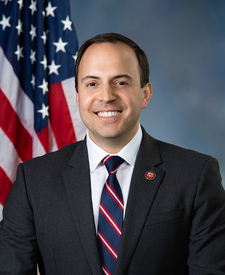
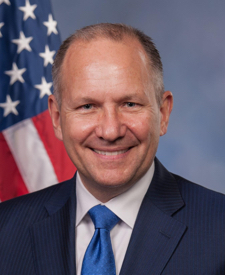
Legislative Progress
IntroducedMrs. Rodgers of Washington (for herself, Mr. McClintock, Mr. Smucker, …
Stakeholder Effects
cui bono?How this legislation distributes effects. Mention counts reflect frequency, not effect magnitude.
All federal discretionary programs, All federal programs receiving direct spending, Commission Director and staff
Spending and Accountability Commission faces effects in multiple directions
Positive-direction: Commission Director and staff, Federal programs receiving timely reauthorization
Negative-direction: All federal discretionary programs, All federal programs receiving direct spending, Congress, Congressional Budget and Appropriations Committees, Federal agencies operating unauthorized programs, Federal agencies subject to Commission requests, Federal agencies subject to Commission review, Federal agencies with long-unauthorized programs, Federal agencies with unauthorized programs, House of Representatives operating budget, Members of Congress on specified committees, Senate operating budget
Beneficiaries of terminated federal programs, Beneficiaries of unauthorized federal programs, Discretionary program beneficiaries
Positive-direction: Discretionary program beneficiaries, Taxpayers
Negative-direction: Beneficiaries of terminated federal programs, Beneficiaries of unauthorized federal programs, Programs funded by direct spending (mandatory programs)
Fiscal conservatives and government accountability advocates
Bill Structure & Actor Mappings
Who is "The Secretary" in each section?
- "the_chair"
- → Chair of the Budget Committee
- "the_commission"
- → Spending and Accountability Commission
- "the_speaker"
- → Speaker of the House of Representatives
- "the_director"
- → Director of the Commission
- "the_commission"
- → Spending and Accountability Commission
- "the_majority_leader"
- → Majority Leader of the Senate
- "the_chair"
- → Chair of the Commission
- "the_commission"
- → Spending and Accountability Commission
Key Definitions
Terms defined in this bill
Has the meaning given in section 250(c)(8) of the Balanced Budget and Emergency Deficit Control Act of 1985
The allocation made under section 302(a) of the Congressional Budget Act to the Committee on Appropriations in a concurrent resolution on the budget for a fiscal year
The Spending and Accountability Commission established under title II
With respect to an unauthorized program, the fiscal year during which authorizations of appropriations will expire
Any program or activity listed in the CBO annual report 'Expired and Expiring Authorizations of Appropriations' for which authorizations will expire during that fiscal year
We use a combination of our own taxonomy and classification in addition to large language models to assess meaning and potential beneficiaries. High confidence means strong textual evidence. Always verify with the original bill text.
Learn more about our methodology