Public Safety Employer-Employee Cooperation Act
Summary
What This Bill Does
The Public Safety Employer-Employee Cooperation Act creates a federal floor for State and local public-safety labor relations. The Federal Labor Relations Authority must determine within 180 days whether each State substantially provides the required rights and responsibilities, considering employer and labor-organization views. Within one year, FLRA must issue procedures for States that do not substantially provide those rights, including unit determinations, representation elections, good-faith bargaining issues, unfair labor practice complaints, arbitrator exceptions, and protection for employees to form, join, assist, or refrain from labor organizations without penalty or reprisal. The bill preserves stronger State laws, right-to-work laws, and specified small-jurisdiction exceptions while authorizing necessary appropriations.
Who Benefits and How
Law enforcement officers benefit from federal backing for representation, bargaining, and unfair-labor-practice protections where State law is weak. Firefighters benefit from collective-bargaining procedures covering wages, hours, and working conditions in uncovered States. Emergency medical services personnel benefit from access to representation elections and good-faith bargaining protections. Public safety labor organizations benefit from FLRA-supervised rights and procedures in States lacking substantial protections.
Who Bears the Burden and How
State and local public safety employers must participate in FLRA determinations and potentially new bargaining procedures. The Federal Labor Relations Authority must review State laws, issue regulations, conduct elections, and resolve labor disputes. Local governments may face more bargaining obligations, hearings, arbitration exceptions, and unfair-labor-practice claims. Public safety managers must adjust labor relations practices while preserving management, right-to-work, and small-jurisdiction exceptions.
Key Provisions
- Requires FLRA to determine whether States substantially provide public-safety labor rights.
- Requires federal fallback collective-bargaining procedures in States that lack substantial protections.
- Protects public safety employees' ability to form, join, assist, or refrain from labor organizations.
- Preserves stronger State laws, right-to-work laws, and specified small-jurisdiction exemptions.
Evidence Chain:
This summary is generated from the full bill text using AI analysis. Expand "Detailed Analysis" below for identified beneficiaries/burden bearers with clause-level evidence links.
At a Glance
What This Bill Does
Requires FLRA review of State public-safety collective-bargaining rights and federal fallback procedures for law enforcement officers, firefighters, and emergency medical services personnel in States lacking substantial protections.
Key Policy Areas
Labor, Public Safety, Collective Bargaining
Primary Purpose
Requires FLRA review of State public-safety collective-bargaining rights and federal fallback procedures for law enforcement officers, firefighters, and emergency medical services personnel in States lacking substantial protections.
Policy Domains
Resolution provisions
Identified Gains
- Law enforcement officers
- Firefighters
- Emergency medical services personnel
- Public safety labor organizations
Identified Costs
- Public safety employers
- Federal Labor Relations Authority
- Local governments
- Public safety managers
Sponsors
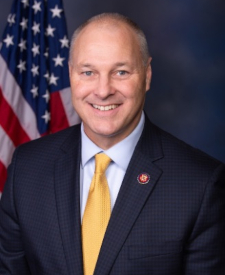


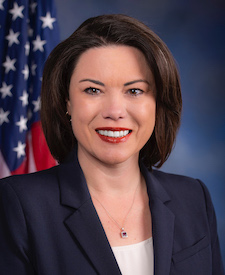

Legislative Progress
In CommitteeMr. Stauber (for himself, Ms. Budzinski, Mr. Van Drew, Mr. …
Referred to the House Committee on Education and Workforce.
Introduced in House
Stakeholder Effects
cui bono?How this legislation distributes effects. Mention counts reflect frequency, not effect magnitude.
Bill Structure & Actor Mappings
Who is "The Secretary" in each section?
We use a combination of our own taxonomy and classification in addition to large language models to assess meaning and potential beneficiaries. High confidence means strong textual evidence. Always verify with the original bill text.
Learn more about our methodology