Economic Espionage Prevention Act
Summary
What This Bill Does
The Economic Espionage Prevention Act combines a Russia-China supply-chain reporting requirement with a sanctions authority for foreign adversary economic espionage. Congress cites State Department and Commerce Bureau of Industry and Security analysis that PRC semiconductor exports to Russia increased by $25 million to $50 million per month after Russia's full-scale invasion of Ukraine, with another $50 million to $100 million per month flowing to known transshipment hubs, and that Chinese and U.S.-branded semiconductors recovered from Russian weapons are likely supporting Russian military capabilities. The bill requires the Secretary of State, with relevant agencies, to report within 90 days on PRC citizens, PRC entities, and PRC-controlled persons that supply critical components, transact with Russia's defense or intelligence sectors, or support countries and entities cooperating with Russia's war. It then allows the President to impose IEEPA property-blocking and immigration sanctions on foreign adversary entities that steal U.S. trade secrets, support adversary military or intelligence entities, or violate U.S. export-control laws. It also amends IEEPA so bulk sensitive personal data and source code used in connected software applications cannot be treated as ordinary personal communications or informational materials for key statutory exceptions.
Who Benefits and How
U.S. technology companies, semiconductor firms, defense contractors, trade-secret owners, Ukraine security partners, NATO allies, Commerce export-control staff, State Department sanctions offices, Treasury sanctions offices, and congressional foreign-affairs committees benefit from a clearer path to identify and sanction adversary supply-chain actors. The IEEPA clarification also helps data-security and national-security officials treat bulk sensitive personal data and connected-app source code as sanctionable or controllable assets when foreign adversaries use data flows or software exports to evade emergency authorities.
Who Bears the Burden and How
PRC semiconductor exporters, PRC electronics companies, Russian defense suppliers, foreign adversary entities, data brokers, connected software application firms, persons trafficking in U.S. proprietary information, and sanctioned foreign executives face report exposure, asset blocking, visa ineligibility, and transaction restrictions. The Secretary of State, President, Treasury sanctions officials, Commerce export-control officials, visa officers, and congressional committees must prepare reports, evaluate classified evidence, administer waivers and exceptions, and enforce sanctions while preserving intelligence, law-enforcement, U.N. Headquarters Agreement, and humanitarian carveouts.
Key Provisions
- Finds that PRC semiconductor and transshipment exports have materially supported Russia's reconstituted military capabilities.
- Requires a State Department report within 90 days on PRC-linked critical-component support for Russia's defense and intelligence sectors.
- Authorizes the President to sanction foreign adversary entities that conduct economic espionage, support adversary security services, or violate export-control laws.
- Provides IEEPA property blocking and visa ineligibility as sanctions, with intelligence, law-enforcement, U.N., and humanitarian exceptions.
- Amends IEEPA so bulk sensitive personal data and connected-application source code are not shielded as ordinary communications or informational materials.
- Defines foreign adversary by reference to the Commerce Department list in 15 C.F.R. 7.4.
Evidence Chain:
This summary is generated from the full bill text using AI analysis. Expand "Detailed Analysis" below for identified beneficiaries/burden bearers with clause-level evidence links.
At a Glance
What This Bill Does
Requires a State Department report on PRC-linked support for Russia's defense and intelligence sectors, authorizes asset-blocking and visa sanctions against foreign adversary entities tied to economic espionage, military support, or export-control violations, and clarifies IEEPA treatment of bulk sensitive personal data and connected-application source code.
Key Policy Areas
National Security, Export Controls, Sanctions, Data Security
Primary Purpose
Requires a State Department report on PRC-linked support for Russia's defense and intelligence sectors, authorizes asset-blocking and visa sanctions against foreign adversary entities tied to economic espionage, military support, or export-control violations, and clarifies IEEPA treatment of bulk sensitive personal data and connected-application source code.
Policy Domains
Substantive provisions
Identified Gains
- U.S. technology manufacturers
- Semiconductor manufacturers
- Defense contractors
- Trade-secret owner organizations
- Ukrainian government agencies
- NATO member states
- Commerce export-control staff
- Treasury sanctions administrators
Identified Costs
- PRC semiconductor manufacturers
- PRC electronics manufacturers
- Russian defense contractors
- Foreign adversary organizations
- Data brokers
- Connected software developers
- State Department sanctions staff
Sponsors



Legislative Progress
Passed HouseReceived; read twice and referred to the Committee on Foreign …
Passed House (inferred from eh version)
Received in the Senate and Read twice and referred to …
Motion to reconsider laid on the table Agreed to without …
On motion to suspend the rules and pass the bill, …
Passed/agreed to in House: On motion to suspend the rules …
DEBATE - The House proceeded with forty minutes of debate …
Considered under suspension of the rules. (consideration: CR H1828-1830)
Mr. Mast moved to suspend the rules and pass the …
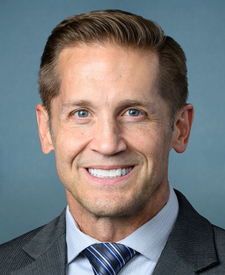
Mr. McCormick (for himself and Mr. Moolenaar) introduced the following …
Stakeholder Effects
cui bono?How this legislation distributes effects. Mention counts reflect frequency, not effect magnitude.
Connected software application developers, Data brokers, Trade-secret owners
Positive-direction: Trade-secret owners, U.S. technology companies
Negative-direction: Connected software application developers, Data brokers
Commerce export-control staff, House Foreign Affairs Committee, Senate Foreign Relations Committee
Positive-direction: House Foreign Affairs Committee, Senate Foreign Relations Committee
Negative-direction: Commerce export-control staff, State Department, State Department visa officers, Treasury sanctions administrators
Foreign adversary entities, Foreign adversary surveillance networks, Russian defense suppliers
Bill Structure & Actor Mappings
Who is "The Secretary" in each section?
- "foreign_adversary"
- → A country listed as a foreign adversary in 15 C.F.R. 7.4.
- "economic_espionage"
- → Economic or industrial espionage involving trade secrets or proprietary information.
- "bulk_sensitive_personal_data"
- → Sensitive personal data whose import, export, or communication can be excluded from IEEPA informational-material protections.
We use a combination of our own taxonomy and classification in addition to large language models to assess meaning and potential beneficiaries. High confidence means strong textual evidence. Always verify with the original bill text.
Learn more about our methodology