To provide for advocation of support for nuclear energy, and establish a nuclear energy assistance trust fund, at the World Bank, the European Bank for Reconstruction and Development, and other international financial institutions, as appropriate, and for other purposes.
Summary
What This Bill Does
The International Nuclear Energy Financing Act uses U.S. influence at international financial institutions to expand support for nuclear power. Its findings describe nuclear power as an emissions-free source producing about 30 percent of the world's low-carbon electricity, note that 33 countries operated nuclear plants in 2021, and warn that China and Russia use reactor exports and long-term financial and operational support to gain influence across Europe, Eurasia, Latin America, Africa, and South Asia. The bill directs the Treasury Secretary to instruct U.S. Executive Directors at the International Bank for Reconstruction and Development, European Bank for Reconstruction and Development, and other appropriate multilateral development banks to use U.S. voice, vote, and influence to advocate for removing bank prohibitions on financial and technical assistance for nuclear generation and distribution and to build internal capacity to assess nuclear energy's role in client-country energy systems. It also directs Treasury to instruct U.S. Governors of those institutions to advocate for Nuclear Energy Assistance Trust Funds that provide financial and technical assistance for nuclear generation and distribution in borrowing countries, make competitive financing available, help client countries build capacity to operate nuclear energy safely and securely, and reduce dependence on Chinese and Russian nuclear exporters. For 7 years, the National Advisory Council on International Monetary and Financial Policies annual report must describe progress promoting multilateral development bank nuclear assistance and establishing or operating trust funds.
Who Benefits and How
Borrowing countries seeking nuclear energy benefit from potential multilateral development bank financing and technical assistance. U.S. nuclear technology suppliers and allied nuclear developers benefit if international financial institutions become more willing to support nuclear projects on competitive terms. Treasury benefits from a clear mandate to advocate at the World Bank, EBRD, and other banks. Client-country energy systems benefit from internal bank capacity to assess nuclear generation and distribution options. U.S. foreign-policy officials benefit from a tool designed to counter Chinese and Russian long-term influence through nuclear exports. National Advisory Council reporting gives Congress visibility into progress over 7 years.
Who Bears the Burden and How
The Treasury Secretary must instruct U.S. Executive Directors and Governors at international financial institutions and track progress. Multilateral development banks must consider removing nuclear-financing prohibitions, building nuclear expertise, and creating or operating trust funds. U.S. Executive Directors and Governors must advocate using U.S. voice, vote, and influence. Chinese and Russian nuclear exporters face competitive pressure if Western-backed financing expands. International financial institution staff must evaluate nuclear safety, security, financing terms, and technical assistance. The National Advisory Council must include progress descriptions in annual reports for 7 years.
Key Provisions
- Directs U.S. advocacy to remove multilateral development bank prohibitions on nuclear-energy assistance.
- Requires advocacy for bank capacity to assess nuclear energy in client-country energy systems.
- Directs U.S. Governors to advocate for Nuclear Energy Assistance Trust Funds.
- Provides trust fund purposes for nuclear financing, technical assistance, competitive terms, and safe operation.
- Frames the policy as countering Chinese and Russian influence through reactor exports.
- Requires 7 years of National Advisory Council annual reporting on progress and trust fund activities.
Evidence Chain:
This summary is generated from the full bill text using AI analysis. Expand "Detailed Analysis" below for identified beneficiaries/burden bearers with clause-level evidence links.
At a Glance
What This Bill Does
Directs Treasury to use U.S. voice, vote, and influence at the World Bank, European Bank for Reconstruction and Development, and other multilateral development banks to remove nuclear-energy financing prohibitions, build internal nuclear assessment capacity, create Nuclear Energy Assistance Trust Funds for competitive financing and technical assistance in borrowing countries, counter Chinese and Russian nuclear influence, and report progress for 7 years through the National Advisory Council annual report.
Key Policy Areas
Nuclear Energy, International Finance, Foreign Affairs
Primary Purpose
Directs Treasury to use U.S. voice, vote, and influence at the World Bank, European Bank for Reconstruction and Development, and other multilateral development banks to remove nuclear-energy financing prohibitions, build internal nuclear assessment capacity, create Nuclear Energy Assistance Trust Funds for competitive financing and technical assistance in borrowing countries, counter Chinese and Russian nuclear influence, and report progress for 7 years through the National Advisory Council annual report.
Policy Domains
House resolution provisions
Identified Gains
- Borrowing country utilities
- U.S. nuclear energy developers
- Allied nuclear energy developers
- Department of the Treasury
- Client-country energy systems
- Congressional oversight committees
- National Advisory Council staff
Identified Costs
- Secretary of the Treasury
- Multilateral development bank staff
- U.S. Executive Directors
- U.S. Governors
- Chinese nuclear energy developers
- Russian nuclear energy developers
- National Advisory Council staff
Sponsors
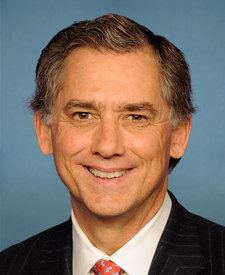


Legislative Progress
ReportedReported with an amendment, committed to the Committee of the …
Additional sponsor: Mr. Donalds
Mr. Hill of Arkansas (for himself and Mr. Torres of …
Stakeholder Effects
cui bono?How this legislation distributes effects. Mention counts reflect frequency, not effect magnitude.
Borrowing countries seeking nuclear energy, Chinese nuclear exporters, Russian nuclear exporters
Positive-direction: Borrowing countries seeking nuclear energy, U.S. nuclear technology suppliers
Negative-direction: Chinese nuclear exporters, Russian nuclear exporters
Department of the Treasury, Multilateral development banks
Bill Structure & Actor Mappings
Who is "The Secretary" in each section?
- "nac"
- → National Advisory Council on International Monetary and Financial Policies
- "ebrd"
- → European Bank for Reconstruction and Development
- "ibrd"
- → International Bank for Reconstruction and Development
- "treasury"
- → Department of the Treasury
We use a combination of our own taxonomy and classification in addition to large language models to assess meaning and potential beneficiaries. High confidence means strong textual evidence. Always verify with the original bill text.
Learn more about our methodology