To establish an Outdoor Restoration Fund for restoration and resilience projects, and for other purposes.
Summary
What This Bill Does
The bill establishes key definitions for the Act including eligible entities (state, local, tribal governments, nonprofits), covered federal conservation authorities, and restoration project criteria, establishes the Outdoor and Watershed Restoration Fund in the Treasury to provide funding for grant programs and partnership programs, with provisions for streamlined cost-sharing, pay-for-performance contracts, and creates a 15-member Restoration Fund Advisory Council to advise the Secretary on fund disbursement, priority-setting, and project evaluation, with mandated representation from resource industries, conservation groups. It relies on grants, appropriations, definition changes, and exemptions. The main policy areas are Environment, Agriculture, Energy, and Social Welfare.
Who Benefits and How
State agencies managing restoration could gain revenue opportunities, Restoration contractors and workforce could gain revenue opportunities, and Restoration and forestry contractors could gain revenue opportunities.
Who Bears the Burden and How
USDA Forest Service would take on compliance duties, Federal taxpayers could face higher costs, and USDA Inspector General would take on compliance duties.
Key Provisions
- Establishes key definitions for the Act including eligible entities (state, local, tribal governments, nonprofits), covered federal conservation authorities, and restoration project criteria.
- Establishes the Outdoor and Watershed Restoration Fund in the Treasury to provide funding for grant programs and partnership programs, with provisions for streamlined cost-sharing, pay-for-performance contracts...
- Creates a 15-member Restoration Fund Advisory Council to advise the Secretary on fund disbursement, priority-setting, and project evaluation, with mandated representation from resource industries, conservation groups...
- Establishes a restoration and resilience grant program providing capacity grants and implementation grants to eligible entities for planning, coordinating, and implementing restoration projects, with priority for job...
- Establishes the Restoration and Resilience Partnership Program to restore forest, grassland, and rangeland ecosystems, reduce wildfire risk, and create outdoor jobs on designated federal and non-federal lands...
Evidence Chain:
This summary is generated from the full bill text using AI analysis. Expand "Detailed Analysis" below for identified beneficiaries/burden bearers with clause-level evidence links.
At a Glance
What This Bill Does
The bill establishes key definitions for the Act including eligible entities (state, local, tribal governments, nonprofits), covered federal conservation authorities, and restoration project criteria, establishes the Outdoor and Watershed Restoration Fund in the Treasury to provide funding for grant programs and partnership programs, with provisions for streamlined cost-sharing, pay-for-performance contracts, and creates a 15-member Restoration Fund Advisory Council to advise the Secretary on fund disbursement, priority-setting, and project evaluation, with mandated representation from resource industries, conservation groups.
Key Policy Areas
Environment, Agriculture, Energy, Social Welfare
Primary Purpose
The bill establishes key definitions for the Act including eligible entities (state, local, tribal governments, nonprofits), covered federal conservation authorities, and restoration project criteria, establishes the Outdoor and Watershed Restoration Fund in the Treasury to provide funding for grant programs and partnership programs, with provisions for streamlined cost-sharing, pay-for-performance contracts, and creates a 15-member Restoration Fund Advisory Council to advise the Secretary on fund disbursement, priority-setting, and project evaluation, with mandated representation from resource industries, conservation groups.
Policy Domains
Protect the West Act of 2025
Identified Gains
- State agencies managing restoration
- Restoration contractors and workforce
- Restoration and forestry contractors
- Forestry services industry
- Forestry and land management contractors
Identified Costs
- USDA Forest Service
- Federal taxpayers
- USDA Inspector General
- Logging companies targeting old growth
Sponsors
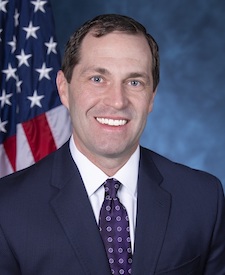
Legislative Progress
IntroducedMr. Crow introduced the following bill; which was referred to …
Stakeholder Effects
cui bono?How this legislation distributes effects. Mention counts reflect frequency, not effect magnitude.
Forest products industry, Forestry and land management contractors, Forestry services industry
Positive-direction: Forest products industry, Forestry and land management contractors, Forestry services industry, Restoration and forestry contractors, Restoration contractors and workforce
Negative-direction: Logging companies targeting old growth
Congress, Tribal governments, USDA Forest Service
Positive-direction: Congress, Tribal governments, USDA staff and workforce
Negative-direction: USDA Forest Service, USDA Inspector General
Conservation nonprofit organizations, Conservation organizations, Wilderness conservation advocates
Local government units, State agencies, State agencies managing restoration
Bill Structure & Actor Mappings
Who is "The Secretary" in each section?
- "the_council"
- → Restoration Fund Advisory Council
- "the_secretary"
- → Secretary of Agriculture
Key Definitions
Terms defined in this bill
The Restoration Fund Advisory Council established by section 4(a)
As defined in section 101 of the Healthy Forests Restoration Act of 2003 (16 U.S.C. 6511)
The Outdoor and Watershed Restoration Fund established by section 3(a)
The Secretary of Agriculture
A State agency, unit of local government, Tribal government, regional government, special district, or nonprofit organization
Includes good neighbor authority, Water Source Protection Program, Watershed Condition Framework, stewardship contracting, Cooperative Forestry Assistance, Joint Chiefs Program, watershed protection programs, emergency watershed protection, Collaborative Forest Landscape Restoration Program, legacy roads and trails, working lands for wildlife, and conservation programs under Food Security Act
A project on Federal or non-Federal land designed to conduct restoration that measurably improves forest conditions, rangeland and native grassland health, watershed function, or wildlife habitat
We use a combination of our own taxonomy and classification in addition to large language models to assess meaning and potential beneficiaries. High confidence means strong textual evidence. Always verify with the original bill text.
Learn more about our methodology