Zuni Indian Tribe Water Rights Settlement Act of 2025
Summary
What This Bill Does
The bill establishes key definitions for the Act including Enforceability Date, Secretary (of the Interior), State (New Mexico), Tribal Water Rights, and Tribe (Zuni Tribe of the Zuni Reservation), creates states the purposes of Title I: to achieve final settlement of Zuni water rights claims, authorize the Settlement Agreement, direct the Secretary to execute the Agreement, and authorize funds for implementation, and provides detailed definitions for Title I including Adjudication, Agreement, Allotment, Allottee, Partial Final Judgment and Decree, Trust Fund, Zuni Lands, and Zuni River Stream System. It relies on definition changes, exemptions, appropriations, and liability protections. The main policy areas are Native American Affairs, Public Lands, Agriculture, and Energy.
Who Benefits and How
Zuni Indian Tribe could gain revenue opportunities, United States government could face reduced risk, and Other parties to the Agreement could face reduced risk.
Who Bears the Burden and How
State of New Mexico could face higher costs, Bureau of Land Management would take on compliance duties, and Bureau of Indian Affairs would take on compliance duties.
Key Provisions
- Establishes key definitions for the Act including Enforceability Date, Secretary (of the Interior), State (New Mexico), Tribal Water Rights, and Tribe (Zuni Tribe of the Zuni Reservation).
- Creates states the purposes of Title I: to achieve final settlement of Zuni water rights claims, authorize the Settlement Agreement, direct the Secretary to execute the Agreement, and authorize funds for implementation.
- Provides detailed definitions for Title I including Adjudication, Agreement, Allotment, Allottee, Partial Final Judgment and Decree, Trust Fund, Zuni Lands, and Zuni River Stream System.
- Authorizes, ratifies, and confirms the Settlement Agreement between the Zuni Tribe, State of New Mexico, and United States. Requires Secretary to execute the Agreement and comply with environmental laws including ESA...
- Establishes that Tribal Water Rights shall be held in trust by the United States for the Tribe, protected from loss through non-use, forfeiture, or abandonment. Authorizes the Tribe to allocate, distribute, and lease...
Evidence Chain:
This summary is generated from the full bill text using AI analysis. Expand "Detailed Analysis" below for identified beneficiaries/burden bearers with clause-level evidence links.
At a Glance
What This Bill Does
The bill establishes key definitions for the Act including Enforceability Date, Secretary (of the Interior), State (New Mexico), Tribal Water Rights, and Tribe (Zuni Tribe of the Zuni Reservation), creates states the purposes of Title I: to achieve final settlement of Zuni water rights claims, authorize the Settlement Agreement, direct the Secretary to execute the Agreement, and authorize funds for implementation, and provides detailed definitions for Title I including Adjudication, Agreement, Allotment, Allottee, Partial Final Judgment and Decree, Trust Fund, Zuni Lands, and Zuni River Stream System.
Key Policy Areas
Native American Affairs, Public Lands, Agriculture, Energy
Primary Purpose
The bill establishes key definitions for the Act including Enforceability Date, Secretary (of the Interior), State (New Mexico), Tribal Water Rights, and Tribe (Zuni Tribe of the Zuni Reservation), creates states the purposes of Title I: to achieve final settlement of Zuni water rights claims, authorize the Settlement Agreement, direct the Secretary to execute the Agreement, and authorize funds for implementation, and provides detailed definitions for Title I including Adjudication, Agreement, Allotment, Allottee, Partial Final Judgment and Decree, Trust Fund, Zuni Lands, and Zuni River Stream System.
Policy Domains
Title I - Zuni River Water Rights Settlement
Identified Gains
- Zuni Indian Tribe
- United States government
- Other parties to the Agreement
- Individual Indian Allottees
- Water infrastructure contractors
Identified Costs
- State of New Mexico
- Bureau of Land Management
- Bureau of Indian Affairs
- Zuni Indian Tribe
- Ranchers with existing grazing permits
Sponsors
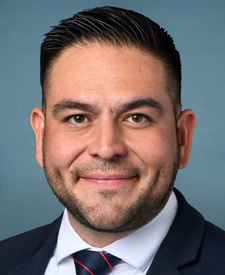


Legislative Progress
In CommitteeMr. Vasquez (for himself, Ms. Leger Fernandez, and Ms. Stansbury) …
Referred to the House Committee on Natural Resources.
Introduced in House
Stakeholder Effects
cui bono?How this legislation distributes effects. Mention counts reflect frequency, not effect magnitude.
Individual Allottees, Individual Indian Allottees, Zuni Indian Tribe
Zuni Indian Tribe faces effects in multiple directions
Bureau of Indian Affairs, Bureau of Land Management, Department of the Interior
Positive-direction: United States as trustee, United States government
Negative-direction: Bureau of Indian Affairs, Bureau of Land Management, Department of the Interior
State of New Mexico
State of New Mexico faces effects in multiple directions
Ranchers with existing grazing permits, Water users leasing from the Tribe
Positive-direction: Water users leasing from the Tribe
Negative-direction: Ranchers with existing grazing permits
Bill Structure & Actor Mappings
Who is "The Secretary" in each section?
- "the_state"
- → State of New Mexico
- "the_tribe"
- → Zuni Tribe of the Zuni Reservation
- "the_secretary"
- → Secretary of the Interior
- "the_tribe"
- → Zuni Tribe of the Zuni Reservation
- "the_secretary"
- → Secretary of the Interior
Key Definitions
Terms defined in this bill
The date described in section 109 when the Secretary publishes findings that all conditions have been met
Secretary of the Interior
State of New Mexico
Water rights of the Tribe in the Zuni River Stream System as identified in the Agreement and section 104, and as confirmed in the Partial Final Judgment and Decree
The general adjudication of water rights entitled United States v. A&R Production, et al., Civil No. 01-CV-00072, pending in the U.S. District Court for the District of New Mexico
Settlement Agreement to Quantify and Protect the Water Rights of the Zuni Indian Tribe in the Zuni River Basin dated May 1, 2023, and attachments thereto
Land within New Mexico held in trust by the United States for the Tribe, or owned by the Tribe, including land set apart by various Executive orders and Acts
The Zuni River surface water drainage basin as identified in a 2003 court order
Has the meaning given in section 6301 of the Omnibus Public Land Management Act of 2009
Federal land or interest within the boundary of the Zuni Salt Lake and Sanctuary, including land acquired after enactment
Approximately 217,037 acres in New Mexico protected by State Engineer Order No. 199 due to historical and cultural significance
We use a combination of our own taxonomy and classification in addition to large language models to assess meaning and potential beneficiaries. High confidence means strong textual evidence. Always verify with the original bill text.
Learn more about our methodology