To require any convention, agreement, or other international instrument on pandemic prevention, preparedness, and response reached by the World Health Assembly to be subject to Senate ratification.
Analysis under review: This bill has generated analysis that may be too generic or incomplete. Clause-level evidence remains available below.
Summary
What This Bill Does
This bill requires any international agreement related to pandemic preparedness negotiated by the World Health Organization (WHO) to be submitted to the Senate for approval as a treaty, rather than being adopted as an executive agreement. It establishes that such agreements cannot take effect in the United States without Senate ratification by a two-thirds vote.
Who Benefits and How
- The U.S. Senate gains explicit authority over WHO pandemic agreements, strengthening its constitutional treaty powers.
- States and localities are protected from binding international health mandates that weren't approved through the treaty process.
- Advocates of national sovereignty benefit from clearer limits on executive authority to commit the U.S. to international health obligations.
Who Bears the Burden and How
- The Executive Branch faces constraints on its ability to quickly adopt international pandemic response frameworks through executive agreements.
- International health coordination efforts may be slowed by the requirement for full Senate ratification.
- The WHO and international partners may face uncertainty about U.S. participation in pandemic preparedness frameworks.
Key Provisions
- Any WHO pandemic-related agreement must be submitted to the Senate as a treaty under Article II of the Constitution
- Such agreements cannot enter into force without advice and consent of two-thirds of Senators present
- Explicitly applies to the WHO Convention, Agreement, or other international instruments concerning pandemic prevention, preparedness, and response
- Establishes that no such agreement can have domestic legal effect without Senate approval
Evidence Chain:
This summary is generated from the full bill text using AI analysis. Expand "Detailed Analysis" below for identified beneficiaries/burden bearers.
At a Glance
What This Bill Does
Requires any WHO pandemic prevention, preparedness, and response agreement to be treated as a treaty requiring Senate ratification by two-thirds vote, preventing implementation before ratification.
Key Policy Areas
Foreign Affairs, Public Health, Treaty Powers, WHO
Primary Purpose
Requires any WHO pandemic prevention, preparedness, and response agreement to be treated as a treaty requiring Senate ratification by two-thirds vote, preventing implementation before ratification.
Policy Domains
Sponsors


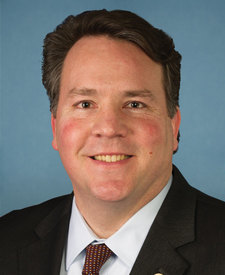


Legislative Progress
In CommitteeReceived; read twice and referred to the Committee on Foreign …
Additional sponsors: Mr. Grothman, Ms. Hageman, Mr. Steube, Mr. Hudson, …
Committed to the Committee of the Whole House on the …
Mr. Tiffany (for himself, Mr. Biggs, Mrs. Boebert, Mr. Fitzgerald, …
Mr. Tiffany (for himself, Mr. Biggs, Ms. Boebert, Mr. Fitzgerald, …
Impact analysis is available but no clear stakeholder effects identified. View clause-level analysis →
Bill Structure & Actor Mappings
Who is "The Secretary" in each section?
We use a combination of our own taxonomy and classification in addition to large language models to assess meaning and potential beneficiaries. High confidence means strong textual evidence. Always verify with the original bill text.
Learn more about our methodology