Make American Flags in America Act of 2025
Sponsors




Legislative Progress
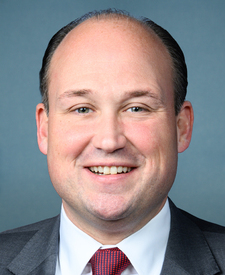
In CommitteeMr. Langworthy (for himself, Mr. Aderholt, Mr. Moolenaar, Mr. Tonko, …
Summary
What This Bill Does
The Make American Flags in America Act of 2025 requires all American flags displayed or purchased by federal agencies to be 100% manufactured in the United States. The bill also directs the Federal Trade Commission to study how well current country-of-origin labeling rules for American flags are being enforced.
Who Benefits and How
American flag manufacturers are the primary beneficiaries. Companies that produce flags entirely within the United States will gain exclusive access to all federal flag contracts, eliminating competition from foreign-made flags. This creates a guaranteed market for domestic producers, potentially allowing them to expand operations and hire more workers.
Textile workers and manufacturing communities in the U.S. may see increased employment opportunities as demand shifts to domestically-produced flags.
Who Bears the Burden and How
Federal agencies face new procurement requirements and potential cost increases. They must ensure all flags purchased or displayed are 100% American-made, which may be more expensive than foreign alternatives. Agencies have 90 days after enactment to comply with procurement rules and 2 years to replace any non-compliant flags on display.
Taxpayers may indirectly bear higher costs if domestically-manufactured flags cost more than imported alternatives, though the overall budget impact is likely modest given the relatively small scale of flag procurement.
Key Provisions
- Prohibits federal agencies from displaying any American flag on federal property unless it is 100% made in the United States
- Bars federal agencies from using appropriated funds to purchase flags that are not 100% American-made
- Defines "made in the United States" strictly as 100% manufactured from articles, materials, and supplies that are themselves 100% produced in the U.S.
- Requires the FTC to study current country-of-origin labeling enforcement for American flags and report to Congress within one year
- Exempts private citizens and businesses from these requirements - the rules only apply to federal agencies
- Allows implementation to be adjusted to comply with U.S. international trade agreements
Evidence Chain:
This summary is derived from the structured analysis below. See "Detailed Analysis" for per-title beneficiaries/burden bearers with clause-level evidence links.
Primary Purpose
The bill aims to promote domestic manufacturing by requiring that all flags displayed or procured by federal agencies be made in the United States, while also conducting a study on country-of-origin labeling for American flags.
Policy Domains
Bill Structure & Actor Mappings
Who is "The Secretary" in each section?
- "the_secretary"
- → Secretary of the Federal Trade Commission
Key Definitions
Terms defined in this bill
An independent agency that promotes competition, protects consumers and enforces federal antitrust laws.
An Executive agency, military department, office or establishment in the legislative branch, judicial branch, Government of District of Columbia, and government-controlled corporations.
Real property owned, leased or occupied by a Federal agency or an instrumentality wholly owned by the United States.
100% manufactured in the US from articles, materials or supplies that have been 100% produced or manufactured in the US.
When used geographically, includes each of the several states, District of Columbia, Tribal lands and territories or possessions.
An Executive agency, military department, office or establishment in the legislative branch, judicial branch, Government of District of Columbia and government-controlled corporations.
Real property owned, leased or occupied by a Federal agency or an instrumentality wholly owned by the United States.
100% manufactured in the US from articles, materials or supplies that have been 100% produced or manufactured in the US.
When used geographically, includes each of the several states, District of Columbia, Tribal lands and territories or possessions.
We use a combination of our own taxonomy and classification in addition to large language models to assess meaning and potential beneficiaries. High confidence means strong textual evidence. Always verify with the original bill text.
Learn more about our methodology