To provide funding to the Bureau of Prisons, States, and localities to carry out mental health screenings and provide referrals to mental healthcare providers for individuals in prison or jail.
Analysis under review: This bill has generated analysis that may be too generic or incomplete. Clause-level evidence remains available below.
Summary
What This Bill Does
This bill creates a new federal grant program to provide mental health screenings and referrals for people in prisons and jails. The program requires facilities to screen inmates for severe mental illnesses like schizophrenia, bipolar disorder, and major depression, then connect those who need help with local mental healthcare providers before or after their release.
Who Benefits and How
Mental healthcare providers and clinics near prisons and jails will receive new patient referrals and funding through the grant program. States and localities receive competitive grants totaling 70% of the approximately $600 million authorized over 5 years (FY2026-2030) to implement screening programs. The Bureau of Prisons receives 20% of grant funding for federal prison implementation. Independent research organizations benefit from contracts to evaluate program effectiveness.
Who Bears the Burden and How
State and local governments must hire mental health liaison staff, establish outreach teams, and submit implementation plans to receive grants. Prisons and jails face new administrative requirements including conducting surveys of all inmates, sharing data with researchers, and coordinating with the Advisory Board. The Attorney General must establish and administer the program and Advisory Board within 60-90 days.
Key Provisions
- Authorizes $600 million over 5 years ($100M-$140M annually) for mental health screening grants
- Requires 5-10 question screening survey based on Brief Jail Mental Health Screen for all inmates
- Mandates rigorous program evaluation using randomized control trials to measure impact on recidivism and employment
Evidence Chain:
This summary is generated from the full bill text using AI analysis. Expand "Detailed Analysis" below for identified beneficiaries/burden bearers.
At a Glance
What This Bill Does
Establishes a federal grant program to fund mental health screenings and referrals for individuals entering or leaving prisons and jails, with the goal of reducing recidivism and improving employment outcomes.
Key Policy Areas
Criminal Justice, Mental Health, Public Health
Primary Purpose
Establishes a federal grant program to fund mental health screenings and referrals for individuals entering or leaving prisons and jails, with the goal of reducing recidivism and improving employment outcomes.
Policy Domains
Mental Health Screening and Referral Grant Program
Identified Gains
Contextual inference, no direct clause citation- Mental healthcare providers
- States and localities
- Bureau of Prisons
- Independent research organizations
- Formerly incarcerated individuals
Contextual inference, no direct clause citation
Identified Costs
Contextual inference, no direct clause citation- Attorney General / DOJ
- State and local corrections facilities
- State Departments of Labor and Public Safety
Contextual inference, no direct clause citation
Legislative Progress
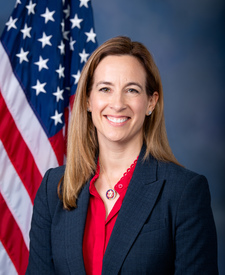
IntroducedMs. Sherrill introduced the following bill; which was referred to …
Stakeholder Effects
cui bono?How this legislation distributes effects. Mention counts reflect frequency, not effect magnitude.
Local governments operating jails, State Departments of Labor, State Departments of Public Safety
Positive-direction: Local governments operating jails, State and local governments operating prisons and jails, State governments operating prisons
Negative-direction: State Departments of Labor, State Departments of Public Safety
Advisory Board, Bureau of Prisons, Department of Justice / Attorney General
Bureau of Prisons faces effects in multiple directions
Positive-direction: Advisory Board
Negative-direction: Department of Justice / Attorney General
Mental healthcare providers near federal prisons, Mental healthcare providers near prisons and jails, Mental healthcare providers participating in working group
Federal prison inmates with mental illness, Formerly incarcerated individuals with mental illness
Prison and jail administrators, State and local corrections facilities
Bill Structure & Actor Mappings
Who is "The Secretary" in each section?
- "the_director"
- → Director of the Bureau of Prisons
- "the_advisory_board"
- → Advisory Board established under Section 4
- "the_attorney_general"
- → Attorney General of the United States
Key Definitions
Terms defined in this bill
Any State of the United States, the District of Columbia, Puerto Rico, Virgin Islands, Guam, American Samoa, and the Northern Mariana Islands
Any city, county, township, town, borough, parish, village, or other general purpose political subdivision of a State
One or more mental, behavioral, or emotional disorders that results in serious functional impairment and substantially interferes with or limits major life activities
An entity not operated or controlled by a governmental body that conducts high-quality experimental and quasi-experimental evaluations
Any prison or jail administered by the Bureau of Prisons or a State, or any jail administered by a State or locality
A fully-licensed professional or group of professionals who diagnose mental health conditions and provide treatment, operating near the relevant jail or prison
We use a combination of our own taxonomy and classification in addition to large language models to assess meaning and potential beneficiaries. High confidence means strong textual evidence. Always verify with the original bill text.
Learn more about our methodology