Justice for All Act of 2025
Summary
What This Bill Does
The Justice for All Act of 2025 is a broad civil-rights enforcement bill. It responds to Alexander v. Sandoval by restoring private enforcement of disparate-impact regulations under major civil-rights statutes, adds sex and religion coverage in key places, authorizes compensatory and punitive damages plus fees, bans law-enforcement profiling based on race, ethnicity, national origin, religion, sex, gender identity, or sexual orientation, expands public accommodations to modern services including online retailers, transportation providers, shelters, health care, accounting, and legal services, imposes strict employer liability for discrimination by employees, bars predispute arbitration and class-action waivers for employment, consumer, and civil-rights disputes, and extends section 1983-style liability to certain federal actors.
Who Benefits and How
Civil rights plaintiffs benefit because disparate-impact and intentional-discrimination claims regain private enforcement tools and damages remedies. People facing law-enforcement profiling benefit from a federal prohibition covering routine and spontaneous investigatory activities. Customers using online retailers, transportation services, shelters, health care providers, accounting firms, and legal services benefit because public-accommodation protections reach more modern service settings. Workers and consumers benefit because predispute arbitration clauses and joint-action waivers cannot force covered disputes out of court.
Who Bears the Burden and How
Federally funded program recipients must defend disparate-impact claims and justify challenged policies as necessary to nondiscriminatory goals. Law enforcement agencies must change profiling policies, training, data practices, and supervision. Employers bear stricter liability for discrimination, harassment, intimidation, and retaliation committed by employees. Online retailers, transportation providers, shelters, health care providers, accounting firms, and legal services offices must comply with broader protected-class and service-setting rules.
Key Provisions
- Amends Title VI to recognize disparate-impact discrimination and add sex and religion coverage.
- Provides damages, attorney fees, expert fees, costs, and settlement enforcement for covered civil-rights claims.
- Prohibits law-enforcement profiling across race, ethnicity, national origin, religion, sex, gender identity, and sexual orientation.
- Expands public accommodations and blocks forced arbitration for employment, consumer, and civil-rights disputes.
Evidence Chain:
This summary is generated from the full bill text using AI analysis. Expand "Detailed Analysis" below for identified beneficiaries/burden bearers with clause-level evidence links.
At a Glance
What This Bill Does
Restores and expands civil-rights enforcement by authorizing disparate-impact claims, broad remedies, anti-profiling rules, wider public-accommodation coverage, employer vicarious liability, arbitration limits, and section 1983 liability for federal officials.
Key Policy Areas
Civil Rights, Law Enforcement, Employment, Consumer Protection
Primary Purpose
Restores and expands civil-rights enforcement by authorizing disparate-impact claims, broad remedies, anti-profiling rules, wider public-accommodation coverage, employer vicarious liability, arbitration limits, and section 1983 liability for federal officials.
Policy Domains
Resolution provisions
Identified Gains
- Civil rights plaintiffs
- Workers
- Consumers
- Health care providers' patients
- Transportation service users
Identified Costs
- Federally funded program recipients
- Law enforcement agencies
- Employers
- Online retailers
- Transportation providers
- Health care providers
Sponsors
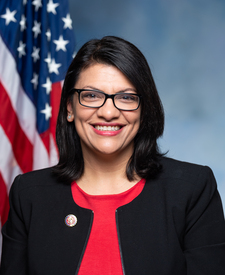
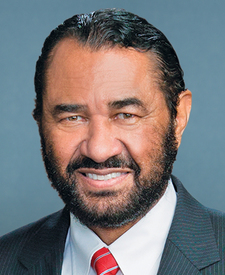
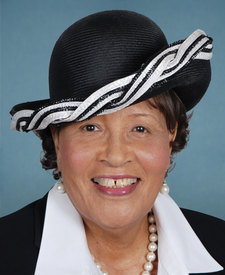
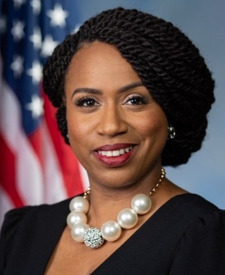

Legislative Progress
In CommitteeMs. Tlaib (for herself, Mr. Cleaver, Ms. Lee of Pennsylvania, …
Referred to the Committee on the Judiciary, and in addition …
Introduced in House
Stakeholder Effects
cui bono?How this legislation distributes effects. Mention counts reflect frequency, not effect magnitude.
Federally funded program recipients
Bill Structure & Actor Mappings
Who is "The Secretary" in each section?
We use a combination of our own taxonomy and classification in addition to large language models to assess meaning and potential beneficiaries. High confidence means strong textual evidence. Always verify with the original bill text.
Learn more about our methodology