Justice for Murder Victims Act
Summary
What This Bill Does
The Justice for Murder Victims Act closes a timing gap in federal homicide law. Congress.gov summarizes the bill as allowing prosecution for any federal homicide offense without regard to how much time elapsed between the act or omission that caused the death and the death itself. That matters in cases where a victim dies long after the injury, exposure, or assault, and prosecutors might otherwise face uncertainty about whether the offense can still be charged as homicide. The bill strengthens prosecution authority but also extends exposure for defendants whose alleged conduct caused delayed death.
Who Benefits and How
Families of murder victims benefit because federal prosecutors would not be blocked by a delay between injury and death. Federal prosecutors benefit from clearer authority to charge homicide when causation is provable despite elapsed time. Cold-case investigators benefit because delayed-death cases can stay within homicide charging authority. Crime-victim advocates benefit from a rule focused on causation rather than arbitrary timing.
Who Bears the Burden and How
Homicide defendants bear greater prosecution risk when a death occurs long after the alleged act or omission. Federal public defenders must defend cases involving older evidence, medical causation, and delayed death. Federal courts may hear homicide cases with longer factual histories and more causation disputes. Medical experts may face greater demand for testimony connecting an old injury or omission to a later death.
Key Provisions
- Provides federal homicide prosecution authority regardless of elapsed time between conduct and death.
- Strengthens delayed-death homicide cases by focusing on causation rather than timing.
- Protects murder victims' families from losing federal charges because the victim survived for a period before dying.
- Extends litigation pressure on defendants in federal homicide cases involving older conduct.
Evidence Chain:
This summary is generated from the full bill text using AI analysis. Expand "Detailed Analysis" below for identified beneficiaries/burden bearers.
At a Glance
What This Bill Does
Allows federal homicide prosecutions regardless of the time between the defendant's act or omission and the victim's death.
Key Policy Areas
Crime and Law Enforcement, Federal Criminal Law
Primary Purpose
Allows federal homicide prosecutions regardless of the time between the defendant's act or omission and the victim's death.
Policy Domains
Resolution provisions
Identified Gains
Contextual inference, no direct clause citation- Families of murder victims
- Federal prosecutors
- Cold-case investigators
- Crime-victim advocates
Contextual inference, no direct clause citation
Identified Costs
Contextual inference, no direct clause citation- Homicide defendants
- Federal public defenders
- Federal courts
- Medical experts
Contextual inference, no direct clause citation
Sponsors
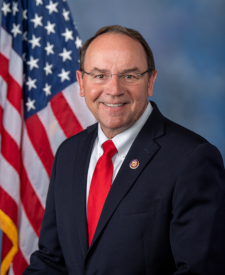
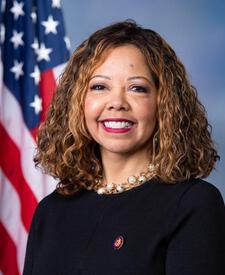
Legislative Progress
In CommitteeMr. Tiffany (for himself and Mrs. McBath) introduced the following …
Referred to the House Committee on the Judiciary.
Introduced in House
Bill Structure & Actor Mappings
Who is "The Secretary" in each section?
We use a combination of our own taxonomy and classification in addition to large language models to assess meaning and potential beneficiaries. High confidence means strong textual evidence. Always verify with the original bill text.
Learn more about our methodology