Supply Chain Security and Growth Act of 2025
Summary
What This Bill Does
The Supply Chain Security and Growth Act creates a new section 48F critical supply chains reshoring investment credit. A qualifying taxpayer that is not a prohibited foreign entity receives a credit equal to 40 percent of qualified investment in qualified property placed in service as part of a critical supply chain facility. Covered facilities must primarily manufacture active pharmaceutical ingredients, drugs, biologics, medical countermeasures, diagnostic devices, semiconductors or semiconductor manufacturing equipment, aerospace equipment, or artificial nanomaterials and must be located in Puerto Rico or another specified U.S. possession. Prohibited foreign entities include foreign entities of concern, entities controlled through covered-nation officer appointment rights, and entities with 25 percent or more ownership by covered nations or their citizens, nationals, residents, or organized entities. The bill allows direct-pay and transferability treatment for the credit, coordinates it with other facility credits, applies to property placed in service after December 31, 2024, and raises the deemed credit for tested foreign income taxes paid to U.S. possessions from 80 percent to 100 percent for taxes after 2024.
Who Benefits and How
Puerto Rico manufacturers benefit from a 40 percent investment credit for critical supply chain facilities. U.S. possession economic development agencies benefit if the credit attracts pharmaceutical, semiconductor, aerospace, diagnostic, or nanomaterial facilities. Domestic supply chain security advocates benefit because prohibited foreign entities are excluded from the credit. Companies reshoring medical and semiconductor production benefit from direct-pay or transferable credit treatment.
Who Bears the Burden and How
The Treasury Department and IRS must administer complex ownership, facility, direct-pay, transferability, and possession-tax rules. Prohibited foreign entities lose access to the reshoring credit even if they invest in covered facilities. Federal taxpayers bear revenue costs from the 40 percent investment credit and 100 percent possession tax deemed credit. Competing mainland manufacturers may face subsidized competition from facilities in Puerto Rico and U.S. possessions.
Key Provisions
- Creates a 40 percent critical supply chains reshoring investment credit.
- Limits eligible facilities to Puerto Rico or specified U.S. possessions and covered critical manufacturing sectors.
- Excludes prohibited foreign entities tied to covered nations, foreign entities of concern, or covered ownership.
- Authorizes direct-pay and transferable credit treatment and coordinates with other facility credits.
- Raises the deemed credit for taxes paid to U.S. possessions from 80 percent to 100 percent.
Evidence Chain:
This summary is generated from the full bill text using AI analysis. Expand "Detailed Analysis" below for identified beneficiaries/burden bearers with clause-level evidence links.
At a Glance
What This Bill Does
Creates a 40 percent critical supply chains reshoring investment credit for qualifying facilities in Puerto Rico or U.S. possessions and raises the deemed foreign tax credit for possession taxes from 80 percent to 100 percent.
Key Policy Areas
Tax, Manufacturing, Supply Chain
Primary Purpose
Creates a 40 percent critical supply chains reshoring investment credit for qualifying facilities in Puerto Rico or U.S. possessions and raises the deemed foreign tax credit for possession taxes from 80 percent to 100 percent.
Policy Domains
Resolution provisions
Identified Gains
- Puerto Rico manufacturers
- U.S. possession economic development agencies
- Supply chain security advocates
- Reshoring companies
Identified Costs
- Treasury Department
- Prohibited foreign entities
- Federal taxpayers
- Mainland manufacturers
Sponsors


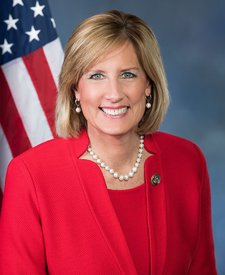


Legislative Progress
In CommitteeMs. Malliotakis (for herself, Mr. Panetta, Mr. Buchanan, Ms. Velázquez, …
Referred to the House Committee on Ways and Means.
Introduced in House
Stakeholder Effects
cui bono?How this legislation distributes effects. Mention counts reflect frequency, not effect magnitude.
Puerto Rico manufacturers, Reshoring companies
Bill Structure & Actor Mappings
Who is "The Secretary" in each section?
We use a combination of our own taxonomy and classification in addition to large language models to assess meaning and potential beneficiaries. High confidence means strong textual evidence. Always verify with the original bill text.
Learn more about our methodology