EAGLES Act of 2025
Summary
What This Bill Does
The EAGLES Act responds to the 2018 Marjory Stoneman Douglas High School attack by codifying a National Threat Assessment Center operated by the United States Secret Service at the direction of the Secretary of Homeland Security. The Center's functions include training and education on threat assessment and targeted violence prevention, consultation on complex threat cases and programs, research consistent with evidence-based standards, information sharing among agencies and organizations with protective or public-safety responsibilities, and development of evidence-based programs to standardize federal, state, and local threat assessments and prevention best practices. The bill turns Secret Service threat-assessment expertise into a formal national program for schools and other entities facing targeted violence risks.
Who Benefits and How
Schools benefit from threat-assessment training and evidence-based best practices aimed at preventing targeted violence. Secret Service threat assessment specialists benefit from statutory authority for the National Threat Assessment Center. State and local public safety agencies benefit from consultation and information sharing on complex threat cases. Families and students affected by targeted school violence benefit if prevention practices identify concerning behavior earlier.
Who Bears the Burden and How
The Secret Service must operate the Center, provide training, consult on cases, conduct research, and share information. The Department of Homeland Security must oversee the Center through the Secretary's direction. Public and private entities using threat assessment must align with evidence-based standards and privacy laws. Federal taxpayers bear the cost of a national threat-assessment training and research program.
Key Provisions
- Establishes the National Threat Assessment Center in statute under the United States Secret Service.
- Requires training, education, consultation, research, and information sharing on targeted violence prevention.
- Develops evidence-based programs to standardize threat assessments across federal, state, and local levels.
- Uses lessons from the Parkland attack to support earlier identification of threatening behavior.
Evidence Chain:
This summary is generated from the full bill text using AI analysis. Expand "Detailed Analysis" below for identified beneficiaries/burden bearers with clause-level evidence links.
At a Glance
What This Bill Does
Establishes a Secret Service National Threat Assessment Center in statute to train, consult, research, share information, and standardize threat assessments for targeted violence prevention.
Key Policy Areas
Public Safety, School Safety, Homeland Security
Primary Purpose
Establishes a Secret Service National Threat Assessment Center in statute to train, consult, research, share information, and standardize threat assessments for targeted violence prevention.
Policy Domains
Resolution provisions
Identified Gains
- Schools
- Secret Service specialists
- State public safety agencies
- Families affected by school violence
Identified Costs
- Secret Service
- Department of Homeland Security
- Threat assessment programs
- Federal taxpayers
Sponsors
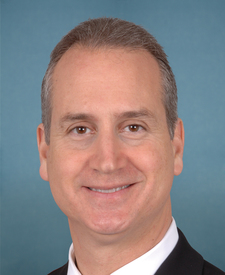
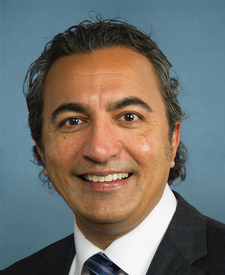


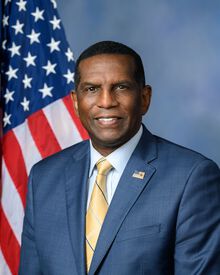
Legislative Progress
In CommitteeMr. Diaz-Balart (for himself and Mr. Moskowitz) introduced the following …
Referred to the Committee on the Judiciary, and in addition …
Introduced in House
Stakeholder Effects
cui bono?How this legislation distributes effects. Mention counts reflect frequency, not effect magnitude.
Bill Structure & Actor Mappings
Who is "The Secretary" in each section?
We use a combination of our own taxonomy and classification in addition to large language models to assess meaning and potential beneficiaries. High confidence means strong textual evidence. Always verify with the original bill text.
Learn more about our methodology