Cartel Marque and Reprisal Authorization Act of 2025
Summary
What This Bill Does
The Cartel Marque and Reprisal Authorization Act invokes Congress's Article I power to grant letters of marque and reprisal. It authorizes and requests the President to commission privately armed and equipped persons or entities, under official letters, to use reasonably necessary means outside the United States and its territories to seize the person or property of individuals the President determines are cartel members, cartel-linked organization members, or associated conspirators responsible for aggression against the United States. The President must require a security bond sufficient to ensure the letter is executed according to its terms. The bill therefore creates an extraordinary private-force tool against cartels rather than relying only on ordinary law enforcement, sanctions, or military authorities.
Who Benefits and How
Private security contractors benefit if the President commissions them to operate under letters of marque and reprisal. Border-security advocates benefit from an aggressive tool aimed at cartel members and cartel property outside U.S. territory. Victims of cartel violence benefit if the authority disrupts cartel operations responsible for aggression against the United States. The President benefits from discretionary authority to decide how many private commissions the service requires.
Who Bears the Burden and How
Cartel members and cartel-linked conspirators face seizure of person or property outside U.S. territory. The President must set instructions, determine covered cartel responsibility, and require adequate security bonds. Foreign governments may face sovereignty and diplomatic conflicts if privately commissioned operations occur near or within their territories. Federal courts and foreign-affairs lawyers may confront disputes over constitutional, international-law, and liability boundaries.
Key Provisions
- Authorizes letters of marque and reprisal against cartel members and cartel-linked conspirators.
- Allows privately armed and equipped persons or entities to be commissioned by the President.
- Requires operations to occur outside the geographic boundaries of the United States and its territories.
- Requires a presidentially determined security bond to ensure each letter is executed according to its terms.
Evidence Chain:
This summary is generated from the full bill text using AI analysis. Expand "Detailed Analysis" below for identified beneficiaries/burden bearers with clause-level evidence links.
At a Glance
What This Bill Does
Authorizes the President to issue letters of marque and reprisal to privately armed persons or entities to seize cartel members and property outside U.S. territory, subject to presidential instructions and security bonds.
Key Policy Areas
Foreign Affairs, Public Safety, Cartels
Primary Purpose
Authorizes the President to issue letters of marque and reprisal to privately armed persons or entities to seize cartel members and property outside U.S. territory, subject to presidential instructions and security bonds.
Policy Domains
Resolution provisions
Identified Gains
- Private security contractors
- Border-security advocates
- Victims of cartel violence
- President of the United States
Identified Costs
- Cartel members
- President of the United States
- Foreign governments
- Federal courts
Sponsors

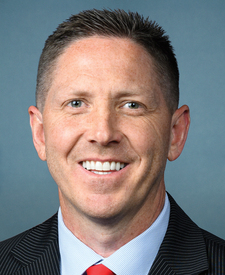

Legislative Progress
In CommitteeMr. Burchett (for himself and Mr. Messmer) introduced the following …
Referred to the House Committee on Foreign Affairs.
Introduced in House
Stakeholder Effects
cui bono?How this legislation distributes effects. Mention counts reflect frequency, not effect magnitude.
Bill Structure & Actor Mappings
Who is "The Secretary" in each section?
We use a combination of our own taxonomy and classification in addition to large language models to assess meaning and potential beneficiaries. High confidence means strong textual evidence. Always verify with the original bill text.
Learn more about our methodology