Restoring Checks and Balances Act
Summary
What This Bill Does
The Restoring Checks and Balances Act creates a five-year sunset for covered federal rules issued after enactment unless Congress specifically reauthorizes them by statute. Once a rule sunsets, the agency may not reissue, enforce, revise, or take other regulatory action related to the covered rule. OMB or the relevant agency head may oversee sunsets. If an agency wants reauthorization, the agency head must submit a public report to Congress and the appropriate committees by December 1 of the year before sunset, explaining the justification for each rule, related rules, and any chair or ranking member recommendations or requests. Agencies are directed to bundle multiple reauthorization requests where possible.
Who Benefits and How
Congressional committees benefit because major regulatory continuation decisions come back to Congress for reauthorization. Regulated businesses benefit if covered rules expire unless Congress affirmatively renews them. Deregulation advocates benefit from an automatic sunset that limits indefinite agency rulemaking. OMB oversight officials benefit from explicit authority to oversee covered-rule sunsets.
Who Bears the Burden and How
Federal agencies must track covered rule sunset dates, stop enforcement after sunset, and prepare reauthorization reports. Public health, labor, environmental, and consumer protection beneficiaries may lose protections if rules expire without reauthorization. Agency lawyers must avoid reissuing or revising sunset rules without congressional reauthorization. Congress must handle more rule-specific reauthorization workload to preserve regulatory protections.
Key Provisions
- Establishes a five-year sunset for covered federal rules issued after enactment.
- Prohibits agencies from reissuing, enforcing, revising, or acting on sunset rules without reauthorization.
- Requires agency heads to submit public reauthorization reports by December 1 before sunset.
- Authorizes OMB or agency heads to oversee the sunset of covered rules.
Evidence Chain:
This summary is generated from the full bill text using AI analysis. Expand "Detailed Analysis" below for identified beneficiaries/burden bearers with clause-level evidence links.
At a Glance
What This Bill Does
Sunsets covered federal rules five years after their effective date unless Congress reauthorizes them and requires agencies to submit public reauthorization reports.
Key Policy Areas
Regulation, Congress, Administrative Law
Primary Purpose
Sunsets covered federal rules five years after their effective date unless Congress reauthorizes them and requires agencies to submit public reauthorization reports.
Policy Domains
Resolution provisions
Identified Gains
- Congressional committees
- Regulated businesses
- Deregulation advocates
- OMB oversight officials
Identified Costs
- Federal agencies
- Regulatory beneficiaries
- Agency lawyers
- Congress
Sponsors
Legislative Progress
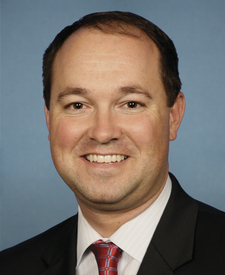
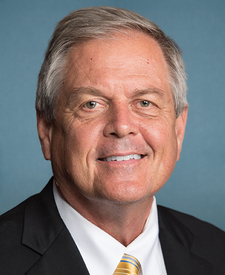
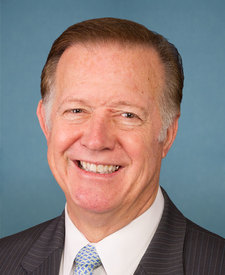
In CommitteeMr. Stutzman (for himself, Mr. Weber of Texas, and Mr. …
Referred to the Committee on Oversight and Government Reform, and …
Introduced in House
Stakeholder Effects
cui bono?How this legislation distributes effects. Mention counts reflect frequency, not effect magnitude.
Congressional committees, Federal agencies
Bill Structure & Actor Mappings
Who is "The Secretary" in each section?
We use a combination of our own taxonomy and classification in addition to large language models to assess meaning and potential beneficiaries. High confidence means strong textual evidence. Always verify with the original bill text.
Learn more about our methodology