Clock Hour Program Student Protection Act
Summary
What This Bill Does
The Clock Hour Program Student Protection Act changes title IV eligibility for clock-hour training programs that prepare students for gainful employment in a recognized profession. If a program offers more clock hours than the state minimum, it remains eligible so long as hours do not exceed 150 percent of the applicable state minimum or 150 percent of a federal agency minimum. The rule applies beginning with award year 2024-2025 and later years. The bill targets career programs whose federal aid eligibility can be affected when regulators view program length as exceeding required licensing or training hours.
Who Benefits and How
Students in clock-hour career programs benefit if their programs keep federal student aid eligibility. Career colleges benefit from a statutory 150 percent safe harbor for program length. Workforce training providers benefit when licensing-driven training programs are not cut off from title IV aid solely for exceeding minimum hours. Employers in recognized professions benefit if training pipelines remain available for occupations with clock-hour requirements.
Who Bears the Burden and How
The Education Department must administer the 150 percent state or federal minimum-hours rule for eligible programs. Program accreditors and auditors must verify clock-hour calculations against state and federal training requirements. Students may bear added tuition or debt if programs use the safe harbor to offer hours above the minimum. Consumer advocates may lose a stricter program-length check against unnecessary clock hours.
Key Provisions
- Adds a 150 percent safe harbor for certain clock-hour gainful-employment training programs.
- Limits eligible clock hours by reference to state minimum training hours or federal agency minimum hours.
- Protects title IV eligibility for otherwise eligible programs within the safe harbor.
- Requires the rule to apply starting with award year 2024-2025 and each succeeding award year.
Evidence Chain:
This summary is generated from the full bill text using AI analysis. Expand "Detailed Analysis" below for identified beneficiaries/burden bearers with clause-level evidence links.
At a Glance
What This Bill Does
Protects title IV eligibility for certain clock-hour training programs when instructional hours are up to 150 percent of state or federal minimum training-hour requirements.
Key Policy Areas
Education, Workforce, Student Aid
Primary Purpose
Protects title IV eligibility for certain clock-hour training programs when instructional hours are up to 150 percent of state or federal minimum training-hour requirements.
Policy Domains
Resolution provisions
Identified Gains
- Students in clock-hour programs
- Career colleges
- Workforce training providers
- Employers in recognized professions
Identified Costs
- Education Department
- Program accreditors
- Students paying extra tuition
- Consumer advocates
Sponsors
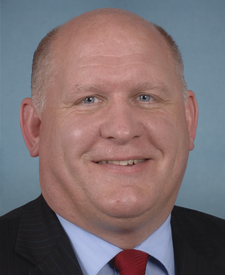
Legislative Progress
In CommitteeMr. Smucker (for himself, Mr. Owens, Mr. Meuser, Mr. Thompson …
Referred to the House Committee on Education and Workforce.
Introduced in House
Stakeholder Effects
cui bono?How this legislation distributes effects. Mention counts reflect frequency, not effect magnitude.
Career colleges, Students in clock-hour programs, Students paying extra tuition
Positive-direction: Career colleges, Students in clock-hour programs
Negative-direction: Students paying extra tuition
Bill Structure & Actor Mappings
Who is "The Secretary" in each section?
We use a combination of our own taxonomy and classification in addition to large language models to assess meaning and potential beneficiaries. High confidence means strong textual evidence. Always verify with the original bill text.
Learn more about our methodology