To require the inspection of certain foreign cranes before use at a United States port, and for other purposes.
Analysis under review: This bill has generated analysis that may be too generic or incomplete. Clause-level evidence remains available below.
Summary
What This Bill Does
The Port Crane Security and Inspection Act of 2025 addresses cybersecurity vulnerabilities in America'''s port infrastructure by restricting the use of cranes manufactured by foreign adversaries (primarily China). The bill requires the Department of Homeland Security to inspect new foreign cranes before they'''re used, assess security risks of existing cranes, and prohibit the operation of newly contracted foreign cranes at US ports. It also gives port operators 5 years to remove foreign software from cranes currently in use.
Who Benefits and How
US-based and allied nation crane manufacturers benefit by gaining market share previously dominated by Chinese manufacturers like ZPMC, which currently supplies roughly 80% of cranes at US ports. Domestic cybersecurity firms and industrial software providers stand to gain substantial business from the mandatory 5-year transition period, as ports must hire contractors to replace foreign software and retrofit existing equipment. These companies will likely receive millions in contracts to assess, replace, and certify crane control systems.
Who Bears the Burden and How
Port operators and terminal operators face the heaviest burden, as they must replace or retrofit expensive equipment (port cranes cost $10-20 million each). Those who recently signed contracts for foreign cranes cannot fulfill them, leading to contractual penalties and delays while sourcing alternative equipment. Ports with existing foreign cranes must spend significant capital within 5 years to replace all foreign software or face operational shutdowns. These costs will likely be passed to importers and logistics companies through higher port fees, ultimately affecting consumer prices across the supply chain.
Key Provisions
- Requires DHS to inspect all new high-risk foreign cranes before they can be placed into service at US ports
- Directs DHS to assess existing foreign cranes within 180 days and take offline any that pose security threats
- Prohibits operation of foreign cranes from adversary nations if contracted after the bill'''s enactment
- Bans the use of foreign software on any existing cranes after 5 years from enactment
- Defines "foreign crane" as equipment with IT/OT components or software manufactured by entities owned, controlled, or financially connected to corporations in countries identified as foreign adversaries by US intelligence
- Requires a Congressional briefing within 1 year on foreign crane security threats at US ports
Evidence Chain:
This summary is generated from the full bill text using AI analysis. Expand "Detailed Analysis" below for identified beneficiaries/burden bearers.
At a Glance
What This Bill Does
Requires security inspection of foreign cranes at US ports and prohibits operation of cranes from adversary nations
Who Benefits
- US-based crane manufacturers
- US-based port equipment providers
- Domestic cybersecurity contractors
Who Bears Costs
- Port operators with existing foreign cranes (especially Chinese-manufactured)
- Foreign crane manufacturers from adversary nations (primarily China)
- Ports that recently contracted for foreign cranes
Key Policy Areas
Cybersecurity, Port Security, National Security, Supply Chain Security, Critical Infrastructure
Primary Purpose
Requires security inspection of foreign cranes at US ports and prohibits operation of cranes from adversary nations
Policy Domains
Legislative Strategy
"Address national security vulnerabilities in port infrastructure by restricting foreign adversary access to critical cyber-connected equipment at US ports"
Identified Gains
- US-based crane manufacturers
- US-based port equipment providers
- Domestic cybersecurity contractors
- Port operators seeking to replace existing foreign equipment (potential grant/funding recipients)
Identified Costs
- Port operators with existing foreign cranes (especially Chinese-manufactured)
- Foreign crane manufacturers from adversary nations (primarily China)
- Ports that recently contracted for foreign cranes
- Supply chain dependent on foreign port equipment
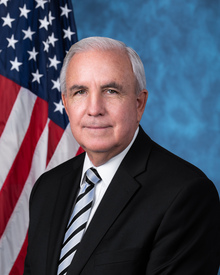
Sponsors




Legislative Progress
IntroducedMr. Gimenez (for himself, Mr. Garamendi, Mrs. Kiggans of Virginia, …
Stakeholder Effects
cui bono?How this legislation distributes effects. Mention counts reflect frequency, not effect magnitude.
Port operators and terminal operators with existing or planned foreign cranes, Port operators with recent foreign crane contracts
Domestic industrial software providers for port equipment, US cybersecurity firms specializing in port infrastructure and industrial control systems
US-based crane manufacturers and allied nation manufacturers
Foreign crane manufacturers from adversary nations (primarily Chinese manufacturers like ZPMC)
Bill Structure & Actor Mappings
Who is "The Secretary" in each section?
- "the_agency"
- → Cybersecurity and Infrastructure Security Agency (CISA)
- "the_director"
- → Director of National Intelligence
- "the_secretary"
- → Secretary of Homeland Security
- "the_director"
- → Director of National Intelligence
- "the_secretary"
- → Secretary of Homeland Security
Note: Definition of 'foreign crane' differs between Section 2 (focuses on IT/OT components under ownership, control, or influence) and Section 3 (focuses on software/technology from entities owned, controlled, or financially related to corporations based in covered foreign country)
Key Definitions
Terms defined in this bill
A country that the intelligence community has identified as a foreign adversary in its most recent Annual Threat Assessment, or that the Secretary of Homeland Security, in coordination with the Director of National Intelligence, has identified as a foreign adversary
A crane for which any information technology and operational technology components in such crane that is connected into cyber infrastructure at a port located in the United States was, in whole or in part, manufactured by an entity that is operating under ownership, control, or influence of a covered foreign country
A crane for which any software or other technology in such crane that is connected into cyber infrastructure at a port located in the United States was, in whole or in part, manufactured by an entity that is owned or controlled by, is a subsidiary of, or is otherwise related legally or financially to a corporation based in a covered foreign country
Software or other technology, in whole or in part, manufactured by a company wholly owned by a covered foreign country
We use a combination of our own taxonomy and classification in addition to large language models to assess meaning and potential beneficiaries. High confidence means strong textual evidence. Always verify with the original bill text.
Learn more about our methodology