Freedom to Invest in Tomorrow’s Workforce Act
Summary
What This Bill Does
The Freedom to Invest in Tomorrow's Workforce Act expands tax-preferred 529 education savings accounts beyond traditional college expenses. It adds qualified postsecondary credentialing expenses, including tuition and fees for recognized credential programs, books, supplies, equipment, testing fees required to obtain or maintain a credential, and required continuing education fees. The bill is designed for workers pursuing licenses, certificates, apprenticeships, industry credentials, and continuing education tied to employment rather than only degree programs.
Who Benefits and How
Workers pursuing occupational credentials benefit because 529 funds can be used for credential programs and required exams. 529 account beneficiaries benefit from a broader menu of tax-preferred education and workforce expenses. Credentialing organizations benefit if more workers can afford certification exams, licensing costs, and maintenance fees. Employers needing skilled workers benefit if employees have easier financing for recognized postsecondary credentials.
Who Bears the Burden and How
The Treasury Department and IRS must update 529 guidance, forms, and enforcement rules for credentialing expenses. Federal taxpayers bear revenue loss if more tax-free 529 distributions are used for non-degree workforce training. State 529 plan administrators must update plan materials, eligible-expense controls, and customer support. Workers still bear costs for credentials that are not recognized or expenses that fall outside the statutory definition.
Key Provisions
- Adds qualified postsecondary credentialing expenses to tax-free 529 account distributions.
- Covers recognized credential program tuition, fees, books, supplies, and equipment.
- Includes testing fees and required continuing education fees for obtaining or maintaining credentials.
- Expands 529 savings from degree-centered education costs into workforce credentialing costs.
Evidence Chain:
This summary is generated from the full bill text using AI analysis. Expand "Detailed Analysis" below for identified beneficiaries/burden bearers with clause-level evidence links.
At a Glance
What This Bill Does
Expands 529 education savings accounts to cover postsecondary credentialing expenses, exams, books, supplies, equipment, and required continuing education.
Key Policy Areas
Tax, Education, Workforce
Primary Purpose
Expands 529 education savings accounts to cover postsecondary credentialing expenses, exams, books, supplies, equipment, and required continuing education.
Policy Domains
Resolution provisions
Identified Gains
- Workers pursuing occupational credentials
- 529 account beneficiaries
- Credentialing organizations
- Employers needing skilled workers
Identified Costs
- Treasury Department
- Federal taxpayers
- State 529 plan administrators
- Workers with ineligible expenses
Sponsors




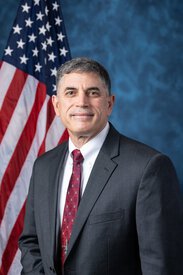
Legislative Progress
In CommitteeMr. Wittman (for himself, Mr. Horsford, Mr. Hern of Oklahoma, …
Referred to the House Committee on Ways and Means.
Introduced in House
Stakeholder Effects
cui bono?How this legislation distributes effects. Mention counts reflect frequency, not effect magnitude.
Bill Structure & Actor Mappings
Who is "The Secretary" in each section?
We use a combination of our own taxonomy and classification in addition to large language models to assess meaning and potential beneficiaries. High confidence means strong textual evidence. Always verify with the original bill text.
Learn more about our methodology