To require the Secretary of Health and Human Services to conduct a national, evidence-based education campaign to increase public and health care provider awareness regarding the potential risks and benefits of human cell and tissue products transplants, and for other purposes.
Summary
What This Bill Does
The Shandra Eisenga Human Cell and Tissue Product Safety Act directs HHS to support educational materials on organ, tissue, and eye donation, donor screening tests, and other transplant issues for health care professionals and other appropriate professionals. It adds civil penalties for violations of 21 CFR part 1271 subparts C and D for section 361 human cell and tissue products: up to $20,000 per violation, $20,000 per day after written notice for continuing violations, plus the retail value of the products, capped at $10 million in one proceeding. It also requires FDA website materials on the Tissue Reference Group, annual data on HCT/P establishment registrations and inspections, TRG inquiries and response times, stakeholder education, workshops, and a public docket on scientific-data best practices for stem cell and other cellular therapies.
Who Benefits and How
Patients receiving human cell and tissue products, transplant recipients, families considering organ, tissue, or eye donation, physicians, transplant coordinators, academic health centers, biomedical consortia, compliant tissue establishments, and FDA enforcement staff benefit from clearer safety information, donor-screening education, stronger penalties against bad actors, and more transparent Tissue Reference Group processes. Legitimate tissue product developers gain better regulatory predictability through public materials, workshops, response-time data, and scientific-data guidance.
Who Bears the Burden and How
Human cell and tissue establishments, stem cell clinics, tissue product manufacturers, noncompliant section 361 establishments, FDA Center for Biologics Evaluation and Research staff, the Tissue Reference Group, HHS communications staff, academic health centers, biomedical consortia, and research organizations must absorb education, registration, inspection, inquiry, docket, workshop, and compliance work. Violators face penalties that can accumulate daily after written notice and reach $10 million in a single proceeding.
Key Provisions
- Defines human cell and tissue products by reference to 21 CFR 1271.3(d) and identifies the Tissue Reference Group.
- Requires HHS educational materials for health care professionals on donation, donor screening tests, and transplant issues.
- Authorizes civil penalties of $20,000 per violation, $20,000 per continuing day after notice, and product retail value, capped at $10 million per proceeding.
- Requires FDA website materials on the Tissue Reference Group and best practices for timely, accurate recommendations.
- Requires annual publication of HCT/P establishment registrations, FDA inspections, blood-establishment inspection comparisons, TRG inquiry volume and types, and average response times.
- Requires stakeholder information, workshops, public comments, and updated best practices for scientific data on stem cell and other cellular therapies.
Evidence Chain:
This summary is generated from the full bill text using AI analysis. Expand "Detailed Analysis" below for identified beneficiaries/burden bearers with clause-level evidence links.
At a Glance
What This Bill Does
Requires HHS and FDA to educate clinicians and the public about human cell and tissue product transplant risks and benefits, adds civil penalties up to $20,000 per violation or day and $10 million per proceeding, and publishes Tissue Reference Group and inspection transparency data.
Key Policy Areas
Health Care, FDA, Patient Safety, Biologics
Primary Purpose
Requires HHS and FDA to educate clinicians and the public about human cell and tissue product transplant risks and benefits, adds civil penalties up to $20,000 per violation or day and $10 million per proceeding, and publishes Tissue Reference Group and inspection transparency data.
Policy Domains
Substantive provisions
Identified Gains
- Patients receiving human cell and tissue products
- Transplant recipients
- Physicians
- Transplant coordinators
- Academic health centers
- Compliant tissue establishments
- FDA enforcement staff
Identified Costs
- Human cell and tissue establishments
- Stem cell clinics
- Tissue product manufacturers
- Noncompliant section 361 establishments
- FDA Center for Biologics Evaluation and Research
- Tissue Reference Group
- HHS communications staff
Sponsors
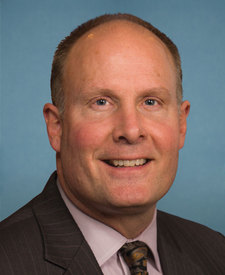

Legislative Progress
Passed HouseCommitted to the Committee of the Whole House on the …
Passed House (inferred from eh version)
Mr. Moolenaar (for himself and Mrs. Dingell) introduced the following …
Stakeholder Effects
cui bono?How this legislation distributes effects. Mention counts reflect frequency, not effect magnitude.
FDA Center for Biologics Evaluation and Research, FDA enforcement staff, HHS communications staff
Positive-direction: FDA enforcement staff
Negative-direction: FDA Center for Biologics Evaluation and Research, HHS communications staff, Tissue Reference Group
Academic health centers, Health care professionals, Stem cell clinics
Positive-direction: Academic health centers, Health care professionals
Negative-direction: Stem cell clinics
Human cell and tissue establishments, Noncompliant tissue establishments, Tissue product developers seeking clarity
Positive-direction: Tissue product developers seeking clarity
Negative-direction: Human cell and tissue establishments, Noncompliant tissue establishments
Patients receiving HCT/P products, Transplant patients
Bill Structure & Actor Mappings
Who is "The Secretary" in each section?
- "trg"
- → FDA Tissue Reference Group.
- "hctp"
- → Human cells, tissues, or cellular or tissue-based products regulated under 21 CFR part 1271.
We use a combination of our own taxonomy and classification in addition to large language models to assess meaning and potential beneficiaries. High confidence means strong textual evidence. Always verify with the original bill text.
Learn more about our methodology