To amend the Higher Education Act of 1965 to require disclosure of certain foreign investments within endowments, and for other purposes.
Analysis under review: This bill has generated analysis that may be too generic or incomplete. Clause-level evidence remains available below.
Summary
What This Bill Does
This bill requires wealthy private colleges and universities to publicly report their investments in countries and entities that the U.S. considers adversarial. Schools with endowments over $6 billion, or those holding more than $250 million in such investments, must file annual disclosure reports detailing what they bought, sold, or held, along with fair market values and capital gains.
Who Benefits and How
The general public and policymakers gain transparency into how major university endowments are connected to foreign adversaries. National security interests are served by identifying financial ties between elite academic institutions and countries like China, Russia, Iran, and North Korea.
Who Bears the Burden and How
Large private universities with substantial endowments face significant new compliance obligations, including designating a compliance officer, filing detailed annual reports, and potentially paying fines of up to 200 percent of their foreign investments if they fail to comply. Investment managers handling university endowment funds face increased reporting burdens for pooled investments.
Key Provisions
- Mandates annual disclosure of investments of concern, including stocks, bonds, and derivatives tied to foreign adversaries
- Creates a publicly searchable database of all filed reports on the Department of Education website
- Imposes fines of 50-100 percent for first-time violations and 100-200 percent for repeat violations
- Institutions violating requirements for three consecutive years lose eligibility for federal financial aid programs for at least two years
Evidence Chain:
This summary is generated from the full bill text using AI analysis. Expand "Detailed Analysis" below for identified beneficiaries/burden bearers.
At a Glance
What This Bill Does
Requires large private colleges and universities to disclose their investments in foreign countries and entities of concern by amending the Higher Education Act to add a new Section 117A with mandatory annual reporting, a public database, and steep fines for noncompliance.
Key Policy Areas
Education, National Security, Finance
Primary Purpose
Requires large private colleges and universities to disclose their investments in foreign countries and entities of concern by amending the Higher Education Act to add a new Section 117A with mandatory annual reporting, a public database, and steep fines for noncompliance.
Policy Domains
Whole Bill
Identified Gains
Contextual inference, no direct clause citation- U.S. national security interests
- General public seeking transparency
Contextual inference, no direct clause citation
Identified Costs
Contextual inference, no direct clause citation- Large private universities
- University endowment fund managers
Contextual inference, no direct clause citation
Sponsors
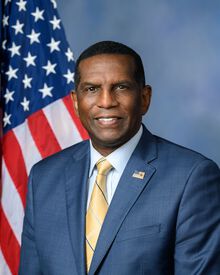
Burgess Owens
R-UT | Primary Sponsor

Legislative Progress
IntroducedMr. Owens (for himself and Mr. Harris of North Carolina) …
Stakeholder Effects
cui bono?How this legislation distributes effects. Mention counts reflect frequency, not effect magnitude.
Large private universities with endowments over $6 billion
Mutual fund and ETF managers holding foreign investments of concern, University endowment fund managers
Bill Structure & Actor Mappings
Who is "The Secretary" in each section?
- "the_secretary"
- → Secretary of Education
Key Definitions
Terms defined in this bill
Any covered nation under 10 USC 4872 or any country the Secretary determines is detrimental to U.S. national security or foreign policy.
Has the meaning given in the CHIPS and Science Act (42 USC 19221(a)) and includes entities on the DOD military-affiliated list.
Any stock, debt, or derivative with respect to a foreign country or entity of concern.
A private institution with assets over $6 billion or investments of concern over $250 million.
We use a combination of our own taxonomy and classification in addition to large language models to assess meaning and potential beneficiaries. High confidence means strong textual evidence. Always verify with the original bill text.
Learn more about our methodology