To amend the Public Health Service Act to clarify liability protections regarding emergency use of automated external defibrillators.
Analysis under review: This bill has generated analysis that may be too generic or incomplete. Clause-level evidence remains available below.
Summary
What This Bill Does
The Cardiac Arrest Survival Act of 2023 creates a uniform national standard protecting people from lawsuits when they use automated external defibrillators (AEDs) during medical emergencies. It replaces the current inconsistent patchwork of state Good Samaritan laws with a single federal baseline that shields AED users, property owners, and device owners from civil liability.
Who Benefits and How
Bystanders who use AEDs to help cardiac arrest victims benefit from strong legal protection regardless of which state they are in, whether they have training, or whether signage is present. Businesses and organizations operating across multiple states benefit from consistent liability rules that remove barriers to purchasing and deploying AEDs. Cardiac arrest victims benefit indirectly because more AEDs will likely be deployed when liability fears are reduced.
Who Bears the Burden and How
Injured patients lose some ability to sue for damages when AEDs are used on them, as the immunity is broad. State legislatures lose authority over AED liability laws since this bill preempts less protective state laws. Licensed healthcare professionals and healthcare facilities are excluded from the immunity when acting within their professional scope, so they remain fully liable.
Key Provisions
- Grants civil liability immunity to good samaritan AED users, premises owners/managers, and device owners in perceived medical emergencies
- Immunity applies regardless of training, signage, government registration, or supervision
- Excludes from immunity those acting with gross negligence, willful misconduct, or licensed professionals acting within their scope
- Preempts state laws that provide less protection than this federal baseline
Evidence Chain:
This summary is generated from the full bill text using AI analysis. Expand "Detailed Analysis" below for identified beneficiaries/burden bearers.
At a Glance
What This Bill Does
Amends the Public Health Service Act to establish a nationally uniform federal baseline of civil liability protection for persons who use, own, or manage premises where automated external defibrillators (AEDs) are used in perceived medical emergencies.
Key Policy Areas
Healthcare, Civil Law
Primary Purpose
Amends the Public Health Service Act to establish a nationally uniform federal baseline of civil liability protection for persons who use, own, or manage premises where automated external defibrillators (AEDs) are used in perceived medical emergencies.
Policy Domains
Whole Bill
Identified Gains
Contextual inference, no direct clause citation- Good samaritan bystanders
- Multi-state businesses and organizations
- Cardiac arrest victims
Contextual inference, no direct clause citation
Identified Costs
Contextual inference, no direct clause citation- Patients harmed by AED use
- State legislatures
- Licensed healthcare professionals
Contextual inference, no direct clause citation
Sponsors

Legislative Progress
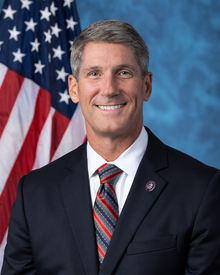
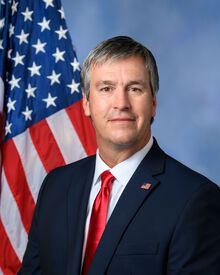
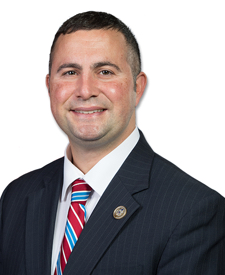
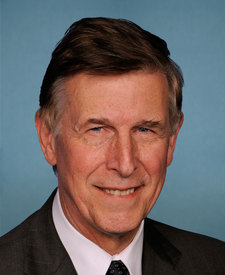
IntroducedMr. C. Scott Franklin of Florida (for himself, Mr. Connolly, …
Stakeholder Effects
cui bono?How this legislation distributes effects. Mention counts reflect frequency, not effect magnitude.
Businesses with AEDs, Organizations deploying AEDs
AED manufacturers, AED manufacturers and sellers
Bill Structure & Actor Mappings
Who is "The Secretary" in each section?
Key Definitions
Terms defined in this bill
A commercially distributed defibrillator that can recognize ventricular fibrillation, determine if defibrillation is needed without user intervention, and deliver an electrical shock, set to operate in automated mode.
Any person who owns or has otherwise acquired a possessory property interest in an AED used on a victim of a perceived medical emergency.
Circumstances in which a reasonable person would believe an individual is experiencing a life-threatening medical condition requiring immediate response regarding heart or cardiopulmonary functioning.
Includes physical, nonphysical, economic, and noneconomic losses.
Any verbal or non-verbal markings purporting to limit AED use by the general public or permit use only by persons with specific skills, qualifications, or training.
We use a combination of our own taxonomy and classification in addition to large language models to assess meaning and potential beneficiaries. High confidence means strong textual evidence. Always verify with the original bill text.
Learn more about our methodology