To prohibit the implementation of new requirements to report bank account deposits and withdrawals.
Analysis under review: This bill has generated analysis that may be too generic or incomplete. Clause-level evidence remains available below.
Summary
What This Bill Does
This bill prohibits the Treasury Department and the IRS from creating any new requirements for banks and financial institutions to report customer account deposits, withdrawals, or transaction flows. It freezes financial reporting obligations at the level that existed under law as of January 1, 2023, blocking any future expansion of bank account surveillance.
Who Benefits and How
Bank customers and individual taxpayers benefit from protection against expanded government monitoring of their financial transactions. Financial institutions benefit from not having to build new reporting infrastructure or comply with additional data collection mandates. Privacy advocates benefit from a statutory barrier against financial surveillance expansion.
Who Bears the Burden and How
The IRS and Treasury Department lose the ability to require new financial transaction reporting that could help identify tax evasion. Federal tax enforcement may be less effective without access to expanded bank account data, potentially reducing tax revenue collection from non-compliant taxpayers.
Key Provisions
- Bars the Treasury Secretary (and any delegate, including the IRS) from requiring financial institutions to report account inflows or outflows
- Applies to both individual transaction reporting and aggregate reporting
- Preserves existing reporting programs that were in effect as of January 1, 2023
- Does not sunset or expire
Evidence Chain:
This summary is generated from the full bill text using AI analysis. Expand "Detailed Analysis" below for identified beneficiaries/burden bearers.
At a Glance
What This Bill Does
Prohibits the Secretary of the Treasury from imposing any new requirements on financial institutions to report bank account inflows, outflows, or aggregate transaction amounts beyond what was already required by law as of January 1, 2023.
Key Policy Areas
Finance, Taxation, Privacy
Primary Purpose
Prohibits the Secretary of the Treasury from imposing any new requirements on financial institutions to report bank account inflows, outflows, or aggregate transaction amounts beyond what was already required by law as of January 1, 2023.
Policy Domains
Whole Bill
Identified Gains
Contextual inference, no direct clause citation- Bank customers and individual account holders
- Financial institutions (banks, credit unions)
- Privacy advocates
Contextual inference, no direct clause citation
Identified Costs
Contextual inference, no direct clause citation- IRS and Treasury Department (reduced enforcement tools)
- Federal tax revenue (potential loss from reduced compliance detection)
Contextual inference, no direct clause citation
Sponsors
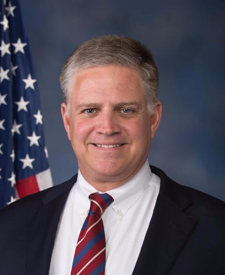



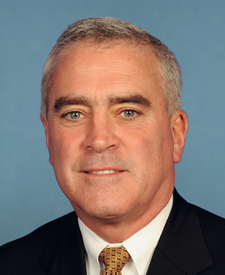
Legislative Progress
IntroducedMr. Ferguson (for himself, Mr. Buchanan, Mr. Smith of Nebraska, …
Stakeholder Effects
cui bono?How this legislation distributes effects. Mention counts reflect frequency, not effect magnitude.
Bill Structure & Actor Mappings
Who is "The Secretary" in each section?
- "secretary_of_treasury"
- → Secretary of the Treasury (including delegates such as the IRS)
We use a combination of our own taxonomy and classification in addition to large language models to assess meaning and potential beneficiaries. High confidence means strong textual evidence. Always verify with the original bill text.
Learn more about our methodology