Higher Education Accountability Tax Act
Summary
What This Bill Does
The Higher Education Accountability Tax Act amends Internal Revenue Code section 4968. It increases the investment-income excise tax on covered private colleges and universities from 1.4 percent to 10 percent. It then creates a higher 20 percent rate for a net-price-increase institution, defined by whether its net price over a three-tax-year period increased faster than the Consumer Price Index. The policy design ties endowment-tax exposure to affordability behavior: wealthy private institutions that raise net prices faster than inflation face a larger tax hit.
Who Benefits and How
Federal taxpayers benefit because covered university endowment income would generate more tax revenue. Student affordability advocates benefit because the 20 percent rate pressures wealthy institutions not to raise net prices faster than inflation. Students at high-price private universities may benefit if schools restrain tuition or net-price increases to avoid the higher rate. Budget writers benefit from a targeted revenue source tied to large private college investment income.
Who Bears the Burden and How
Private colleges with large endowments must pay a much higher excise tax on investment income. Net-price-increase institutions face the highest 20 percent rate if student net prices outpace CPI growth. University finance offices must calculate three-year net-price growth and plan around the tax exposure. Donors to affected institutions may see more endowment resources diverted to federal tax payments.
Key Provisions
- Amends the section 4968 excise tax on private college investment income from 1.4 percent to 10 percent.
- Creates a 20 percent tax rate for institutions whose net price increases faster than inflation.
- Provides a net-price-increase test using a three-tax-year CPI comparison.
- Requires covered private universities to account for affordability behavior in endowment-tax exposure.
Evidence Chain:
This summary is generated from the full bill text using AI analysis. Expand "Detailed Analysis" below for identified beneficiaries/burden bearers with clause-level evidence links.
At a Glance
What This Bill Does
Raises the excise tax on private college and university investment income from 1.4 percent to 10 percent, and to 20 percent for institutions whose net price rises faster than inflation.
Key Policy Areas
Tax, Higher Education
Primary Purpose
Raises the excise tax on private college and university investment income from 1.4 percent to 10 percent, and to 20 percent for institutions whose net price rises faster than inflation.
Policy Domains
Resolution provisions
Identified Gains
- Federal taxpayers
- Student affordability advocates
- Students at high-price private universities
- Budget writers
Identified Costs
- Private colleges with large endowments
- Net-price-increase institutions
- University finance offices
- University donors
Sponsors
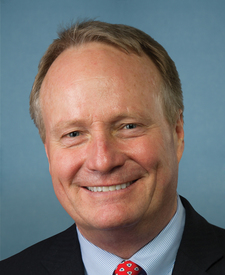

Legislative Progress
In CommitteeMr. Joyce of Ohio (for himself and Ms. Malliotakis) introduced …
Referred to the House Committee on Ways and Means.
Introduced in House
Stakeholder Effects
cui bono?How this legislation distributes effects. Mention counts reflect frequency, not effect magnitude.
Private colleges with large endowments, Students at high-price private universities, University finance offices
Positive-direction: Students at high-price private universities
Negative-direction: Private colleges with large endowments, University finance offices
Bill Structure & Actor Mappings
Who is "The Secretary" in each section?
We use a combination of our own taxonomy and classification in addition to large language models to assess meaning and potential beneficiaries. High confidence means strong textual evidence. Always verify with the original bill text.
Learn more about our methodology