Establishing the ratification of the Equal Rights Amendment.
Summary
What This Bill Does
This joint resolution addresses the contested ratification status of the Equal Rights Amendment. It would state Congress's position that the ERA has satisfied ratification requirements and should be treated as part of the Constitution. The practical effect would be procedural and legal pressure on the Archivist, courts, federal agencies, states, civil rights litigants, and opponents who argue that the deadline or rescissions prevent recognition.
Who Benefits and How
ERA ratification advocates benefit because the resolution gives congressional support to treating the amendment as valid. Sex-discrimination plaintiffs benefit if courts accept the ERA as explicit constitutional text against sex-based inequality. Civil rights organizations benefit from a stronger constitutional hook for gender equality litigation and advocacy. Federal agencies benefit from clearer congressional direction if they update policies to reflect ERA recognition.
Who Bears the Burden and How
Opponents of ERA recognition face legal and political pressure to overcome Congress's ratification position. The Archivist of the United States may face renewed pressure to publish or recognize the amendment. Courts must resolve disputes over deadlines, rescissions, and Article V consequences. State officials in rescission states may face challenges to their position on ratification validity.
Key Provisions
- Establishes congressional recognition of the Equal Rights Amendment's ratification.
- Supports treating the ERA as part of the Constitution despite deadline and rescission disputes.
- Strengthens sex-equality litigation by backing explicit constitutional text.
- Pushes the Archivist, courts, and agencies toward resolving ERA recognition questions.
Evidence Chain:
This summary is generated from the full bill text using AI analysis. Expand "Detailed Analysis" below for identified beneficiaries/burden bearers.
At a Glance
What This Bill Does
Establishes congressional recognition that the Equal Rights Amendment has been ratified as part of the Constitution.
Key Policy Areas
Constitutional Amendment, Civil Rights, Gender Equality
Primary Purpose
Establishes congressional recognition that the Equal Rights Amendment has been ratified as part of the Constitution.
Policy Domains
Resolution provisions
Identified Gains
Contextual inference, no direct clause citation- ERA ratification advocates
- Sex-discrimination plaintiffs
- Civil rights organizations
- Federal agencies
Contextual inference, no direct clause citation
Identified Costs
Contextual inference, no direct clause citation- Opponents of ERA recognition
- Archivist of the United States
- Courts
- State officials in rescission states
Contextual inference, no direct clause citation
Sponsors




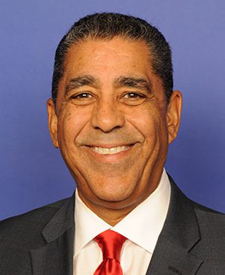
Legislative Progress
In CommitteeReferred to the House Committee on the Judiciary.
Introduced in House
Bill Structure & Actor Mappings
Who is "The Secretary" in each section?
We use a combination of our own taxonomy and classification in addition to large language models to assess meaning and potential beneficiaries. High confidence means strong textual evidence. Always verify with the original bill text.
Learn more about our methodology